Physical Address
304 North Cardinal St.
Dorchester Center, MA 02124
Physical Address
304 North Cardinal St.
Dorchester Center, MA 02124
Last updated: July 10, 2026
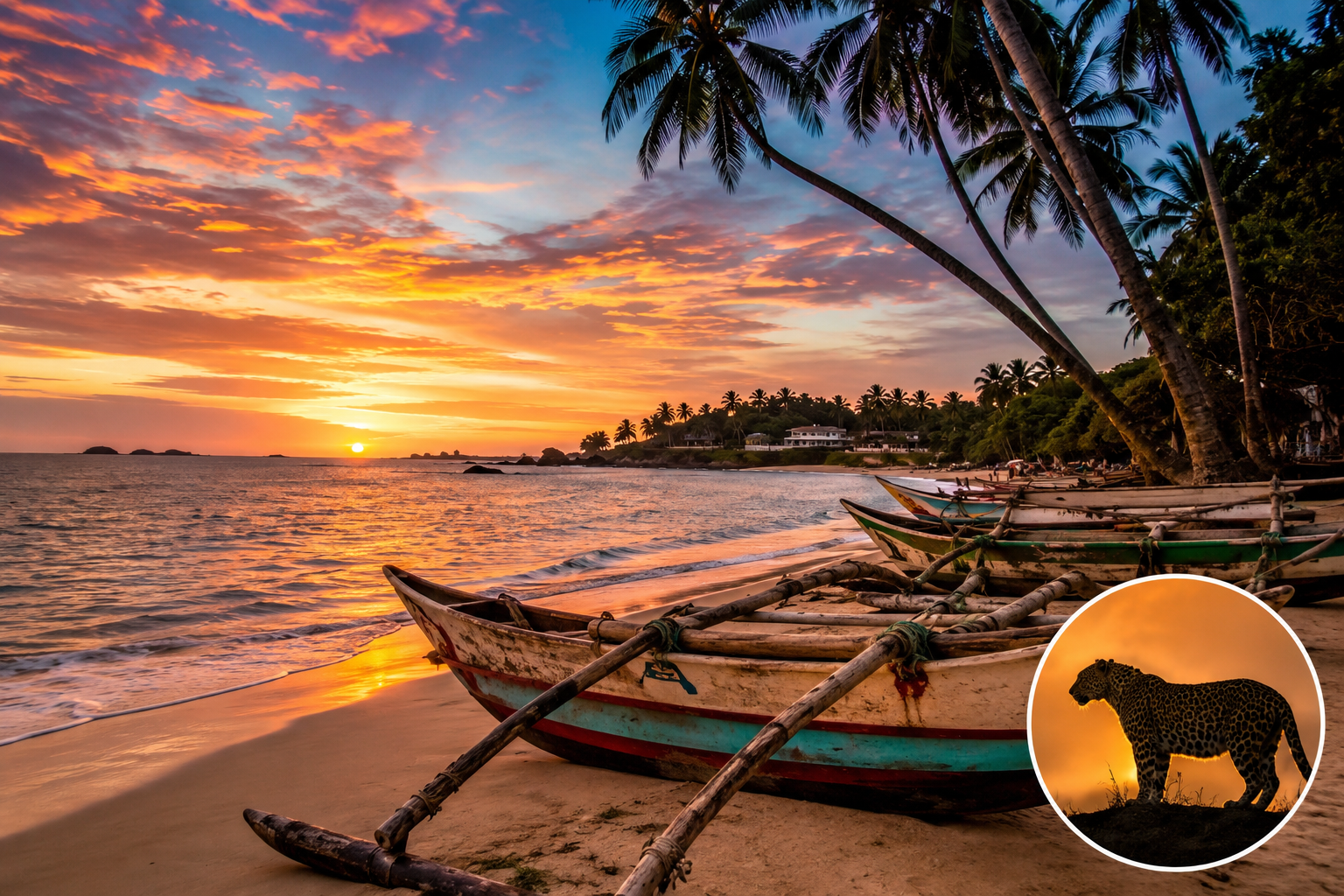
Quick Answer: The best Sri Lanka itinerary for first-time visitors covers 10 days and moves through four distinct zones: the Cultural Triangle (Sigiriya, Dambulla), the hill country (Kandy, Ella), the wildlife south (Yala), and the southern beaches (Mirissa, Unawatuna). This single loop gives you ancient ruins, a legendary train ride, a leopard safari, and beach time without backtracking. December through March is the most reliable window for this route.
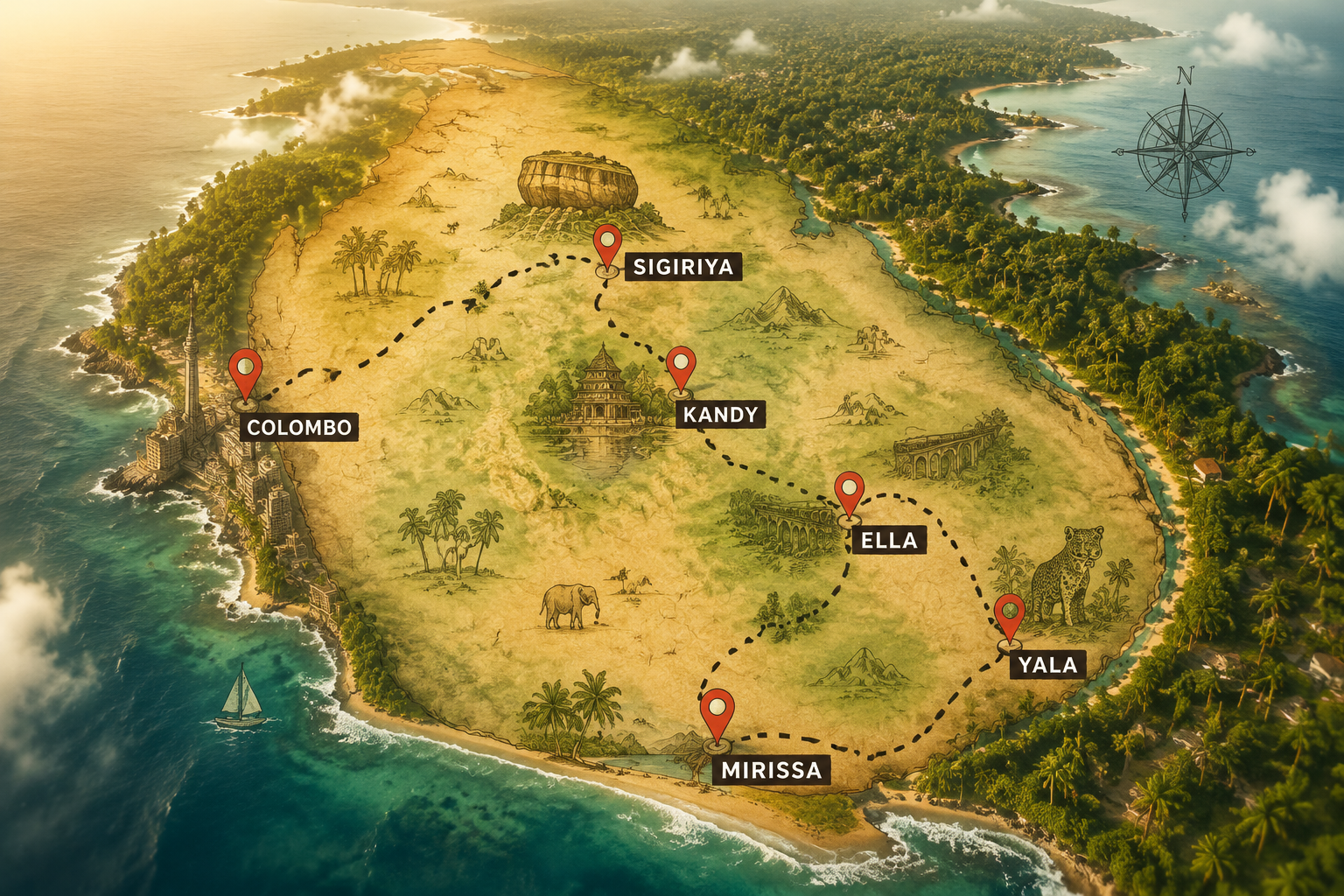
Yes, 10 days is enough for a first-time visitor who follows a focused loop. You won’t see everything, but you’ll cover the four experiences most people come for: ancient ruins, hill country, wildlife, and beaches.
The key is avoiding the common trap of over-scheduling. Sri Lanka is compact (roughly the size of Ireland), but road travel between regions takes longer than maps suggest. Mountain roads are slow, and traffic around Colombo can add hours.
What 10 days realistically covers:
What you’ll need to skip: The north (Jaffna), the east coast (Trincomalee, Arugam Bay), and the far west. Save those for a return trip. [1]
Spread your time unevenly, the cultural north and hill country deserve more days than the beach, especially for first-timers.
Here’s the recommended breakdown for the best Sri Lanka itinerary for first-time visitors:
| Region | Days | Key Stops |
|---|---|---|
| Cultural Triangle | 2 | Sigiriya, Dambulla, Polonnaruwa |
| Kandy | 1.5 | Temple of the Tooth, Peradeniya Gardens |
| Hill Country (Ella + Nuwara Eliya) | 2.5 | Train journey, Nine Arch Bridge, tea tours |
| Yala National Park | 1.5 | Morning + afternoon safari drives |
| Southern Coast | 2 | Mirissa, Galle Fort, Unawatuna |
| Colombo (arrival/departure) | 0.5 | Pettah Market, Galle Face Green |
Practical tip: Fly into Colombo, head straight north to the Cultural Triangle on day one (skip spending a night in Colombo), and end the trip on the south coast before your return flight. This avoids doubling back. [4]
The Cultural Triangle, anchored by Sigiriya, Dambulla, and Polonnaruwa, is the non-negotiable cultural core for any first-time visit. These sites are UNESCO World Heritage listed and genuinely unlike anything else in South Asia.
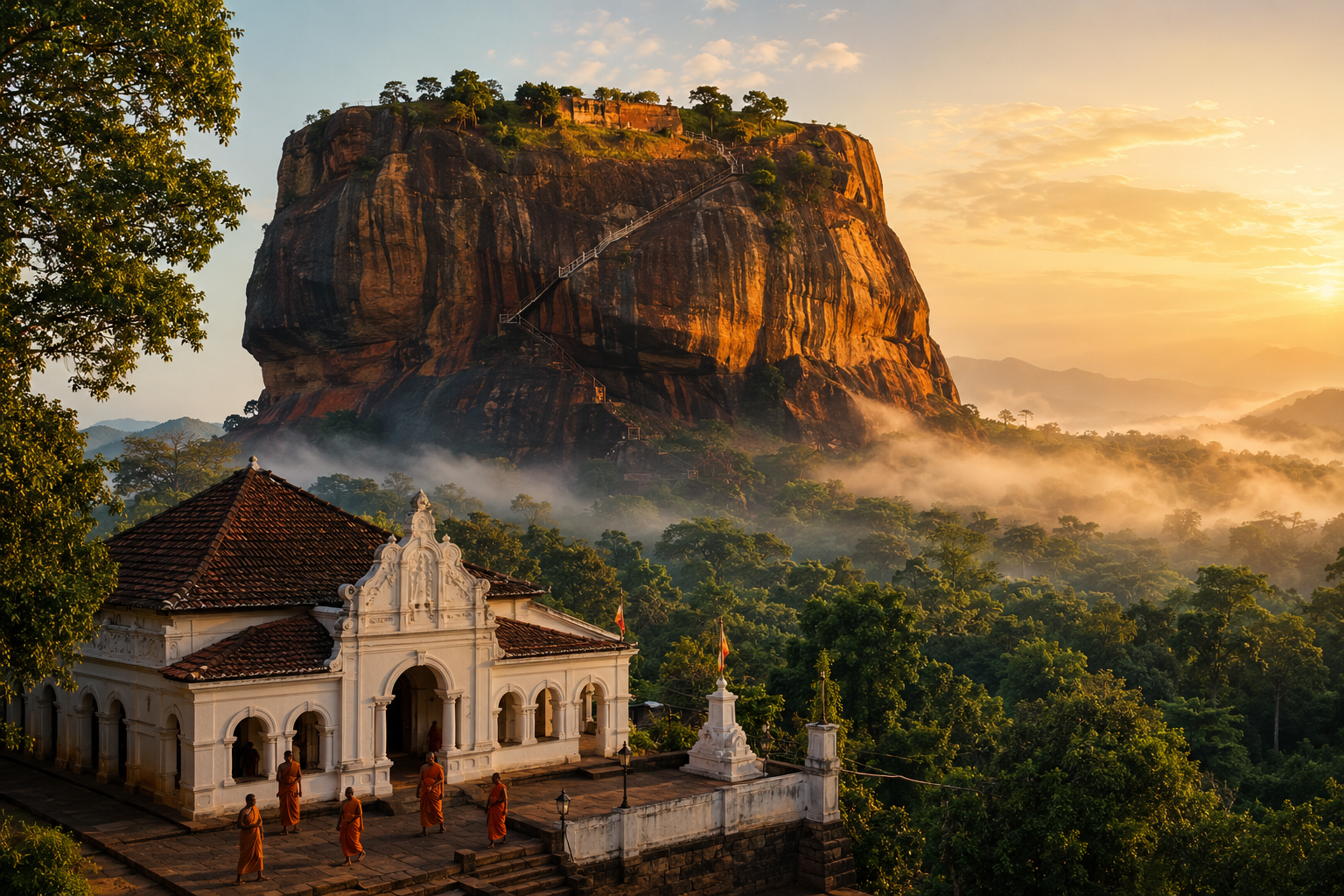
Sigiriya wins. It’s the single most dramatic site in Sri Lanka: a 200-meter volcanic rock with a 5th-century palace complex on top, ancient frescoes on the cliff face, and mirror-wall inscriptions from visiting pilgrims. Budget 3-4 hours and climb early (before 8am) to beat the heat and crowds. [2]
How it compares to other sites:
Choose Sigiriya + Dambulla if you have one day in the Cultural Triangle. Add Polonnaruwa if you have two.
The hill country between Kandy and Ella is Sri Lanka’s tea heartland, and a working plantation tour is one of the most memorable experiences on this itinerary.
Nuwara Eliya sits at 1,868 meters and produces Ceylon tea with a light, delicate flavor. Tours at estates like Pedro or Mackwoods take about 45 minutes, walk you through the full production process (picking, withering, rolling, drying), and end with a tasting. Entry is typically under $5 USD.
Ella is smaller and more backpacker-friendly. The surrounding hills are covered in tea bushes, and you can walk directly into plantations from town. The Lipton’s Seat viewpoint (named after Sir Thomas Lipton, who built his tea empire here) offers sweeping valley views on clear mornings.
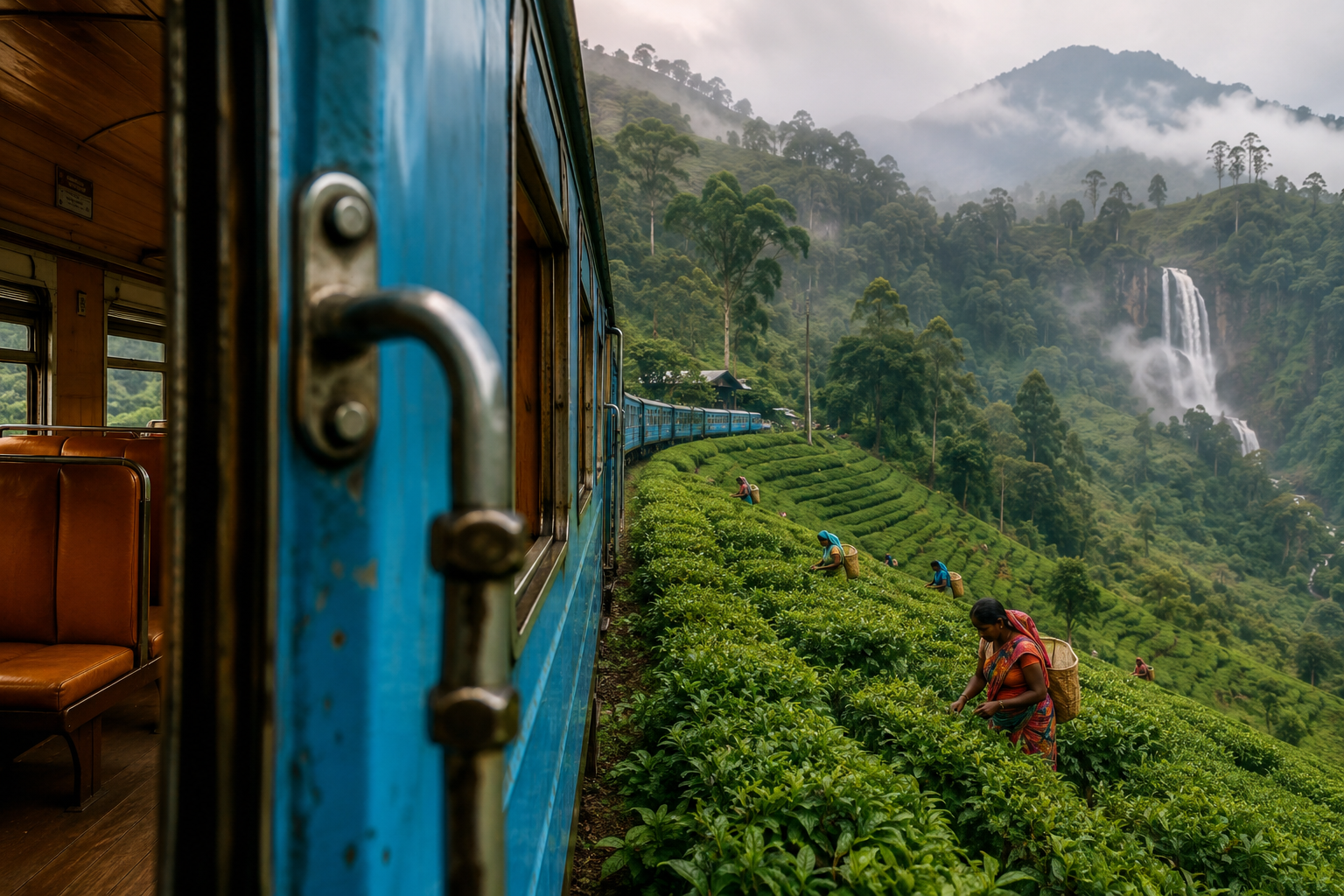
What makes the train journey special: The Kandy-to-Ella train passes directly through these tea estates. Watching Tamil tea pickers work the terraces from an open carriage door is a highlight most travelers rank above the actual plantation tours. Book second-class observation car seats (the ones with the open doors) as early as possible, they sell out weeks ahead during peak season. [3]
The southern coast is the right beach zone for this itinerary. It’s accessible after Yala, the water is calmer from November to April, and the towns have a good mix of atmosphere and infrastructure.
Top southern coast beaches for first-timers:
Galle Fort sits between Mirissa and Colombo and makes a strong half-day stop: Dutch colonial architecture, boutique shops, good cafes, and sea-facing ramparts. [3]
Important note on beach timing: The south coast is calm December, April. The west coast (Negombo, Bentota) is better May, October. This itinerary is built for the December, March peak season.
For a 10-day first-timer itinerary, the most practical approach is a combination: private driver for the cultural and wildlife sections, scenic train for the hill country leg.
Private driver:
Train:
Bus:
Common mistake: Trying to self-drive. Roads are narrow, driving is on the left, and tuk-tuks appear from nowhere. A private driver is genuinely worth the cost for most travelers.
December to March is the best time for this specific itinerary, which covers the west, Cultural Triangle, hill country, and south coast. The weather is dry and sunny across all four zones during this window. [4]
Month-by-month quick guide:
If you can only travel in June, August: Shift the itinerary east. Arugam Bay replaces Mirissa, and the Cultural Triangle stays viable. The hill country gets misty but remains beautiful.
Sri Lanka offers a genuine range, and you can mix budget and mid-range accommodation across the same trip without it feeling inconsistent.
Budget travelers ($15-35/night):
Mid-range travelers ($60-120/night):
Luxury travelers ($150-400+/night):
Practical tip: Splurge on one or two nights (the hill country and beach end are the best places to upgrade) and keep the Cultural Triangle section budget-friendly. The guesthouses there are perfectly adequate. [6]
Most first-timer frustrations come from underestimating travel times and overloading the schedule.
The most common mistakes:
You can absolutely travel Sri Lanka independently, it’s one of the more accessible countries in South Asia for solo travel. But a guide adds real value at specific sites.
Go independent if: You’re comfortable with logistics, enjoy figuring things out, and want flexibility to change plans on the fly. Most guesthouses, tuk-tuk drivers, and locals are helpful and English is widely spoken in tourist areas.
Hire a guide for: Sigiriya (the history is rich and a guide makes the frescoes and water gardens make sense), Polonnaruwa (vast site, easy to miss key structures), and Yala safaris (a good tracker dramatically increases leopard sightings).
Middle-ground option: Book a private driver who also serves as an informal guide. Many drivers have deep local knowledge, speak excellent English, and can arrange restaurant bookings, temple entry, and last-minute changes. This is the most popular setup for independent travelers on a 10-day trip. [1]
Pack light but cover both climates, the coast is hot and humid (28-33°C), the hill country is cool and sometimes wet (12-20°C).
Essentials:
Skip: Heavy rain gear (a compact travel umbrella is enough), formal clothes, and anything you’d be upset to lose to sand or humidity.
Costs vary significantly by travel style, but here’s a realistic breakdown for solo travelers (couples share accommodation costs, so per-person costs drop):
Budget traveler: $60-80 USD/day
Mid-range traveler: $120-180 USD/day
Luxury traveler: $300-500+ USD/day
Note on entrance fees: The Cultural Triangle sites charge foreign visitor rates significantly higher than local rates. Budget $30 for Sigiriya, $10-15 each for Dambulla and Polonnaruwa. These are non-negotiable costs worth every dollar. [4]
Sri Lanka is generally safe for solo travelers, including solo women. The country has a well-established tourism infrastructure, and most visitors report feeling comfortable and welcomed.
Practical safety notes:
Solo travel tip: Staying in guesthouses rather than large resorts makes it much easier to meet other travelers and get reliable local advice. Ella, in particular, has a strong solo traveler community.
Do I need a visa to visit Sri Lanka? Yes. As of May 2026, Sri Lanka issues an Electronic Travel Authorization (ETA) free of charge. Apply online at the official ETA portal before you travel, it’s approved within 24-72 hours for most nationalities. [5]
What’s the best way to get from Colombo airport to Sigiriya? A private transfer takes 3.5-5 hours depending on traffic and costs $50-80 USD. Arrange it through your first guesthouse or a reputable driver service. Don’t start your trip with a 5-hour bus journey after a long flight.
Can I see leopards at Yala National Park? Yala has one of the highest leopard densities of any national park in the world. Sightings aren’t guaranteed, but morning game drives (starting at 6am) give the best odds. Book a reputable jeep safari with an experienced tracker.
Is Sri Lankan food very spicy? It can be. Rice and curry, the staple meal, ranges from mild to very hot depending on the region and cook. Ask for “less spicy” when ordering and you’ll usually be accommodated. Hoppers (bowl-shaped rice flour pancakes) and kottu roti are milder and excellent for first-timers.
Do I need travel insurance for Sri Lanka? Yes, comprehensive travel insurance covering medical evacuation is strongly recommended. Healthcare in rural areas is limited, and medical evacuation costs can be significant without coverage.
How far in advance should I book the Kandy-to-Ella train? At least 3-4 weeks ahead during December, March peak season. The observation car seats (second class) and first-class observation saloon both sell out quickly. Book through the official Sri Lanka Railways website or a verified local agent.
Is it worth spending time in Colombo? For a 10-day itinerary, half a day is enough. Pettah Market and Galle Face Green are worth a quick visit. Colombo is better appreciated on a longer trip when you have time to explore the Pettah neighborhood, the National Museum, and the city’s growing restaurant scene.
What currency is used in Sri Lanka? Sri Lankan Rupee (LKR). ATMs are widely available in cities and tourist areas. Carry some cash for rural guesthouses, tuk-tuks, and local food stalls. Credit cards are accepted at mid-range and upscale hotels and restaurants.
Can I extend this itinerary to 14 days? Yes, add 4 days by including the east coast (Trincomalee or Arugam Bay) or the northern cultural sites (Jaffna). Note that the east coast is best June, September, which conflicts with the December, March optimal window for the main route.
Are there any dress code requirements at Sri Lankan temples? Yes. Cover shoulders and knees at all Buddhist and Hindu temples. Remove shoes before entering any temple. Many sites sell or rent sarongs at the entrance if you arrive unprepared. Avoid pointing feet toward Buddha statues or monks.
The best Sri Lanka itinerary for first-time visitors in 10 days follows one clear loop: Cultural Triangle → Kandy → scenic train to Ella → tea country → Yala safari → southern beaches. Each stop earns its place. Sigiriya is genuinely unmissable. The train through the tea estates is one of those travel experiences that stays with you. Yala delivers wildlife in a landscape unlike anywhere else. And the southern coast gives you the beach time you need after two weeks of early mornings and temple stairs.
Your next steps:
Sri Lanka rewards travelers who plan the logistics but leave room to wander. Follow this framework, adapt it to your budget and pace, and you’ll leave with a trip that covers more ground, and more depth, than most first-time visitors manage.
[1] Sri Lanka 10 Days 2 Weeks Itinerary – https://en.srilanka-charter.com/information/model-itinerary/sri-lanka-10-days-2-weeks-itinerary?utm_source=openai
[2] 10 Days Cultural Triangle – https://www.thesrilankaguides.com/itineraries/10-days-cultural-triangle/?utm_source=openai
[3] Sri Lanka Travel Itinerary First Time Visitors – https://srilankavisits.com/sri-lanka-travel-itinerary-first-time-visitors/?utm_source=openai
[4] 10 Day Sri Lanka Itinerary – https://weltfox.com/stories/10-day-sri-lanka-itinerary/?utm_source=openai
[5] Sri Lanka Foreign Travel Advice – https://www.gov.uk/foreign-travel-advice/sri-lanka?utm_source=openai
[6] 10 Days Sri Lanka Itinerary – https://www.srilanka-maldives.com/10-days-sri-lanka-itinerary/?utm_source=openai