Physical Address
304 North Cardinal St.
Dorchester Center, MA 02124
Physical Address
304 North Cardinal St.
Dorchester Center, MA 02124
Last updated: August 8, 2026
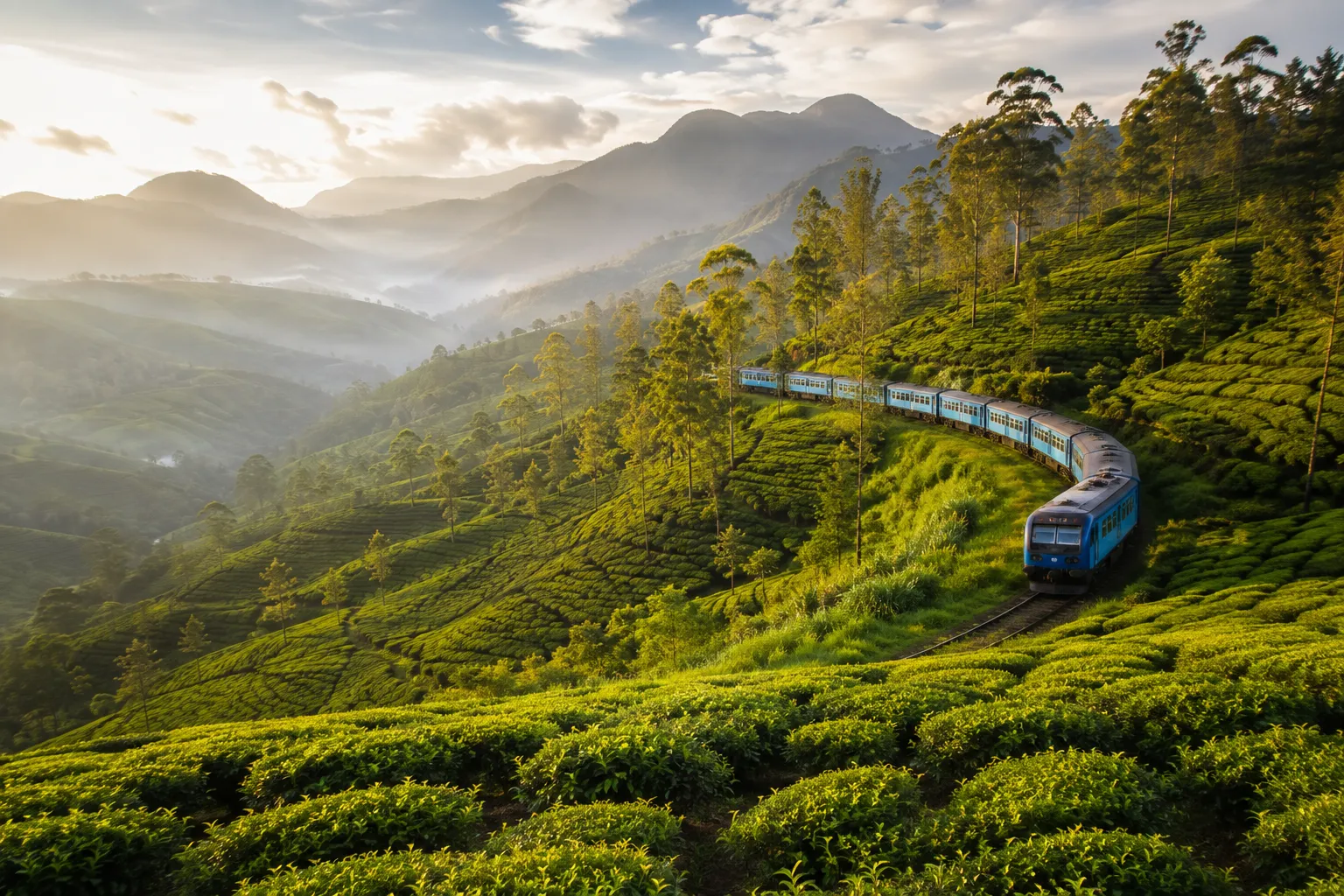
Sri Lanka’s hill country offers three distinct experiences that work perfectly together: Kandy’s cultural heritage and tropical gardens, Nuwara Eliya’s cool climate and colonial charm, and Ella’s dramatic landscapes and hiking trails. Most first-time visitors need 4-6 days to experience all three destinations comfortably, including the scenic train journey that connects them.
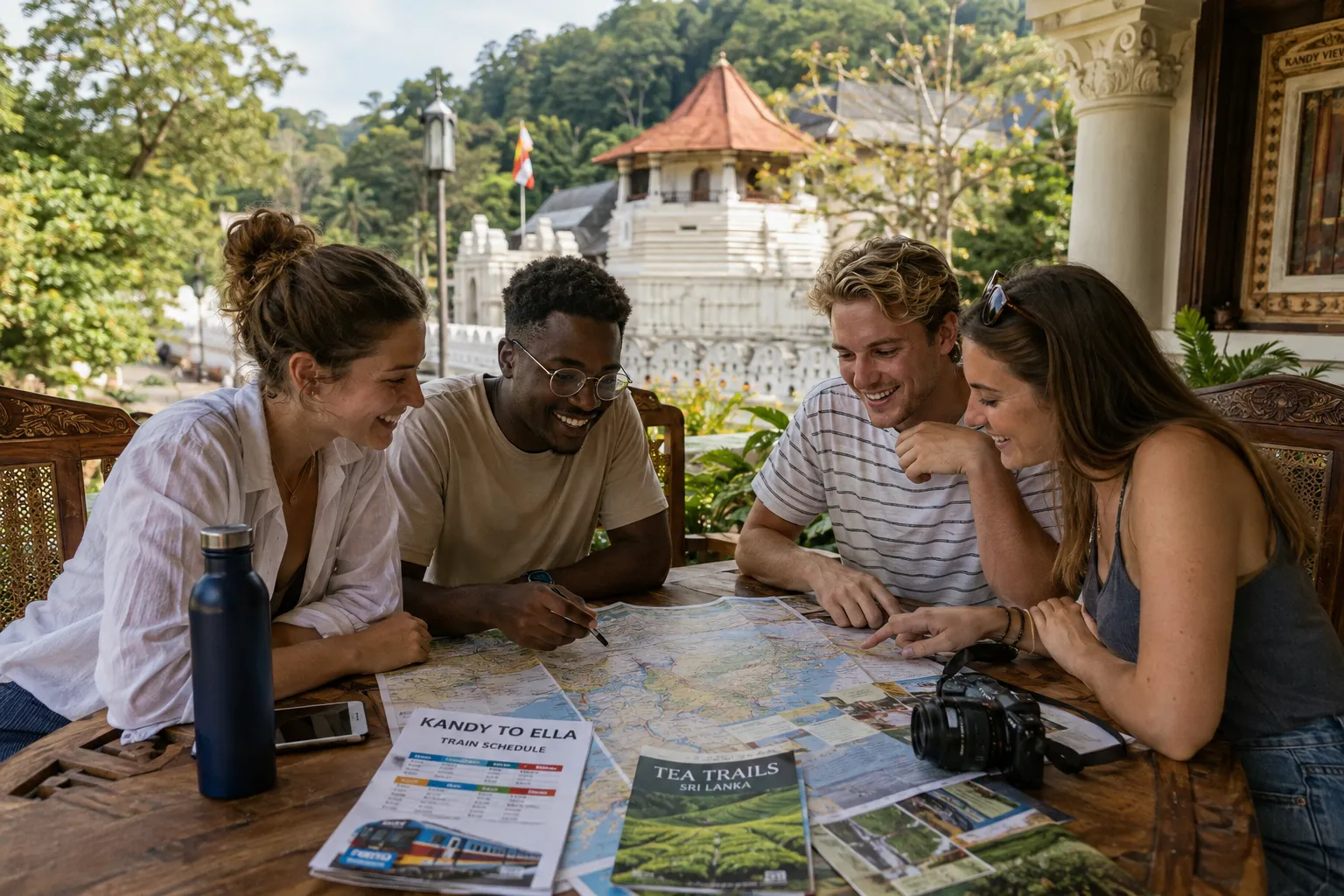
• Best time to visit: December to April offers clear skies and minimal rain, perfect for train rides and hiking • Minimum duration: 4 days covers basics, 6 days allows for proper tea estate visits and hiking • Essential route: Kandy → Nuwara Eliya → Ella by train for the most scenic experience • Budget range: $40-80 per day including accommodation, meals, and activities • Must-pack items: Layers for temperature changes, rain jacket, comfortable walking shoes • Train booking: Reserve seats 7-14 days ahead during peak season (December-March) • Altitude consideration: Nuwara Eliya sits at 6,200 feet – some visitors experience mild discomfort • Tea estate tours: Worth the investment at $15-25 per person for authentic plantation experiences
Four days covers the essentials, but six days lets you truly experience each destination without rushing. The minimum breakdown is one day in Kandy, one day traveling to Nuwara Eliya with afternoon exploration, one day for the train to Ella with hiking, and one day returning to Colombo.
A more comfortable six-day itinerary allows two days in Kandy (including the Botanical Gardens and a cultural show), two days in Nuwara Eliya (tea estate tour and town exploration), and two days in Ella (hiking Little Adam’s Peak and Nine Arch Bridge, plus relaxation time).
Choose the longer option if you want to:
The train journey between destinations takes 2-4 hours each segment, so factor in half a day for travel between each location.
December through April offers the clearest weather and most reliable train schedules. This dry season provides excellent visibility for mountain views and hiking, with minimal rain disrupting outdoor activities.
Peak season considerations (December-March):
Shoulder season benefits (April-May, September-November):
Avoid June-August when the southwest monsoon brings heavy rains to the hill country, making train journeys less scenic and hiking trails muddy or closed [1].
Kandy sits in a tropical valley at 1,600 feet elevation, while Nuwara Eliya is a cool mountain town at 6,200 feet with a distinctly different climate and character.
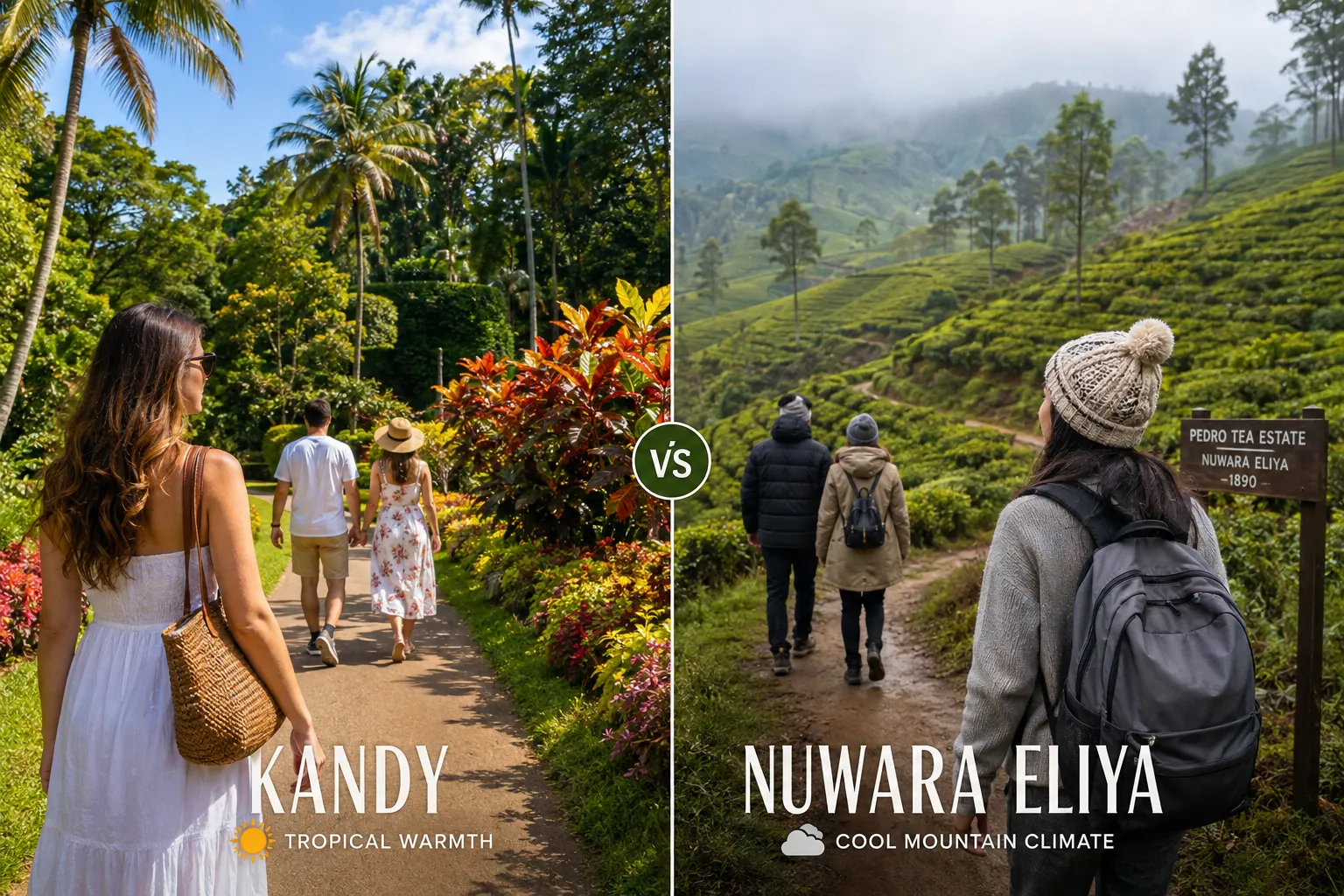
Kandy characteristics:
Nuwara Eliya characteristics:
Choose Kandy if you prefer: Cultural experiences, warm weather, shorter travel times from Colombo, and tropical gardens.
Choose Nuwara Eliya if you want: Cool mountain air, tea plantation tours, colonial history, and access to high-altitude hiking.
Most visitors experience both as part of their hill country journey, spending 1-2 days in each location.
The journey requires a connection in Nanu Oya (near Nuwara Eliya), with the total trip taking 6-7 hours including the transfer. Book second-class reserved seats for the best balance of comfort and scenic views.
Route breakdown:
Booking strategy:
Pro tip: Sit on the right side of the train from Nanu Oya to Ella for the best mountain and tea plantation views. The section passing Demodara Loop and approaching Ella offers the most dramatic scenery.
Alternative route: Some visitors take the train from Kandy to Nanu Oya, spend 1-2 nights in Nuwara Eliya, then continue by train to Ella. This breaks up the journey and allows time to explore the tea capital.
Pack layers for temperature variations from tropical Kandy (85°F) to cool Nuwara Eliya (50°F nights), plus rain protection and sturdy walking shoes.
Essential clothing:
Practical items:
Photography gear:
Don’t overpack: Laundry services are available in all three destinations for $2-4 per load, allowing you to pack lighter and wash items mid-trip.
Yes, tea plantation tours provide authentic insights into Ceylon tea production and offer some of the hill country’s most scenic experiences for $15-25 per person. The tours combine education, tastings, and spectacular mountain views.
What’s included in quality tours:
Best plantations for first-time visitors:
Choose plantation tours if you:
Skip if you’re short on time and prefer hiking or cultural activities – basic tea tastings are available at most hotels and restaurants.
Budget $40-80 per day for accommodation, meals, activities, and local transport, with train tickets adding $5-15 for the scenic routes. Costs vary significantly between budget guesthouses and luxury tea estate bungalows.
Daily budget breakdown:
Budget option ($40-50/day):
Mid-range option ($60-80/day):
Luxury option ($120-200/day):
One-time costs:
Money-saving tips: Book accommodation directly with properties, eat at local restaurants rather than hotel dining rooms, and use public transport between nearby attractions.
Altitude sickness is rare but possible in Nuwara Eliya at 6,200 feet, with some visitors experiencing mild headaches or fatigue during their first day. The elevation change from sea level is significant enough to affect sensitive individuals.
Common mild symptoms:
Prevention strategies:
When to be concerned: Severe headaches, nausea, or dizziness warrant descending to lower elevation immediately. These symptoms are uncommon at Nuwara Eliya’s moderate altitude but shouldn’t be ignored.
Most visitors experience no issues and enjoy the cool mountain air as a refreshing change from Sri Lanka’s coastal humidity. The gradual train ascent from Kandy helps most people adjust naturally.
Three days covers the highlights but feels rushed, while 4-5 days provides a comfortable pace for first-time visitors to experience each destination properly. The choice depends on your travel style and what you want to prioritize.
Efficient 3-day itinerary:
Comfortable 4-day option:
Choose 3 days if you:
Choose 4+ days if you:
Dambatenne Tea Factory and Lipton’s Seat offer the best combination of scenic views, authentic production tours, and historical significance within easy reach of Ella. Both provide different perspectives on Ceylon tea heritage.
Dambatenne Tea Factory:
Lipton’s Seat:
Halpewatte Tea Factory:
Booking tips: Most tea estates accept walk-in visitors, but calling ahead ensures English-speaking guides are available. Combine visits with the scenic drive through active plantation areas.
Tea bungalows offer unique colonial experiences and stunning plantation views, while hotels provide more amenities and central locations – choose based on your priorities for atmosphere versus convenience.
Tea bungalow advantages:
Tea bungalow considerations:
Hotel advantages:
Choose tea bungalows if you: Want a unique colonial experience, don’t mind higher costs, have private transport arranged, and prioritize atmosphere over convenience.
Choose hotels if you: Prefer central locations, want dining variety, travel on a moderate budget, or rely on public transport for getting around.
Kandy maintains tropical warmth year-round (75-85°F), while Nuwara Eliya offers cool mountain climate (50-70°F) with significant temperature drops at night. The 4,600-foot elevation difference creates distinctly different weather patterns.
Kandy weather patterns:
Nuwara Eliya weather patterns:
Seasonal differences:
Packing strategy: Bring summer clothes for Kandy and add warm layers for Nuwara Eliya rather than packing entirely different wardrobes.
Visit major attractions before 8 AM or after 4 PM, choose weekdays over weekends, and explore lesser-known viewpoints that offer similar experiences without the crowds. Strategic timing makes the biggest difference.
Crowd-beating strategies by location:
Nine Arch Bridge (Ella):
Little Adam’s Peak:
Temple of the Tooth (Kandy):
Tea estate tours:
General crowd-avoidance tips:
The hill country lacks beach activities, wildlife safaris, and water sports that define other Sri Lankan regions, but offers unique mountain experiences unavailable elsewhere on the island.
Missing experiences in hill country:
Unique hill country advantages:
Planning implications:
Choose hill country exclusively if you: Prefer cool weather, enjoy hiking and cultural experiences, want to avoid beach crowds, or have limited time requiring focus on one region.
How far in advance should I book hill country trains? Book 7-14 days ahead during peak season (December-March) and 3-5 days for other periods. Second-class reserved seats offer the best availability and scenic views.
Do I need a guide for hiking in Ella? Little Adam’s Peak requires no guide and has clear trails. Ella Rock requires a local guide due to unmarked paths and private property crossings – expect to pay 2,000-3,000 LKR ($10-15).
Can I use credit cards in the hill country? Major hotels accept cards, but tea estates, local restaurants, and transport typically require cash. Bring small bills as change can be limited.
Is it safe to drink tap water in hill country hotels? Stick to bottled water in all three destinations. Most hotels provide complimentary bottled water, and it’s widely available for purchase.
What’s the WiFi situation in tea estate bungalows? WiFi is limited or unavailable in remote tea bungalows. Hotels in town centers offer reliable internet. Consider this if you need connectivity.
Are there ATMs in Nuwara Eliya and Ella? Yes, but they can run out of cash during peak tourist periods. Withdraw money in Kandy before heading to smaller towns.
Can I visit temples in the hill country wearing shorts? No, temples require covered shoulders and legs. Bring long pants and shirts, or purchase appropriate clothing at temple gift shops.
How cold does it get in Nuwara Eliya at night? Temperatures drop to 45-50°F (7-10°C) during peak season nights. Pack a warm jacket or sweater for evening comfort.
Is altitude sickness common in the hill country? Rare but possible in Nuwara Eliya at 6,200 feet. Most visitors experience no issues, but stay hydrated and take it easy on arrival day.
Can I do laundry during my hill country trip? Yes, all three destinations offer laundry services for $2-4 per load with next-day return. This allows lighter packing.
What’s the best camera for hill country photography? Any camera works, but bring extra batteries as cold mountain air drains power faster. A lens cloth helps with misty conditions in Nuwara Eliya.
Are there vegetarian food options in the hill country? Excellent vegetarian options available, including traditional Sri Lankan rice and curry. Many restaurants cater specifically to vegetarian travelers.
Sri Lanka’s hill country delivers three distinct experiences that complement each other perfectly. Kandy provides cultural immersion and tropical gardens, Nuwara Eliya offers cool mountain air and authentic tea plantation tours, while Ella combines dramatic hiking with scenic train journeys.
Your next steps:
The hill country works exceptionally well as part of a longer Sri Lankan journey, providing cool climate relief and unique mountain experiences unavailable elsewhere on the island. Whether you’re seeking cultural experiences, scenic photography, or active hiking, this region offers thoughtful gifts of memory and experience that last far beyond your visit.
SEO Meta Title: Sri Lanka Hill Country Guide: Kandy, Nuwara Eliya, Ella & Tea Trails
SEO Meta Description: Complete first-time visitor guide to Sri Lanka’s hill country. Plan 4-6 days exploring Kandy, Nuwara Eliya, and Ella with scenic trains and tea tours.
[1] Sri Lankas Hill Country And Yala Recast 2026 Travel Perceptions – https://www.thetraveler.org/sri-lankas-hill-country-and-yala-recast-2026-travel-perceptions/ [4] 98178 Tamarind Gardens Homestay Expands Community Tourism Model As Kandy Prepares For Record Visitor Numbe – https://pressadvantage.com/story/98178-tamarind-gardens-homestay-expands-community-tourism-model-as-kandy-prepares-for-record-visitor-numbe