Physical Address
304 North Cardinal St.
Dorchester Center, MA 02124
Physical Address
304 North Cardinal St.
Dorchester Center, MA 02124
Last updated: July 10, 2026
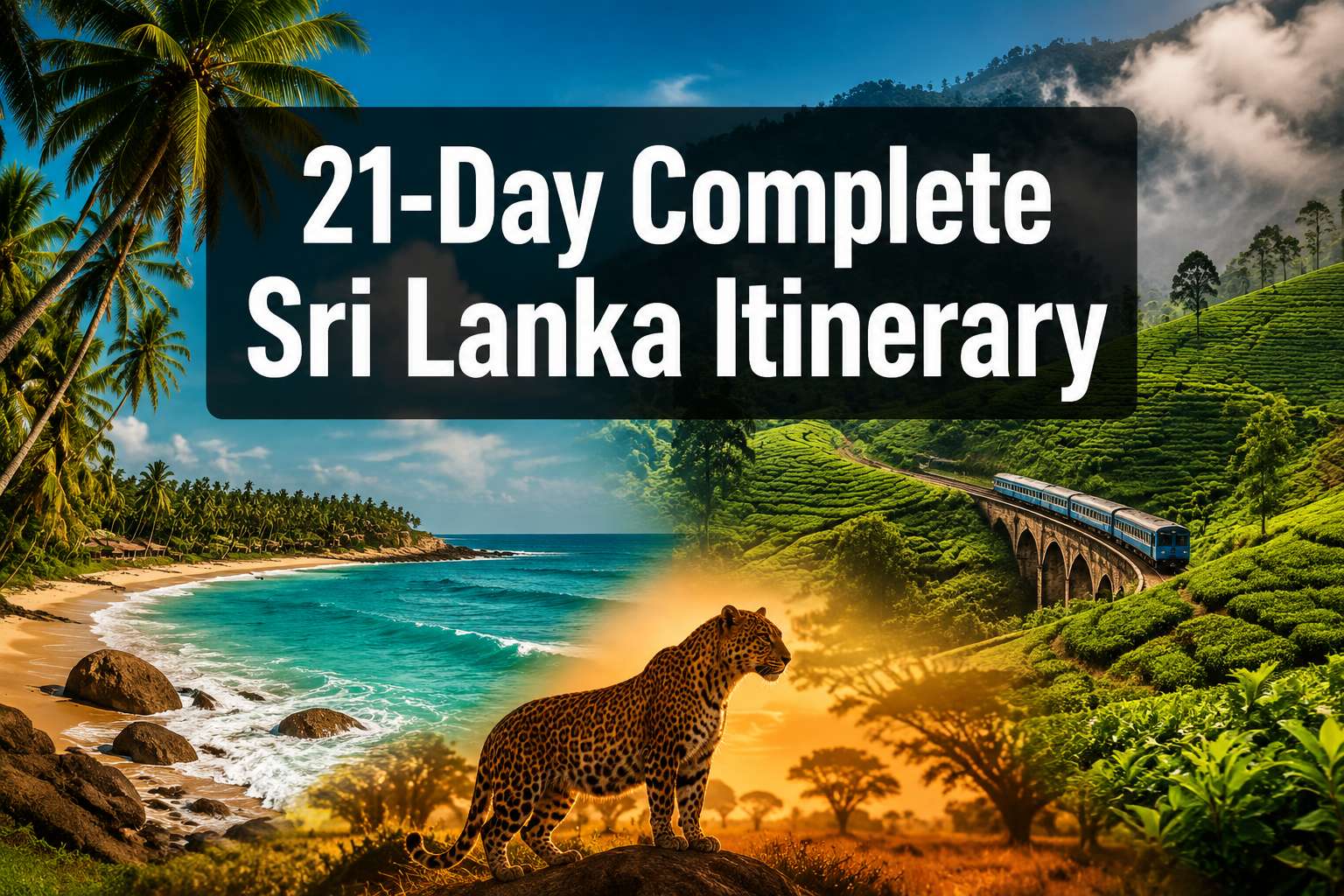
Quick Answer: Sri Lanka is small enough to cover its four main regions, ancient cultural cities, misty hill country, southern beaches, and wildlife parks, in 21 days without feeling rushed. This 21-Day Complete Sri Lanka Itinerary: Beaches, Hill Country, Wildlife & Culture in One Epic Route follows a logical clockwise loop from Colombo, so you’re never backtracking. Budget roughly $1,200,$2,500 per person depending on your accommodation style, and plan around November to March for the best weather on the south and west coasts.
Yes, and 21 days is actually the ideal length for a first visit. Sri Lanka is roughly the size of Ireland, which means distances look short on a map. But mountain roads, wildlife park timings, and the sheer number of worthwhile stops mean you need time to absorb each region properly.
A well-planned 21-day loop covers:
Is 21 days too long or not long enough? For most first-timers, it’s just right. Two weeks feels rushed; a month is ideal if you want to go deep. Three weeks lets you move at a relaxed pace without skipping major highlights.
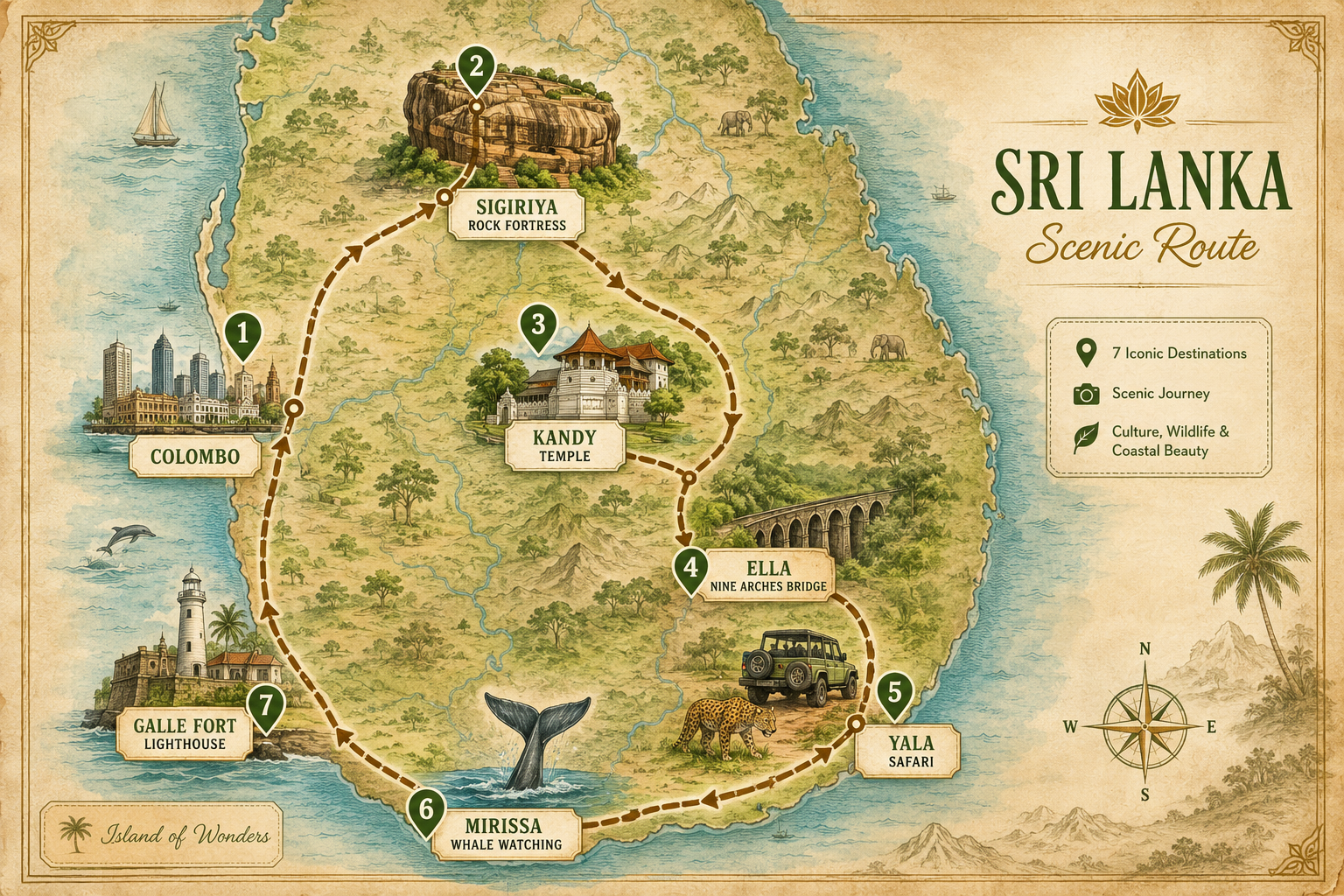
This route runs clockwise from Colombo, keeping travel days manageable and grouping nearby attractions together.
Fly into Bandaranaike International Airport (Negombo is 5 minutes away; Colombo is 35 minutes). Spend Day 1 recovering from the flight and exploring Negombo’s fish market and Dutch canal. On Day 2, head into Colombo, walk Galle Face Green, explore Pettah market, and eat at Ministry of Crab if the budget allows.
Practical tip: Stay in Negombo on arrival night to avoid a late-night Colombo drive.
Drive or take a bus north to Sigiriya (about 4 hours from Colombo). Climb the 5th-century Lion Rock fortress early morning to beat the heat and crowds. Spend the afternoon at Dambulla Cave Temple, one of Sri Lanka’s best-preserved Buddhist shrines.
These two ancient cities are UNESCO World Heritage Sites and easy to cover by bicycle. Polonnaruwa is more compact and better preserved; Anuradhapura is larger and more sacred. Choose one if time is tight, Polonnaruwa wins for visual impact.
Drive south to Kandy (2.5 hours from Sigiriya). Visit the Temple of the Tooth Relic in the evening when the puja ceremony is most atmospheric. The Kandy Lake walk takes 30 minutes and is worth doing at dusk.
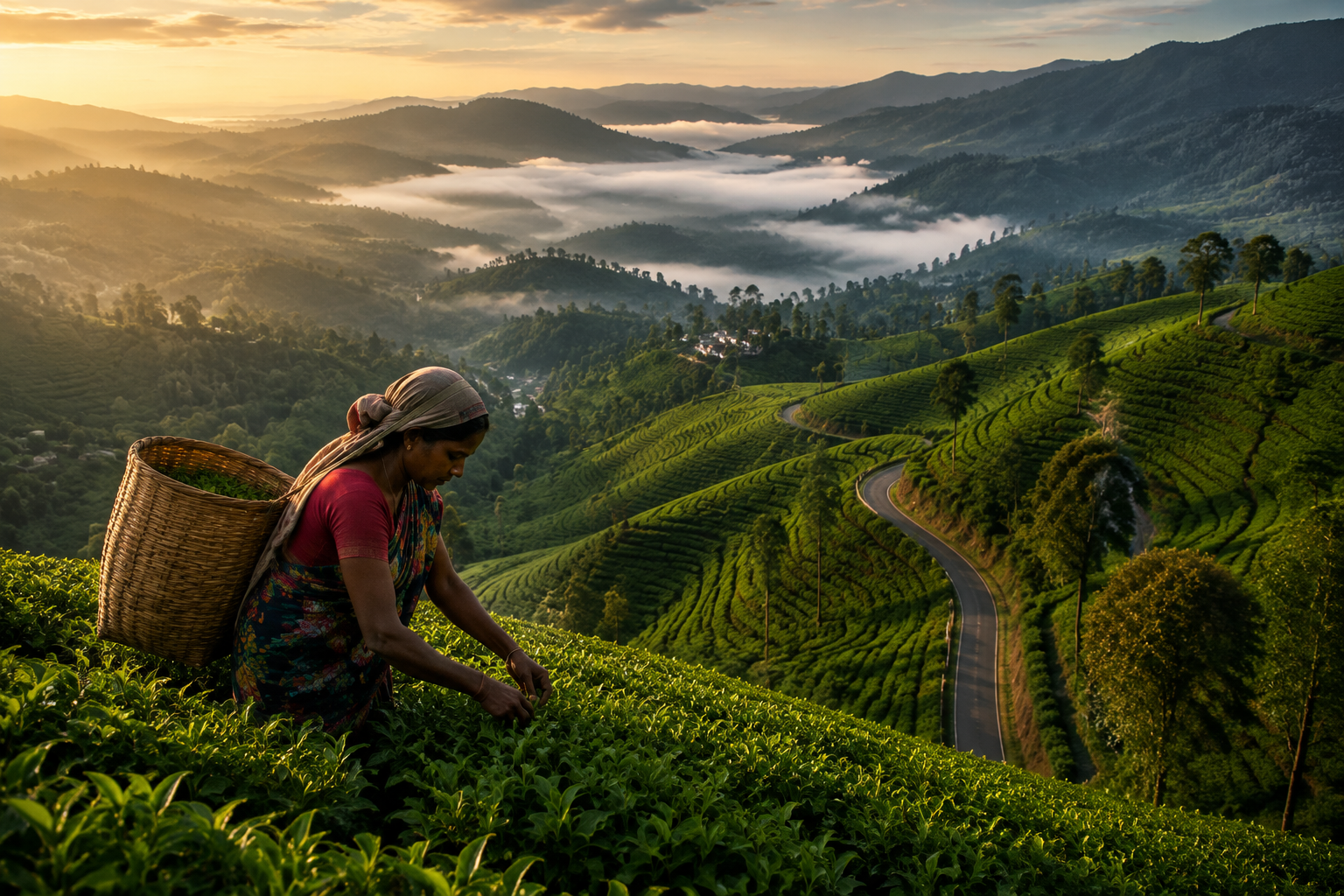
Take the scenic train from Kandy toward Nuwara Eliya (get off at Nanu Oya, then taxi to town). This stretch of track winds through tea estates and misty valleys, it’s genuinely one of the world’s great rail journeys. Visit a working tea factory, walk through the estate, and try fresh-brewed single-origin Ceylon tea.
Book train tickets: Buy observation car or 1st class seats through the Sri Lanka Railways website at least 7-10 days ahead. [4]
Continue by train or tuk-tuk to Ella. The Nine Arches Bridge is the most-photographed spot, arrive at 8am or 4pm to catch a train crossing. Hike Little Adam’s Peak (easy, 1.5 hours return) for panoramic hill country views.
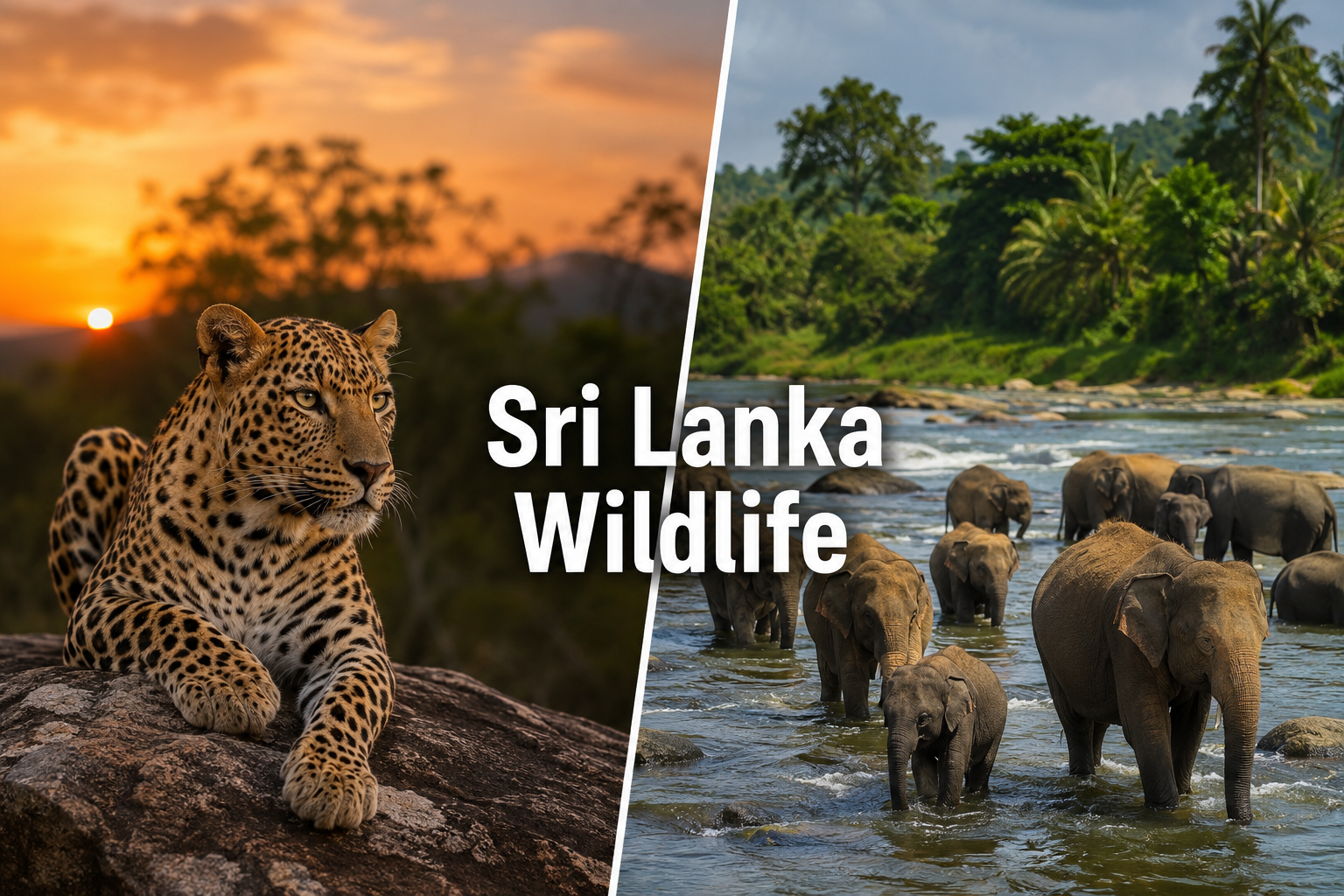
Drive southwest from Ella to Yala (about 2.5 hours). Do a morning and evening safari on Day 12. Yala has the highest density of wild leopards of any park in the world, sightings are common but not guaranteed. You’ll also see elephants, crocodiles, peacocks, and sloth bears.
Book safaris: Go through a licensed operator based in Tissamaharama, the nearest town. Avoid tours sold by guesthouses that use unlicensed jeeps.
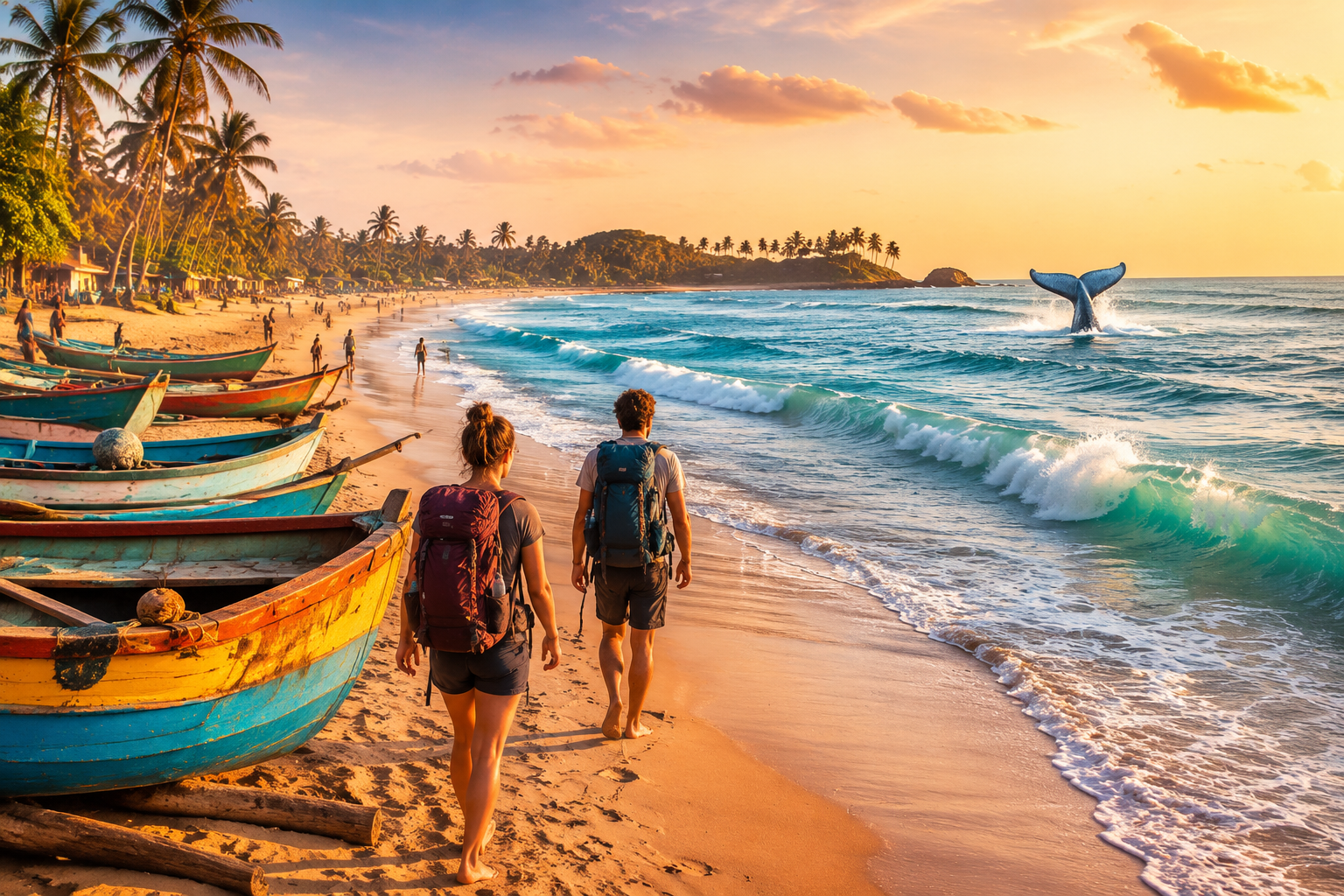
Drive west along the coast to Mirissa (1.5 hours from Yala). Between November and April, blue whale watching boats depart at 6am, book the night before. Weligama, 10 minutes east, is the best beginner surf spot on the island.
Galle Fort is a Dutch colonial walled city with boutique hotels, good restaurants, and a relaxed pace. Walk the ramparts at sunset, explore the lighthouse, and browse the independent shops inside the fort walls.
Drive northeast from Galle to Udawalawe (2.5 hours). This is Sri Lanka’s best park for guaranteed elephant sightings, herds of 50+ animals are common. Less crowded than Yala and more focused on elephants.
If visiting between May and September, the east coast beaches around Trincomalee are stunning and far less crowded than the south. Pigeon Island Marine National Park offers some of Sri Lanka’s best snorkeling. Otherwise, head back to Colombo for a final night before your flight. [5]
November to March is the best window for most first-timers because the south and west coasts are dry, hill country is accessible, and whale watching is at its peak. The east coast (Trincomalee, Arugam Bay) is best from May to September.
Sri Lanka has two monsoon systems, which means different parts of the island are always in season.
| Period | Best For | Avoid |
|---|---|---|
| Nov, Mar | South coast, hill country, Yala, whale watching | East coast (rough seas) |
| Apr, Sep | East coast (Trincomalee, Arugam Bay), Wilpattu | South coast (heavy rain May, Jul) |
| Oct & Apr | Shoulder season, lower prices, fewer crowds | Unpredictable weather island-wide |
Bottom line: If you only have one trip, go November to March. You’ll get the south coast beaches, hill country, and wildlife parks all in good condition.
A 21-day trip costs roughly $1,200,$2,500 per person (excluding international flights) depending on accommodation and transport choices.
| Category | Budget Traveler | Mid-Range | Comfort |
|---|---|---|---|
| Accommodation (per night) | $15-30 | $40-80 | $100-200 |
| Food (per day) | $10-15 | $20-35 | $50-80 |
| Transport (total trip) | $150-250 | $300-500 | $600-1,000 |
| Entry fees & safaris | $200-300 | $300-450 | $450-600 |
| Total (21 days) | ~$1,000-1,300 | ~$1,500-2,500 | $3,000+ |
It’s tight but possible if you stay in guesthouses, eat at local “rice and curry” restaurants (meals cost $2-4), use public buses and trains instead of private taxis, and skip premium safari operators. The biggest fixed costs are national park entry fees (Yala is $25-30 per person per visit) and the Sigiriya entrance fee (~$30). Budget these in advance.
Where budget travelers lose money: Booking safaris through guesthouses (marked up 40-60%), changing money at airport kiosks (poor rates), and buying bottled water constantly (carry a filter bottle).
For a 21-day itinerary, the best approach is a mix: trains for the scenic hill country stretch, private driver or tuk-tuk for national parks and coastal towns.
Fastest way from Colombo to the south coast beaches: Take the Southern Expressway (E01), Colombo to Galle takes about 2 hours, Colombo to Mirissa about 2.5 hours. This is far faster than the old coastal road.
Sri Lanka’s wildlife is genuinely world-class, and most visitors see more than they expect.
All three are worth visiting, but they serve different purposes. Kandy is cultural, Nuwara Eliya is scenic and colonial, and Ella is the best base for hikes and the famous Nine Arches Bridge.
Choose Ella if you only have time for one hill country stop. It combines the best scenery, the easiest hikes, and the most memorable train approach of the three.
For a 21-day trip, a good split is 8-9 days inland (culture + wildlife) and 6-7 days on beaches, with the rest on travel days and Colombo.
Common mistake: Spending too many days in one beach town and rushing the hill country. The tea estates and Ella hikes are highlights that many visitors regret rushing.
Sri Lanka is generally a safe, welcoming destination, but a few specific traps catch first-timers repeatedly.
The most common traps and how to avoid them:
Sri Lanka’s climate ranges from humid coastal heat (30-35°C) to cool mountain mornings in Ella and Nuwara Eliya (12-18°C at night). Pack for both.
Packing essentials:
Q: Do I need a visa for Sri Lanka? Most nationalities can get an Electronic Travel Authorization (ETA) online before arrival. It costs $35-50 USD and is valid for 30 days. Apply at eta.gov.lk.
Q: Is Sri Lanka safe for solo travelers in 2026? Yes. Sri Lanka is considered safe for solo travelers including solo women. Standard precautions apply, be aware of your surroundings at night and use reputable transport.
Q: How far in advance should I book accommodation? Book at least 4-6 weeks ahead for November, March travel, especially in Ella, Mirissa, and Galle. These towns have limited quality rooms that fill quickly. [1]
Q: Can I use a credit card in Sri Lanka? In Colombo, Galle, and tourist hotels, yes. In rural areas, national parks, and local restaurants, cash (Sri Lankan Rupees) is essential. ATMs are available in most towns.
Q: Is the food safe to eat? Street food and local restaurants are generally safe. Stick to freshly cooked food, avoid raw salads at budget spots, and drink bottled or filtered water.
Q: What’s the currency situation in 2026? The Sri Lankan Rupee (LKR) is the local currency. Exchange rates fluctuate, check current rates before travel. Airport exchange desks offer poor rates; use ATMs in Colombo or Negombo for better rates.
Q: Is the Sigiriya climb difficult? It involves steep staircases and a section with a metal spiral staircase on the rock face. Most moderately fit adults can complete it in 45-60 minutes. Not suitable for those with severe vertigo or mobility issues.
Q: How do I get from Yala to Mirissa? It’s about 90 minutes by road along the south coast highway. Private driver or taxi is the easiest option, no direct bus service.
Q: Are whale watching trips guaranteed? No. Operators typically offer a refund or second trip if no whales are spotted, but sightings are very common between December and March. Blue whales are seen on roughly 80-90% of trips during peak season.
Q: What’s the deal with the train from Kandy to Ella? It’s a 7-hour journey through tea estates and mountain scenery. Book observation car seats (limited) or 2nd class reserved seats online. The train runs daily and is one of the most memorable travel experiences in Asia.
Q: How many UNESCO World Heritage Sites does Sri Lanka have? Sri Lanka has eight UNESCO World Heritage Sites, including Sigiriya, Polonnaruwa, Anuradhapura, Kandy’s Temple of the Tooth, and Galle Fort. A 21-day itinerary can realistically cover five of them.
Q: Is it worth hiring a private driver for the full 21 days? For groups of 2-4 people, a private driver for 10-14 days of the trip (particularly for the south coast and wildlife parks) works out cost-effective and far more flexible than public buses.
The 21-Day Complete Sri Lanka Itinerary: Beaches, Hill Country, Wildlife & Culture in One Epic Route works because it follows a logical loop, no backtracking, no wasted travel days, and no major highlights left out.
Your next steps:
Sri Lanka is one of the most rewarding destinations in Asia for first-time visitors, compact enough to cover properly in three weeks, diverse enough that no two days feel the same. With 904,855 tourists already arriving in just the first five months of 2026, the island is busier than ever. [1] Book early, plan the route, and go.
[1] 2026 05 12 Sri Lanka Tops 900000 Tourist Arrivals 2026 – https://www.thesrilankaguides.com/news/2026-05-12-sri-lanka-tops-900000-tourist-arrivals-2026/?utm_source=openai
[2] Tourism Earnings Keep Declines Again Despite Rise In Arrivals – https://hirunews.lk/en/business/471960/tourism-earnings-keep-declines-again-despite-rise-in-arrivals?utm_source=openai
[3] Sri Lanka Targets 5 Billion Tourism Revenue For 2026 – https://english.newsfirst.lk/2026/02/25/sri-lanka-targets-5-billion-tourism-revenue-for-2026?utm_source=openai
[4] How To Plan 21 Day Sri Lanka Itinerary – https://www.ceylonlanka.info/2026/02/how-to-plan-21-day-sri-lanka-itinerary.html?utm_source=openai
[5] Epic Sri Lanka 21 Days – https://www.srilanka-spirit.com/itineraries/epic-sri-lanka-21-days/?utm_source=openai