Physical Address
304 North Cardinal St.
Dorchester Center, MA 02124
Physical Address
304 North Cardinal St.
Dorchester Center, MA 02124
Last updated: July 17, 2026
Quick Answer: A well-structured Ayurveda & Wellness Retreat Itinerary in Sri Lanka covering 7 days of spa, yoga & healing typically combines daily Panchakarma or Abhyanga treatments, morning yoga sessions, Ayurvedic meals, and optional cultural excursions. Sri Lanka is one of the most affordable and authentic destinations for this style of retreat, with residential programs ranging from roughly $700 to $3,500 for the week depending on the property and treatment intensity.
Ayurveda is a traditional Indian medical system that has been practiced for over 3,000 years. It works by identifying a person’s unique mind-body constitution (called a dosha) and then using diet, herbal medicine, massage, and cleansing therapies to restore balance.
The three doshas are Vata (air and space), Pitta (fire and water), and Kapha (earth and water). Most people are a combination of two. An Ayurvedic doctor assesses your dosha through pulse diagnosis, observation, and a health questionnaire, then designs a treatment plan specifically for you.
Core therapies you’ll encounter on a retreat:
Sri Lanka has its own branch of this tradition, called Hela Wedakama, which incorporates local herbs and coastal healing practices alongside classical Ayurvedic methods [6].
The best Ayurveda wellness retreats in Sri Lanka are concentrated along the southern and southwestern coastlines, where calm seas, tropical forests, and established wellness infrastructure come together.
Top retreat locations and properties to consider:
For curated listings and reviews across price points, BookRetreats aggregates verified programs with real guest feedback [1].
Choose a residential program over a day-spa if: you want Panchakarma, you’re dealing with a specific health concern, or you want the full dietary component included.
This sample itinerary blends a residential Ayurveda program with light sightseeing so the healing routine stays intact. It’s based on the structure used by established south-coast retreats [4][10].
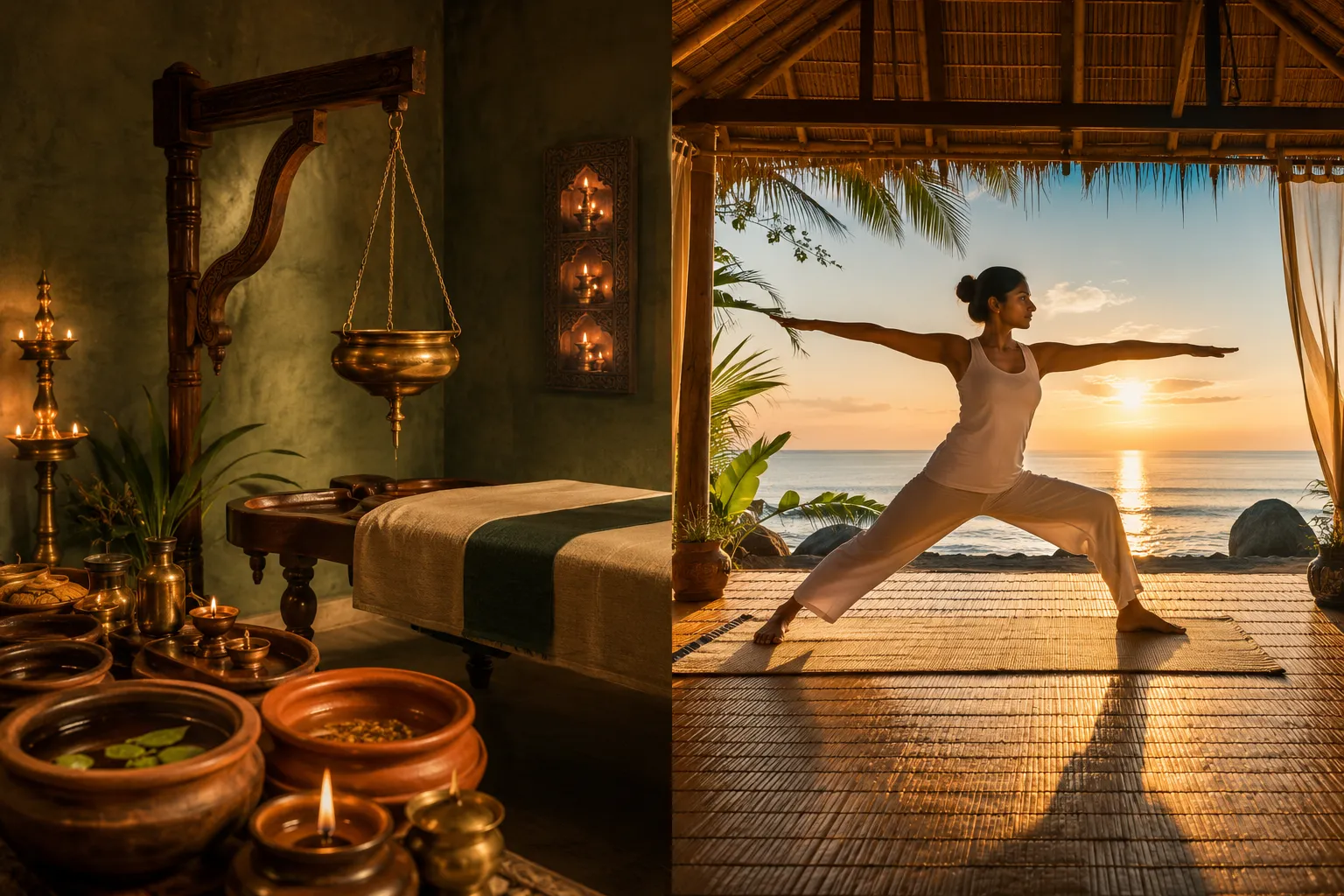
Arrive in Colombo, transfer to your retreat (3-4 hours to the south coast). Evening welcome consultation with the Ayurvedic doctor: pulse diagnosis, dosha assessment, and treatment plan design. Light Ayurvedic dinner. Early bed.
Morning: 60-minute Abhyanga (full-body oil massage) to open the channels. Afternoon: introductory yoga class (all levels). Evening: Ayurvedic cooking demonstration.
Morning: Shirodhara (45 minutes) followed by steam therapy. Afternoon: guided beach walk or garden meditation. Optional: herbology workshop using local Sri Lankan plants [4].
Morning: Panchakarma session (Virechana or Basti depending on your dosha). Rest period mandatory. Afternoon: restorative yoga and pranayama (breathwork). No sightseeing today.
Morning: Nasya treatment and facial Ayurvedic therapy. Afternoon: optional visit to a local spice garden or coastal temple (gentle pace, no rushing). Evening: group meditation.
Morning: 90-minute yoga session with pranayama and yoga nidra. Afternoon: second Shirodhara or Kati Basti (lower back treatment) depending on your plan. Sunset beach walk.
Morning: final Abhyanga and closing consultation. Doctor provides a written post-retreat protocol: diet, herbs, and lifestyle adjustments for the next 4-6 weeks. Afternoon departure or one additional night for rest.
Sri Lanka is significantly more affordable than European Ayurveda destinations and broadly comparable to India, but with better coastal infrastructure.
Estimated price ranges (per person, 7 nights, 2026):
| Program Type | Approx. Cost (USD) |
|---|---|
| Budget guesthouse + basic treatments | $700, $1,200 |
| Mid-range boutique retreat (meals + treatments) | $1,200, $2,000 |
| Premium residential program (full Panchakarma) | $2,000, $3,500 |
| Luxury eco-resort with private doctor | $3,500+ |
Programs at Ayurvie Weligama and similar properties typically include accommodation, three Ayurvedic meals per day, daily treatments, yoga classes, and doctor consultations in one package price [3]. Flights, travel insurance, and optional excursions are always extra.
Budget tip: Booking directly with the retreat property (rather than through a third-party agent) often saves 10-15%.
For authentic Ayurveda specifically, Sri Lanka wins. Thailand’s wellness industry is built around Thai massage and spa culture, not Ayurvedic medicine. Sri Lanka has practicing Ayurvedic doctors, in-house herbal pharmacies, and a centuries-long tradition of the practice.
Choose Sri Lanka if: you want Panchakarma, a doctor-supervised program, or authentic herbal medicine.
Choose Thailand if: you prefer a broader spa menu, more nightlife nearby, or easier international flight connections.
Cost is roughly similar, though Sri Lanka tends to offer better value for dedicated Ayurvedic programs because the infrastructure is purpose-built rather than adapted from a different tradition.
Yes, and this is one of the most common reasons people book a 7-day retreat. Shirodhara (warm oil on the forehead) and Abhyanga massage directly activate the parasympathetic nervous system, which is the body’s rest-and-digest mode. Combined with daily yoga, reduced screen time, and a regulated sleep schedule, most guests report noticeably lower anxiety by day 3 or 4.
Ayurvedic herbs commonly used for stress include Ashwagandha, Brahmi, and Shankhapushpi. Your doctor will prescribe specific formulations based on your dosha.
An Ayurveda retreat is not suitable for everyone. Panchakarma in particular involves active cleansing therapies that place demands on the body.
Avoid or consult your GP first if you have:
Most reputable retreats require a health intake form before booking. Be honest on it. A good Ayurvedic doctor will modify or exclude specific treatments based on your health history [7].
A standard 7-day residential Ayurveda package in Sri Lanka typically includes:
What’s usually NOT included: airport transfers, flights, alcohol, non-Ayurvedic food, personal shopping, and optional excursions [9].
Some programs, like the 7-day herbology retreat at The Young Wings, add specialist workshops on Sri Lankan medicinal plants as part of the package [4].
Preparation matters. Arriving exhausted or jet-lagged on Day 1 and going straight into intense treatments is a common mistake.
Pack:
Prepare before you go:
Knowing what not to do is just as useful as knowing what to do.
The most common mistakes:
For people dealing with chronic stress, burnout, digestive issues, or sleep problems, a well-run 7-day program typically delivers more measurable change than a standard holiday. The combination of daily treatments, regulated diet, and removed distractions creates conditions that are hard to replicate at home.
That said, it’s not worth the money if you’re not willing to follow the program. Guests who skip treatments, eat outside the meal plan, or stay glued to their phones rarely see results.
It’s worth it if: you commit fully, choose a medically supervised program, and follow the post-retreat protocol.
It may not be worth it if: you want a beach holiday with spa add-ons. In that case, a day-spa package at a regular resort is a better fit.
November through April is the best time for the southwest and south coasts, where most retreats are located. The weather is dry, seas are calm, and outdoor yoga and beach walks are comfortable.
May through October brings the southwest monsoon, which can make coastal retreats feel less pleasant. However, the east coast (including Sen Wellness Sanctuary) is actually dry and sunny during these months [6].
Avoid: the weeks around Christmas and New Year if budget is a concern, prices spike significantly.
Absolutely. The yoga taught at most Ayurveda retreats is gentle and therapeutic, not athletic. Classes typically focus on slow Hatha sequences, pranayama (breathing exercises), and yoga nidra (guided relaxation). No prior experience is needed or expected.
If you have injuries or joint issues, tell the yoga teacher before the first class. They’ll offer modifications throughout.
Results can last weeks to months, but only if you follow the post-retreat protocol. Your Ayurvedic doctor will give you a written plan covering diet, daily routine (dinacharya), herbal supplements, and practices to maintain at home.
The most common experience: guests feel significantly better for 4-8 weeks, then gradually drift back toward old habits. The ones who maintain results longest are those who adopt even two or three of the recommended lifestyle changes permanently (earlier bedtimes, reduced sugar, daily oil self-massage).
A follow-up program 6-12 months later is recommended for chronic conditions.
Q: Do I need to speak Sinhala or Tamil to attend a retreat in Sri Lanka? A: No. All major retreat properties operate in English, and staff are accustomed to international guests.
Q: How far in advance should I book? A: Book at least 6-8 weeks ahead for peak season (December, March). Some popular programs fill 3-4 months out.
Q: Can I combine an Ayurveda retreat with a Sri Lanka safari or cultural tour? A: Yes, but schedule the cultural touring before or after the retreat, not during. Active days in the middle of a cleanse program disrupt the treatment process.
Q: Are Ayurvedic treatments safe during menstruation? A: Most oil treatments are fine, but Panchakarma cleansing therapies are typically paused during menstruation. Your doctor will adjust the schedule.
Q: Will I lose weight on a 7-day Ayurveda retreat? A: Possibly, but it’s not the primary goal. The diet is light and the treatments support digestion, so some guests lose 1-3 kg. Sustainable weight management requires longer programs and lifestyle changes.
Q: Is Sri Lankan Ayurveda the same as Indian Ayurveda? A: Very similar, with some local variations in herbs and techniques. Sri Lanka has its own traditional medicine lineage (Hela Wedakama) that runs alongside classical Ayurveda.
Q: Can I get a visa on arrival for Sri Lanka? A: Most nationalities can obtain an Electronic Travel Authorization (ETA) online before arrival. Check the official Sri Lanka immigration portal for your specific country.
Q: What currency should I bring? A: Sri Lankan Rupees (LKR) for small purchases. Most retreat properties accept USD, EUR, and major credit cards.
A 7-day Ayurveda & Wellness Retreat Itinerary in Sri Lanka covering spa, yoga & healing is one of the most practical ways to reset physically and mentally, especially if you choose a medically supervised residential program on the south coast.
Your next steps:
Sri Lanka delivers the real thing at a price that makes the experience accessible. The only question is when you’re going.
[1] Sri Lanka – https://bookretreats.com/s/yoga-retreats/ayurvedic-retreats/sri-lanka [2] Ayurveda Retreat Heilkur Im Paradies Sri Lanka 2026 – https://www.gong-yoga-academy.at/details-registrierung/ayurveda-retreat-heilkur-im-paradies-sri-lanka-2026 [3] Ayurveda Retreat – https://www.wellbeingescapes.com/package/561/ayurvie-weligama/5383/ayurveda-retreat [4] Sri Lanka Serene Ayurveda Beach Bliss 7 Day Herbology Retreat – https://theyoungwings.com/packages/sri-lanka-serene-ayurveda-beach-bliss-7-day-herbology-retreat [6] senwellnesssanctuary – https://www.senwellnesssanctuary.com/ [7] Ayurveda Und Panchakarma Kur Sri Lanka 2026 – https://www.michaela-mayr.de/retreats/fernost/2026/ayurveda-und-panchakarma-kur-sri-lanka-2026 [9] Ayurvedic Wellness Retreat – https://rubyasiatravels.com/tours/ayurvedic-wellness-retreat [10] 7 Day Intensive Cure Panchakarma Ayurveda And Yoga Retreat Ranna Tangalle – https://balanceboat.com/experience/7-day-intensive-cure-panchakarma-ayurveda-and-yoga-retreat-ranna-tangalle