Physical Address
304 North Cardinal St.
Dorchester Center, MA 02124
Physical Address
304 North Cardinal St.
Dorchester Center, MA 02124
Last updated: July 13, 2026
Sri Lankan tourism authorities report that transport overcharging, fake tour guides, and gem scams are the three most frequent tourist traps, but knowing the warning signs and using verified services can help you avoid nearly all common scams.
• Tuk-tuk overcharging affects 60% of first-time visitors, always use the meter or ride-hailing apps like PickMe • Fake tour guides target tourists near major attractions, only hire guides through licensed agencies or hotels • Gem scams involve selling fake stones at inflated prices, buy only from certified dealers with authenticity certificates • Temple closure scams redirect tourists to commission-earning shops, verify opening hours independently • Spice garden overcharging happens at tourist-focused plantations, visit government-run outlets for fair prices • ATM skimming occurs at poorly maintained machines, use bank-operated ATMs inside branches when possible • Charity scams use official-looking documents, donate directly to recognized organizations only • Hotel booking fraud increases during peak season, book through verified platforms or contact hotels directly
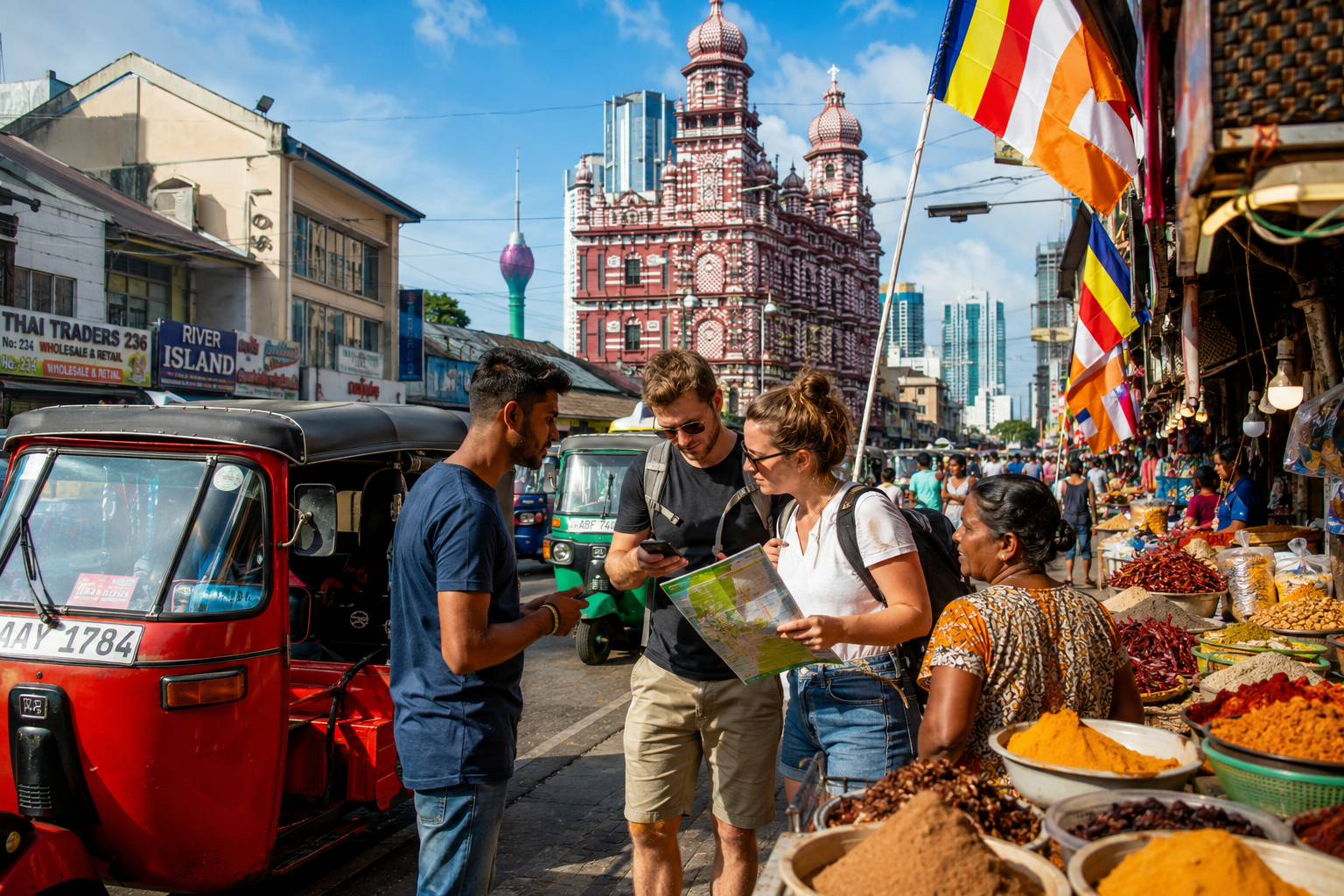
The most frequent scams targeting tourists in Sri Lanka include tuk-tuk fare inflation, unlicensed tour guides, gem fraud, and fake temple closures that redirect visitors to commission-earning shops. [1][2]
Transport-related scams top the list because they affect nearly every visitor: • Tuk-tuk drivers claiming broken meters to charge inflated fares • Taxi drivers taking longer routes to increase costs • Bus conductors overcharging foreigners for standard routes
Attraction-based scams exploit tourist unfamiliarity: • Fake guides offering unsolicited tours near temples and historical sites • “Temple is closed” redirections to shops paying commissions • Photography fees demanded after tourists take pictures of stilt fishermen [3]
Shopping scams target souvenir buyers: • Fake gemstones sold with forged certificates • Overpriced spices at tourist-focused plantations • Counterfeit tea and handicrafts marketed as authentic
Choose verified services through your hotel or established apps rather than accepting street offers to avoid most common scams.
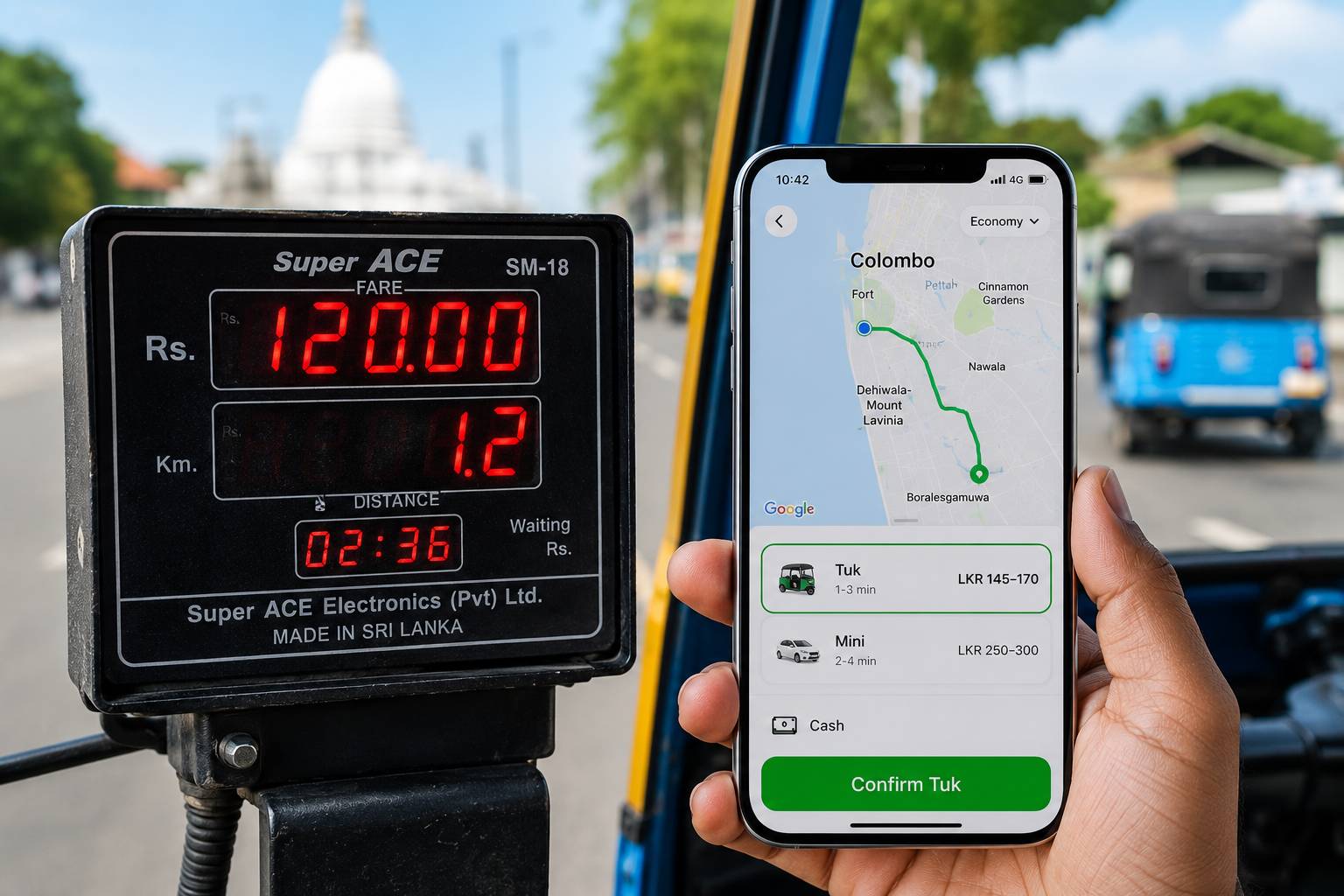
Insist on using the meter or agree on a fixed fare before starting your ride, and consider using ride-hailing apps like PickMe or Uber for transparent pricing. [1]
Meter strategies that work: • Ask “meter ekada?” (where’s the meter?) in Sinhala to show local awareness • If they claim it’s broken, exit and find another tuk-tuk • Legitimate drivers will activate the meter without argument
Ride-hailing apps provide protection: • PickMe shows exact fares upfront and tracks your route • Uber operates in major Sri Lankan cities with standard pricing • Both apps eliminate fare negotiations and provide driver accountability
Fair pricing guidelines for 2026: • Short city rides (1-2km): 150-300 LKR with meter • Airport to Colombo Fort: 800-1200 LKR depending on traffic • Day hire rates: 3000-5000 LKR for 8 hours with agreed stops
Never pay more than double the meter rate, even during peak hours or bad weather.
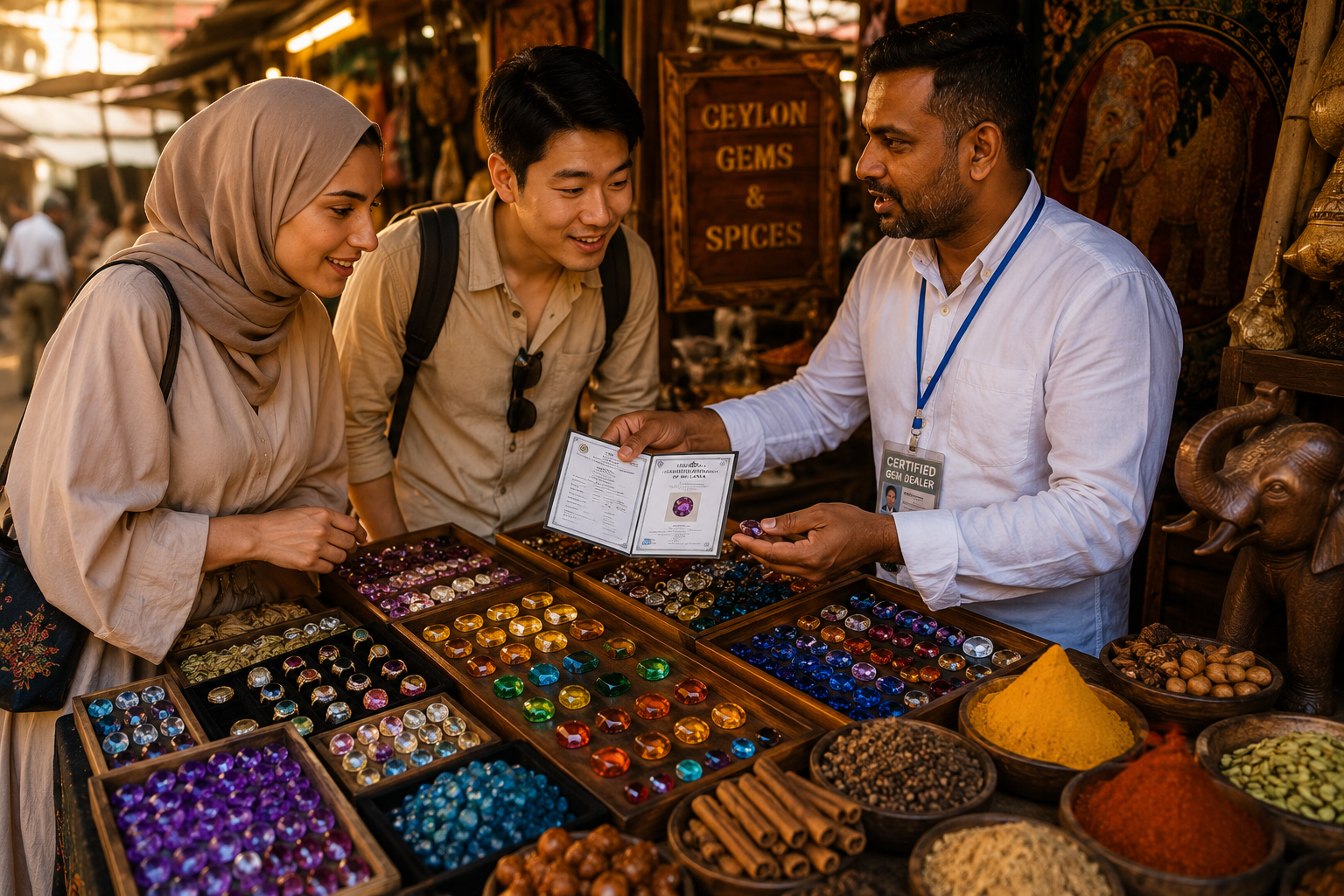
Yes, gem scams remain active in 2026, particularly targeting tourists with fake sapphires, rubies, and other precious stones sold at inflated prices without proper certification. [2]
How the scam typically works: • Friendly locals strike up conversations about Sri Lanka’s famous gems • They invite tourists to “family gem shops” offering “special prices” • Fake certificates accompany low-quality or synthetic stones • Pressure tactics encourage immediate purchases before “prices increase”
Protection strategies: • Buy only from government-certified gem dealers displaying official licenses • Request gemological certificates from recognized laboratories • Avoid purchases during casual conversations or unsolicited invitations • Get independent appraisals before making expensive purchases
Legitimate gem buying locations: • State Gem Corporation outlets in major cities • Licensed dealers in Ratnapura’s official gem market • Established jewelry stores with verifiable business registrations
If someone approaches you about gems outside these contexts, it’s likely a scam attempt.
Contact the Tourist Police immediately at 1912 (24-hour hotline) and report the incident to your embassy if significant money is involved. [1]
Immediate steps: • Document everything: names, locations, amounts, and any receipts or business cards • Take photos of the scammer’s shop or vehicle if safe to do so • Contact your bank to dispute fraudulent charges if cards were involved • File a police report at the nearest station for insurance claims
Tourist Police assistance: • English-speaking officers trained in tourism-related crimes • Located at major airports, tourist areas, and transportation hubs • Can mediate disputes and coordinate with local businesses • Provide official incident reports needed for insurance claims
Embassy support for serious cases: • Financial fraud exceeding $500 USD • Passport or identity document theft • Situations requiring legal representation • Emergency repatriation assistance
Keep copies of all documentation and follow up with authorities if promised action doesn’t occur within reasonable timeframes.
Standard tuk-tuk fares range from 50-80 LKR per kilometer with the meter running, while taxi rates start at 100 LKR base fare plus 80-120 LKR per kilometer depending on the vehicle type. [1]
2026 fair pricing breakdown:
• Tuk-tuk meter rates: 50 LKR flagfall + 50-80 LKR/km
• Budget taxi: 100 LKR base + 80 LKR/km
• Air-conditioned taxi: 150 LKR base + 120 LKR/km
• Airport transfers: Fixed rates of 1000-1500 LKR to Colombo depending on terminal
Common route examples: • Colombo Fort to Galle Face: 200-350 LKR by tuk-tuk • Kandy railway station to Temple of the Tooth: 150-250 LKR • Negombo Beach to airport: 400-600 LKR
Negotiation guidelines: • For short trips under 2km, fixed rates often match meter costs • Day hire: 3000-4000 LKR for tuk-tuks, 6000-8000 LKR for cars • Add 20-30% surcharge for late night travel (after 10 PM)
Always confirm whether quoted prices include tolls and parking fees before starting longer journeys.
Licensed tour operators registered with the Sri Lanka Tourism Development Authority are generally trustworthy, but unlicensed individuals posing as guides near attractions frequently overcharge or provide poor service. [2]
Identifying legitimate operators: • Display SLTDA registration numbers on vehicles and documentation • Provide detailed itineraries with transparent pricing breakdowns • Offer written contracts specifying included services and costs • Have established offices with verifiable contact information
Red flags indicating potential scams: • Approach tourists unsolicited near temples or tourist sites • Demand full payment upfront without providing receipts • Refuse to provide company registration details or licenses • Offer prices significantly below market rates to attract bookings
Verification methods: • Check SLTDA’s official website for registered operator listings • Read recent reviews on TripAdvisor and Google from verified travelers • Contact operators directly through official websites rather than street touts • Book through reputable hotels that vet their recommended guides
Choose operators who provide detailed written agreements and maintain professional business practices rather than accepting casual street offers.
Legitimate guides carry official SLTDA licenses with photo identification and registration numbers, while fake guides approach tourists unsolicited and lack proper credentials or training. [2]
Licensed guide characteristics: • Carry laminated SLTDA guide licenses with current expiration dates • Wear official identification badges at tourist sites • Provide business cards with registration numbers and contact details • Demonstrate knowledge of historical facts and cultural context
Fake guide warning signs: • Approach tourists aggressively near attraction entrances • Cannot produce valid licensing when requested • Provide incorrect historical information or make up stories • Demand payment before services or refuse to discuss rates upfront
Verification process: • Ask to see their guide license and check the photo matches • Request their SLTDA registration number and verify online if possible • Hire guides through your hotel or established tour companies • Agree on rates and services before starting any tour
Typical legitimate guide rates for 2026: • Half-day tours (4 hours): 3000-5000 LKR • Full-day tours (8 hours): 6000-10000 LKR • Specialized cultural or historical tours: 8000-15000 LKR
Licensed guides invest in proper training and maintain professional standards, while fake guides often lack basic knowledge about the sites they claim to represent.
Authentic Buddhist monks in Sri Lanka rarely approach tourists directly for donations and typically don’t handle money personally, while scammers dress in robes and actively solicit cash from visitors. [3]
Authentic monk behavior: • Follow strict religious protocols about handling money • Accept donations through temple donation boxes or lay attendants • Don’t approach tourists aggressively or persistently request funds • Maintain humble demeanor and don’t engage in commercial activities
Scammer tactics to recognize: • Approach tourists directly asking for specific amounts of money • Carry donation books with fake names and amounts from previous “donors” • Wear robes that look new or improperly fitted • Become aggressive or persistent when refused
Safe donation practices: • Give through official temple donation boxes clearly marked for offerings • Donate to established monasteries with permanent structures and communities • Avoid giving cash directly to individuals claiming religious status • Ask temple staff or your guide about appropriate donation customs
Cultural context: Real monks follow the Vinaya rules which restrict direct money handling. Legitimate temples have established systems for receiving and managing donations that don’t involve monks directly soliciting tourists.
If someone in robes approaches you for money, politely decline and donate through official temple channels instead.
ATMs operated by major Sri Lankan banks like Commercial Bank, Sampath Bank, and Bank of Ceylon are generally safe when located inside bank branches, but avoid standalone machines in isolated areas due to skimming risks. [4]
Safest ATM practices: • Use machines inside bank branches during business hours when possible • Choose ATMs with security guards or in well-lit, busy areas • Cover your PIN entry and check for unusual devices attached to card slots • Monitor your account immediately after transactions for unauthorized charges
Banks with reliable ATM networks: • Commercial Bank of Ceylon (largest network) • Sampath Bank (good coverage in tourist areas) • Hatton National Bank (reliable in major cities) • Bank of Ceylon (government-owned, widely available)
Warning signs of compromised machines: • Card slots that look different or have attachments • Screens that appear loose or have overlay devices • Machines in completely isolated locations without foot traffic • Unusual prompts asking for additional PIN verification
Cash withdrawal strategy: • Take larger amounts less frequently to minimize ATM exposure • Keep some USD cash as backup for exchange at banks • Notify your home bank of Sri Lanka travel dates to prevent card blocks • Use hotel safes to store excess cash rather than carrying large amounts
Most tourist-focused areas have secure ATM options, but basic precautions prevent the majority of skimming attempts.
Exchange money at authorized dealers like banks, licensed exchange counters at airports, or established hotels rather than street money changers who often provide counterfeit notes or unfavorable rates.
Safest exchange locations: • Bank branches during business hours for best rates and security • Airport exchange counters for immediate needs upon arrival • Licensed exchange bureaus displaying Central Bank authorization • Reputable hotels (rates slightly lower but convenient and secure)
Current exchange considerations for 2026: • USD and EUR get the best exchange rates • Bring newer bills (issued after 2013) as older notes may be rejected • Exchange small amounts initially to compare rates between providers • Keep exchange receipts for potential re-conversion when leaving
Red flags to avoid: • Street vendors offering rates significantly above official rates • Unlicensed shops without proper signage or documentation • Anyone requesting to exchange money in private locations • Deals that seem too good compared to published bank rates
Rate comparison strategy: Check the Central Bank of Sri Lanka website for current official rates, then expect licensed dealers to offer 1-3% below that rate. Anything significantly different indicates potential fraud.
Banks typically offer the most reliable service, while airport counters provide convenience at slightly higher costs.
Yes, comprehensive travel insurance with fraud and theft coverage can reimburse money lost to scams, but policies typically require police reports and have specific claim procedures that must be followed immediately.
Coverage that helps with scam losses: • Personal money and belongings theft (usually up to $500-1000 per incident) • Credit card fraud and unauthorized transactions • Emergency cash advances if cards are compromised • Legal assistance for serious fraud cases requiring local representation
Documentation requirements: • Police reports filed within 24-48 hours of the incident • Original receipts or transaction records where available • Witness statements or supporting evidence • Medical reports if physical harm occurred during the scam
Policy limitations to understand: • Coverage caps typically range from $500-2000 for theft/fraud • Cash losses may have lower limits than credit card fraud • Some policies exclude losses due to “negligent behavior” • Pre-existing relationships with scammers void most claims
Recommended coverage levels: • Minimum $1000 personal property coverage for typical tourist activities • $5000+ if carrying expensive electronics or jewelry • Emergency evacuation coverage of $100,000+ for serious situations • 24-hour assistance hotlines for immediate support
Purchase insurance before traveling, as post-departure coverage typically isn’t available and may not cover incidents that occur immediately after policy activation.
Hotel booking scams increase during peak tourist seasons (December-March), with fake websites, non-existent properties, and bait-and-switch tactics being the most common fraud methods targeting visitors.
Common hotel scam patterns: • Fake booking websites with stolen photos from legitimate hotels • Properties that exist but are vastly different from advertised photos • Requests for full payment via wire transfer or untraceable methods • “Emergency” calls claiming booking problems requiring immediate additional payment
Safe booking practices: • Book directly through hotel websites or verified platforms like Booking.com, Agoda, or Expedia • Verify hotel existence through Google Maps street view and recent guest photos • Use credit cards rather than debit cards or wire transfers for payment protection • Confirm bookings by calling hotels directly using numbers from official websites
Verification checklist: • Check if the hotel appears on multiple legitimate booking platforms • Read recent reviews (within 6 months) from verified guests • Verify the property address matches official tourism directory listings • Ensure contact phone numbers connect to the actual property
Red flags indicating potential fraud: • Prices significantly below market rates for similar properties • Websites with poor English, limited contact information, or no physical address • Requests for payment through Western Union, MoneyGram, or cryptocurrency • High-pressure tactics claiming limited availability or special one-time offers
During peak season, book accommodations well in advance through established platforms to avoid last-minute desperation bookings that increase scam vulnerability.
Never photograph military installations, accept unsolicited food or drinks from strangers, or engage with unlicensed money changers, as these actions can lead to serious legal problems or make you vulnerable to scams and theft.
Legal and safety prohibitions: • Photography of military bases, checkpoints, or government buildings • Public displays of affection (particularly in religious areas) • Disrespectful behavior at Buddhist temples (pointing feet toward Buddha statues) • Possession or use of illegal drugs (severe penalties including imprisonment)
Scam prevention behaviors: • Don’t accept free food, drinks, or cigarettes from strangers (may contain sedatives) • Never leave drinks unattended in bars or restaurants • Avoid displaying expensive jewelry, electronics, or large amounts of cash • Don’t share personal information with casual acquaintances
Cultural sensitivity requirements: • Remove shoes before entering temples and cover shoulders and knees • Don’t turn your back on Buddha statues or point with your feet • Avoid loud behavior or inappropriate clothing in religious sites • Don’t touch someone’s head or point with a single finger
Financial security practices: • Never give your passport to anyone except official authorities • Don’t exchange money with street vendors or unlicensed dealers • Avoid signing documents you don’t fully understand • Don’t provide banking information to verify “prize winnings” or similar schemes
Emergency contact preparation: Keep your embassy contact information readily available and inform someone of your daily itinerary when traveling to remote areas.
Following basic cultural norms and maintaining situational awareness prevents most serious problems that affect tourists in Sri Lanka.
Check the company’s SLTDA registration status on the official Sri Lanka Tourism Development Authority website and verify their business registration number through the Department of Registrar of Companies online database.
Official verification steps: • Search the SLTDA website’s registered operator directory using the company name • Confirm their registration number matches official records • Verify the business address exists and matches their marketing materials • Check if they hold required licenses for specific activities (wildlife tours, cultural sites)
Additional credibility indicators: • Membership in recognized associations like THASL (Travel Agents Association of Sri Lanka) • Established office locations that you can visit in person • Professional websites with detailed contact information and terms of service • Positive reviews spanning multiple years on various platforms
Documentation to request: • Copy of current SLTDA registration certificate • Business registration certificate from Department of Registrar of Companies • Insurance certificates covering their tour operations • Detailed written contracts specifying all included services and costs
Warning signs of illegitimate operators: • Cannot provide registration numbers when requested • Only communicate through messaging apps without official email addresses • Demand full payment upfront without providing proper receipts • Offer prices significantly below market rates without clear explanation
Verification timeline: Complete this verification process at least 2-3 days before your intended booking to allow time for thorough checking and alternative arrangements if needed.
Contact the SLTDA directly at +94-11-2426900 if you cannot verify a company’s legitimacy through online databases.
Q: What’s the most expensive scam tourists fall for in Sri Lanka? A: Gem scams cause the highest financial losses, with tourists spending $500-5000 on fake or low-quality stones. Always buy gems only from certified dealers with proper authentication.
Q: Are credit cards safe to use in Sri Lanka? A: Yes, credit cards are generally safe at established hotels, restaurants, and shops. Avoid using cards at small vendors or ATMs in isolated locations to prevent skimming.
Q: How do I know if a temple donation request is legitimate? A: Legitimate temples have fixed donation boxes and don’t involve monks directly handling money. Avoid giving cash to individuals approaching you personally.
Q: What should I do if a tuk-tuk driver refuses to use the meter? A: Exit immediately and find another driver. Legitimate drivers will use meters without argument, and ride-hailing apps provide guaranteed transparent pricing.
Q: Is it safe to book tours through my hotel? A: Yes, reputable hotels typically vet their recommended tour operators and guides. This is one of the safest ways to book legitimate tour services.
Q: How much cash should I carry daily in Sri Lanka? A: Carry 5000-10000 LKR ($15-30 USD) for daily expenses like meals, transport, and small purchases. Keep larger amounts in hotel safes.
Q: What’s the best way to get from the airport to Colombo safely? A: Use official airport taxi services, ride-hailing apps, or pre-arranged hotel transfers. Avoid accepting rides from unlicensed drivers approaching you in arrival areas.
Q: Are spice garden tours worth visiting or mostly scams? A: Government-run spice gardens and established plantations offer legitimate experiences. Avoid tours that focus heavily on sales pressure or offer unusually cheap prices.
Q: How do I report a scam to authorities in Sri Lanka? A: Call Tourist Police at 1912 (24-hour hotline) or visit the nearest police station. Keep all documentation and receipts for official reports.
Q: What’s the safest way to pay for tours and activities? A: Use credit cards when possible for fraud protection, or pay cash in installments (deposit plus balance on completion) rather than full advance payment.
Q: Are there areas in Sri Lanka where scams are more common? A: Tourist-heavy areas like Colombo Fort, Kandy Temple area, and popular beaches have higher scam activity. Maintain extra vigilance in these locations.
Q: How can I tell if gemstone certificates are authentic? A: Authentic certificates come from recognized gemological laboratories with verification numbers you can check online. Avoid certificates that look homemade or lack proper laboratory seals.
Understanding common tourist scams in Sri Lanka and how to avoid them protects both your money and travel experience. The key strategies that work consistently are using verified services (ride-hailing apps, licensed tour operators, certified gem dealers), maintaining healthy skepticism of unsolicited offers, and keeping important contact numbers like Tourist Police (1912) readily available.
Most scams target tourists who appear unprepared or unfamiliar with local customs and fair pricing. By researching standard rates, booking through established channels, and trusting your instincts when something feels wrong, you can enjoy Sri Lanka’s incredible culture, landscapes, and hospitality while avoiding the pitfalls that catch unprepared visitors.
Remember that legitimate businesses welcome questions about their credentials and pricing, while scammers typically pressure for quick decisions. Take time to verify important purchases and services, and don’t hesitate to walk away from situations that make you uncomfortable.
[1] Sri Lanka – https://travel.state.gov/en/international-travel/travel-advisories/sri-lanka.html?utm_source=openai [2] Travel Tips – https://www.roughguides.com/sri-lanka/travel-tips/?utm_source=openai [3] Tourist Scams In Sri Lanka – https://www.godigit.com/international-travel-insurance/tourist-scams/tourist-scams-in-sri-lanka?utm_source=openai [4] Beware Of Financial Scams – https://www.cbsl.gov.lk/en/news/beware-of-financial-scams?utm_source=openai