Physical Address
304 North Cardinal St.
Dorchester Center, MA 02124
Physical Address
304 North Cardinal St.
Dorchester Center, MA 02124
Last updated: July 12, 2026
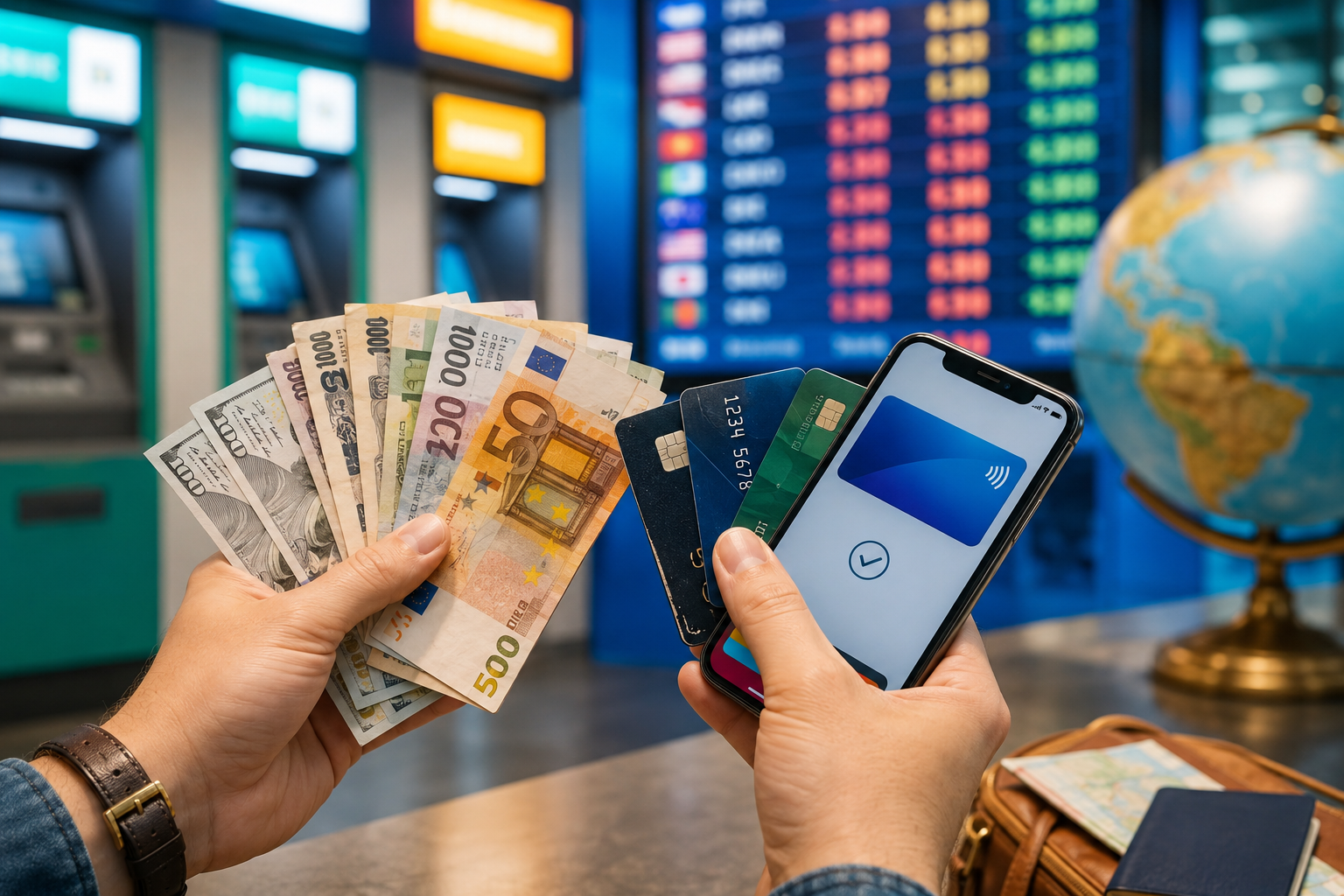
Cash still matters when traveling, even in our digital world. While cards work almost everywhere, you’ll need cash for tips, local markets, and emergencies. ATM fees can eat into your budget, but choosing the right withdrawal strategy saves money. Tipping customs vary dramatically by country, what’s generous in one place might be offensive in another.
• Use bank ATMs instead of standalone machines to avoid excessive fees and scams • Carry 20-30% of your daily budget in local cash as backup for card failures • Credit cards offer better fraud protection than debit cards for international travel • Tipping ranges from 0% (Japan) to 20% (United States) depending on the country • Notify your bank before traveling to prevent card blocks • Contactless payments are safer than cash but aren’t accepted everywhere • Exchange money at banks or official bureaus, never with street vendors • Keep emergency cash hidden separately from your main wallet • Research local tipping customs before you arrive to avoid cultural mistakes • ATM withdrawal fees vary from $0-15 per transaction depending on your bank
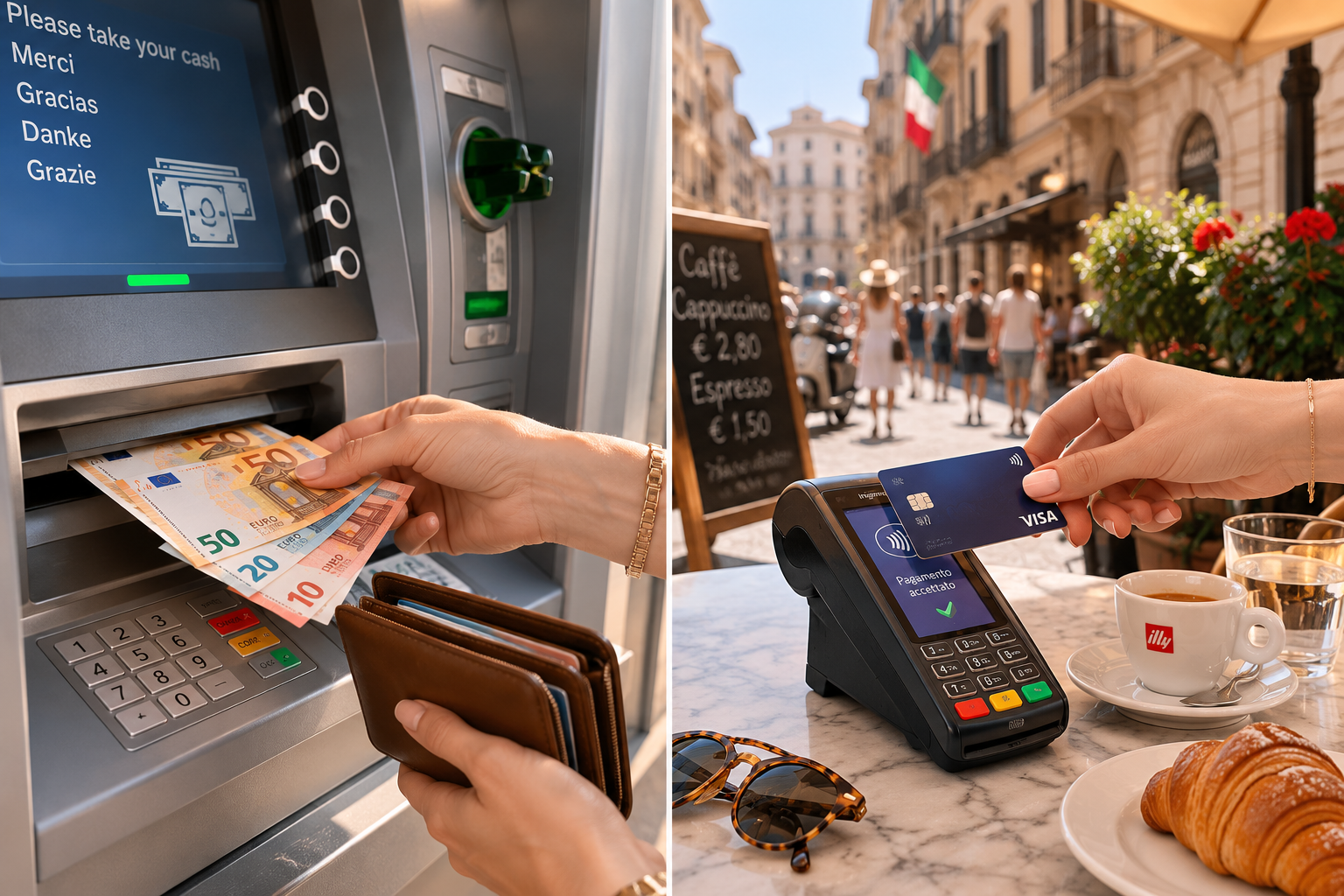
Use your bank’s partner ATMs or reimburse-fee accounts to minimize costs. Many banks waive ATM fees if you maintain minimum balances or use premium accounts.
Fee-Free ATM Strategies: • Choose banks with global ATM partnerships (Bank of America partners with Deutsche Bank, Barclays, and others) • Use credit union accounts, many reimburse all ATM fees worldwide • Look for accounts like Charles Schwab Checking that refund all ATM fees monthly • Withdraw larger amounts less frequently to minimize per-transaction fees
Common ATM Fee Structure: • Your bank’s fee: $0-15 per withdrawal • Foreign ATM operator fee: $2-8 per transaction • Currency conversion fee: 1-3% of withdrawal amount
The cheapest option is often withdrawing $200-300 at once from a major bank’s ATM rather than making multiple small withdrawals from convenience store machines.
Cards work for most purchases, but cash remains essential for tips, street food, local transport, and emergencies. The ideal approach combines both payment methods.
When You Need Cash: • Tipping hotel staff, taxi drivers, and restaurant servers • Local markets, street vendors, and small family businesses • Public transportation in developing countries • Emergency situations when card systems fail • Cultural sites that don’t accept cards
When Cards Work Best: • Hotels, restaurants, and major retailers • Online bookings and reservations • Large purchases where you want fraud protection • Countries with advanced payment infrastructure
Aim to carry 20-30% of your daily budget in cash. In cash-heavy countries like Germany or Japan, increase this to 40-50%. In Nordic countries, you might need only 10-15% cash.
Tipping customs vary dramatically worldwide, from expected 20% in the US to potentially offensive in Japan. Research local customs to avoid cultural missteps.
No Tipping Expected: • Japan: Tipping can be considered rude • South Korea: Service charges included • Australia: Wages are higher, tipping optional
Moderate Tipping (5-10%): • United Kingdom: Round up or add 10% for good service • Germany: Round to nearest euro or add 5-10% • France: Service charge included, but small tips appreciated
Higher Tipping (15-20%): • United States: 18-20% at restaurants, $1-2 per drink at bars • Canada: Similar to US standards • Mexico: 10-15% at restaurants, more in tourist areas
Service-Specific Guidelines: • Hotel housekeeping: $2-5 per night in tip-friendly countries • Taxi drivers: Round up fare or add 10% • Tour guides: $5-20 per day depending on group size and country
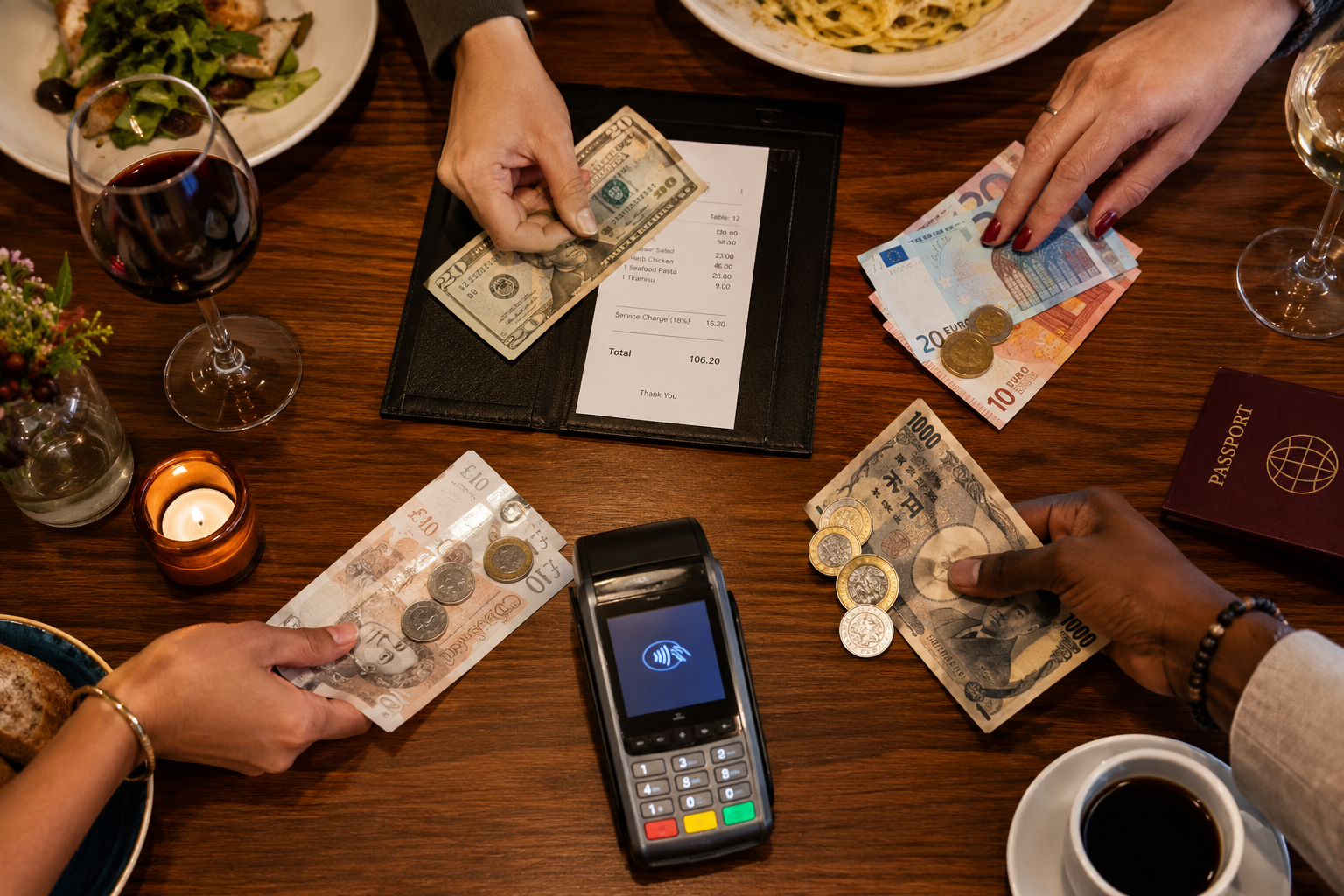
ATM fees are fixed charges per transaction, while exchange rates determine how much foreign currency you receive. Both impact your total cost.
ATM Withdrawal Fees: • Flat fee charged by your bank ($0-15) • Foreign ATM operator fee ($2-8) • These don’t change based on withdrawal amount
Exchange Rate Costs: • Currency conversion fee (1-3% of transaction) • Markup on the exchange rate itself • Can vary throughout the day
Example Cost Breakdown for $200 Withdrawal: • Your bank fee: $5 • Foreign ATM fee: $3 • 2% conversion fee: $4 • Total cost: $12 (6% of withdrawal)
To minimize costs, withdraw larger amounts less frequently and use banks with favorable exchange rate policies.
Credit cards work at most established businesses, but cash backup prevents problems when cards fail or aren’t accepted. Always carry both.
Credit Card Acceptance by Region: • Nordic countries: 95%+ acceptance, even for small purchases • Western Europe/North America: 80-90% for businesses over $10 • Eastern Europe/Latin America: 60-80%, cash needed for small vendors • Asia/Africa: 40-70%, highly variable by country and business size
Card Failure Scenarios: • Internet outages affecting payment systems • Magnetic stripe damage or chip malfunction • Bank fraud alerts blocking legitimate transactions • Businesses with broken card readers
Keep enough cash for 1-2 days of basic expenses as emergency backup. This typically means $100-200 in developed countries, more in cash-dependent regions.
Germany, Japan, and many developing nations remain cash-centric despite growing card acceptance. Cultural preferences and infrastructure limitations drive these patterns.
Heavily Cash-Dependent Countries: • Germany: 58% of transactions still cash-based [1] • Japan: Cash preferred for daily purchases under $50 • India: Rural areas and small vendors cash-only • Many African and Latin American countries
Reasons for Cash Preference: • Cultural tradition and trust in physical money • High card processing fees for small businesses • Limited banking infrastructure in rural areas • Privacy concerns about digital transaction tracking
Moderately Cash-Dependent: • Italy: Restaurants and small shops often prefer cash • Austria: Similar to Germany in cash usage • Greece: Many tavernas and local businesses cash-only
Even in cash-heavy countries, major hotels, restaurants, and tourist attractions usually accept cards.
Use bank-operated ATMs inside branches or secure locations, cover your PIN, and inspect machines for suspicious devices before inserting your card.
ATM Security Checklist: • Choose ATMs inside banks rather than standalone machines • Inspect card slot for loose or unusual attachments (skimmers) • Cover PIN pad completely when entering your number • Check for hidden cameras pointed at the keypad • Use ATMs in well-lit, busy areas with security cameras
Red Flags to Avoid: • ATMs in isolated locations or tourist trap areas • Machines with handwritten signs or unusual instructions • Anyone offering to “help” you use the ATM • Machines that retain your card longer than normal
If Something Goes Wrong: • Report card retention immediately to your bank • Take photos of the ATM and location • File a police report if you suspect fraud • Monitor your accounts closely for unauthorized charges
Banks and credit unions typically offer better exchange rates than airport kiosks or hotel currency exchanges. Online currency services can be even cheaper for large amounts.
Exchange Options Ranked by Cost:
Money-Saving Tips: • Exchange larger amounts to reduce per-transaction fees • Avoid exchanging at airports unless absolutely necessary • Compare rates online before choosing an exchange service • Consider getting a small amount ($50-100) before travel, then using ATMs abroad
When to Exchange in Advance: • Traveling to countries with limited ATM access • Arriving outside banking hours • Need cash immediately for transportation from airport
Credit cards offer superior fraud protection and don’t drain your checking account if compromised, making them safer for international travel than debit cards.
Credit Card Advantages: • Fraud protection limits liability to $50 maximum • Disputed charges don’t affect your cash flow • Often include travel insurance and purchase protection • Better exchange rates than debit cards at many banks
Debit Card Advantages: • Access to cash at ATMs worldwide • No risk of overspending or debt accumulation • Lower fees at some banks
Best Practice Strategy: • Use credit cards for purchases and hotel/restaurant bills • Use debit cards only for ATM cash withdrawals • Notify both card companies of travel dates and destinations • Carry cards from different networks (Visa and Mastercard)
International Network Acceptance: • Visa: Accepted at 70+ million locations worldwide • Mastercard: Similar global acceptance to Visa • American Express: Limited acceptance outside major cities • Discover: Very limited international acceptance
Carry enough for 1-2 days of expenses plus emergency funds, typically $100-300 depending on your destination and spending habits.
Daily Cash Calculation: • Meals at local restaurants: $30-80 • Local transportation: $10-30 • Tips and small purchases: $20-50 • Emergency buffer: $50-100
Split Your Cash Strategy: • Keep daily spending money in your main wallet • Hide emergency cash in different locations (hotel safe, hidden pocket, separate bag) • Carry small bills for tips and street vendors • Keep some larger denominations for substantial purchases
Country-Specific Recommendations: • Cash-heavy countries (Germany, Japan): $200-400 • Card-friendly countries (Sweden, UK): $100-200 • Developing countries: $150-300 (more for rural areas)
Never carry all your cash in one location. Distribute it across multiple hiding spots to minimize loss if pickpocketed or robbed.
Contact your bank immediately and visit the ATM’s operating bank during business hours to retrieve your card. Most cards can be recovered within 24-48 hours.
Immediate Steps: • Note the ATM location, bank name, and exact time • Call your bank’s international emergency number • Take photos of the ATM and any error messages • Don’t leave the area immediately, sometimes cards are returned after a few minutes
Recovery Process: • Visit the ATM’s bank branch with ID and account information • Banks typically hold retained cards for 3-7 days • Some ATMs automatically destroy cards after 24-48 hours • Request a police report if you suspect the machine malfunctioned
Prevention and Backup: • Carry backup cards from different banks • Use ATMs inside bank branches when possible • Avoid using damaged or suspicious-looking machines • Keep emergency contact numbers for all your banks
If card recovery isn’t possible, your bank can expedite a replacement card to your hotel, usually within 1-3 business days for a fee.
Contactless payments offer better security than cash through encryption and fraud monitoring, but aren’t universally accepted. Use both methods strategically.
Contactless Security Advantages: • Encrypted transactions prevent card skimming • No physical card handling reduces theft risk • Bank fraud monitoring detects suspicious activity • Easy to disable if phone/card is stolen
Contactless Limitations: • Requires compatible payment terminals • Transaction limits ($50-200 depending on country) • Battery-dependent for mobile payments • Not accepted at small vendors or rural locations
Safety Comparison: • Cash: Can be stolen but transactions are anonymous • Contactless: Encrypted and monitored but creates digital trail • Chip cards: Secure but require physical handling • Magnetic stripe: Least secure, easily skimmed
Best Security Practice: Use contactless for transactions under $100 at established businesses, cash for tips and small vendors, and chip cards for larger purchases requiring additional verification.
Tipping practices range from mandatory 20% in the US to potentially offensive in Japan, reflecting cultural attitudes toward service, wages, and social hierarchy.
Cultural Context Behind Tipping: • US/Canada: Low service wages expect tip supplementation • Europe: Service charges often included, tips show appreciation • Asia: High-context cultures may view tipping as insulting • Australia: High minimum wages make tipping truly optional
Regional Tipping Guidelines:
Americas: • United States: 18-20% restaurants, 15-20% bars, $2-5 hotel housekeeping • Canada: Similar to US, slightly lower percentages acceptable • Mexico: 10-15% restaurants, more in tourist zones • Brazil: 10% service charge common, additional tips optional
Europe: • UK: 10-15% if service charge not included • France: Service compris (included), round up for good service • Germany: 5-10% or round to nearest euro • Italy: Round up small amounts, 10% for exceptional service
Asia-Pacific: • Japan: No tipping expected, can cause confusion or offense • South Korea: Tipping not customary, service charges included • Australia: Optional, round up or 10% for excellent service • Thailand: Small tips appreciated but not required
Plan ahead by researching ATM locations, carry extra cash for remote areas, and know alternative money access methods like bank branches or money transfer services.
Preparation Strategies: • Download offline ATM locator apps before traveling • Research banking infrastructure in your destination • Carry 3-5 days of cash when heading to remote areas • Identify the nearest major town with banking services
Alternative Money Access: • Bank branches: Can provide cash advances on credit cards • Post offices: Some countries offer banking services • Money transfer services: Western Union, MoneyGram locations • Hotels: May exchange money (poor rates but emergency option)
Emergency Cash Sources: • Credit card cash advances (high fees but available globally) • Traveler’s checks (still accepted at some banks) • Emergency money transfers from family/friends • Embassy assistance for citizens in crisis situations
Prevention Tips: • Check ATM availability when booking remote accommodations • Withdraw extra cash before leaving urban areas • Inform your bank of travel to very remote locations • Consider satellite communication devices for true wilderness travel
How much cash should I exchange before traveling? Exchange $50-100 for immediate needs like airport transportation and tips. Use ATMs abroad for better exchange rates on larger amounts.
Can I use my US debit card in any country? Most US debit cards work internationally on Visa/Mastercard networks, but notify your bank of travel plans to prevent blocks. Some countries have limited ATM networks.
What’s the safest way to carry money while traveling? Split money across multiple locations: daily cash in wallet, emergency funds in hotel safe, backup cards in separate bags. Never carry everything together.
Do I need to tip in countries where it’s not customary? No, follow local customs. Tipping where it’s not expected can create awkward situations or be seen as culturally insensitive.
How do I know if an ATM is safe to use? Use ATMs inside banks or secure locations, inspect for unusual attachments, cover your PIN, and avoid machines in isolated areas or with handwritten signs.
What happens if my card doesn’t work abroad? Contact your bank immediately, cards are often blocked for suspected fraud. Having backup cards from different banks prevents being stranded without money access.
Should I accept dynamic currency conversion at ATMs? Usually no. Dynamic currency conversion typically offers worse exchange rates than letting your bank handle the conversion in your home currency.
How much do international ATM fees typically cost? Expect $5-15 in combined fees per withdrawal: your bank’s fee ($0-15) plus the foreign ATM operator fee ($2-8), plus 1-3% currency conversion charges.
Is it better to use cash or card for small purchases abroad? Depends on the country. Nordic countries prefer cards even for small amounts, while Germany and Japan favor cash for purchases under $20-50.
What should I do if I run out of money in a foreign country? Contact your bank for emergency cash advances, use money transfer services like Western Union, or contact your embassy for assistance in extreme situations.
How do I avoid foreign transaction fees? Use credit cards with no foreign transaction fees, bank accounts that reimburse ATM fees, or travel-specific banking products designed for international use.
Can I rely solely on mobile payments when traveling? No. While Apple Pay and Google Pay work in many countries, acceptance varies widely and you’ll need backup payment methods for areas with limited technology infrastructure.
Smart money management abroad combines strategic planning with flexible execution. Use credit cards for major purchases and fraud protection, withdraw cash from bank ATMs in larger amounts to minimize fees, and research local tipping customs before you travel.
The key is diversification, never rely on just one payment method. Carry cash for tips and small vendors, use contactless payments for convenience and security, and keep backup cards from different banks. Notify your financial institutions of travel plans and know their international policies.
Most importantly, adapt your approach to each destination. What works in Stockholm won’t work in rural Thailand. Research your specific destination’s payment culture, infrastructure, and customs to avoid both financial losses and cultural missteps.
[1] wallethub – https://wallethub.com/edu/cc/cash-vs-credit-card-spending-statistics/133985 [2] How Americans Are Rethinking How They Pay – https://rfi.global/how-americans-are-rethinking-how-they-pay/ [3] Credit Cards Vs Cash Analysis Finds Merchants Benefit From Electronic Payments – https://chamberbusinessnews.com/2026/04/27/credit-cards-vs-cash-analysis-finds-merchants-benefit-from-electronic-payments/ [4] Future Of Payments – https://www.pwc.com/us/en/industries/consumer-markets/library/future-of-payments.html [5] 2026 Findings Diary Consumer Payment Choice – https://www.frbservices.org/news/research/2026-findings-diary-consumer-payment-choice [6] Atm Statistics – https://coinlaw.io/atm-statistics/ [7] Restaurant Tipping Trends How Tipping Culture Is Evolving In 2025 – https://www.zbspos.com/restaurant-tipping-trends-how-tipping-culture-is-evolving-in-2025