Physical Address
304 North Cardinal St.
Dorchester Center, MA 02124
Physical Address
304 North Cardinal St.
Dorchester Center, MA 02124
Last updated: July 10, 2026
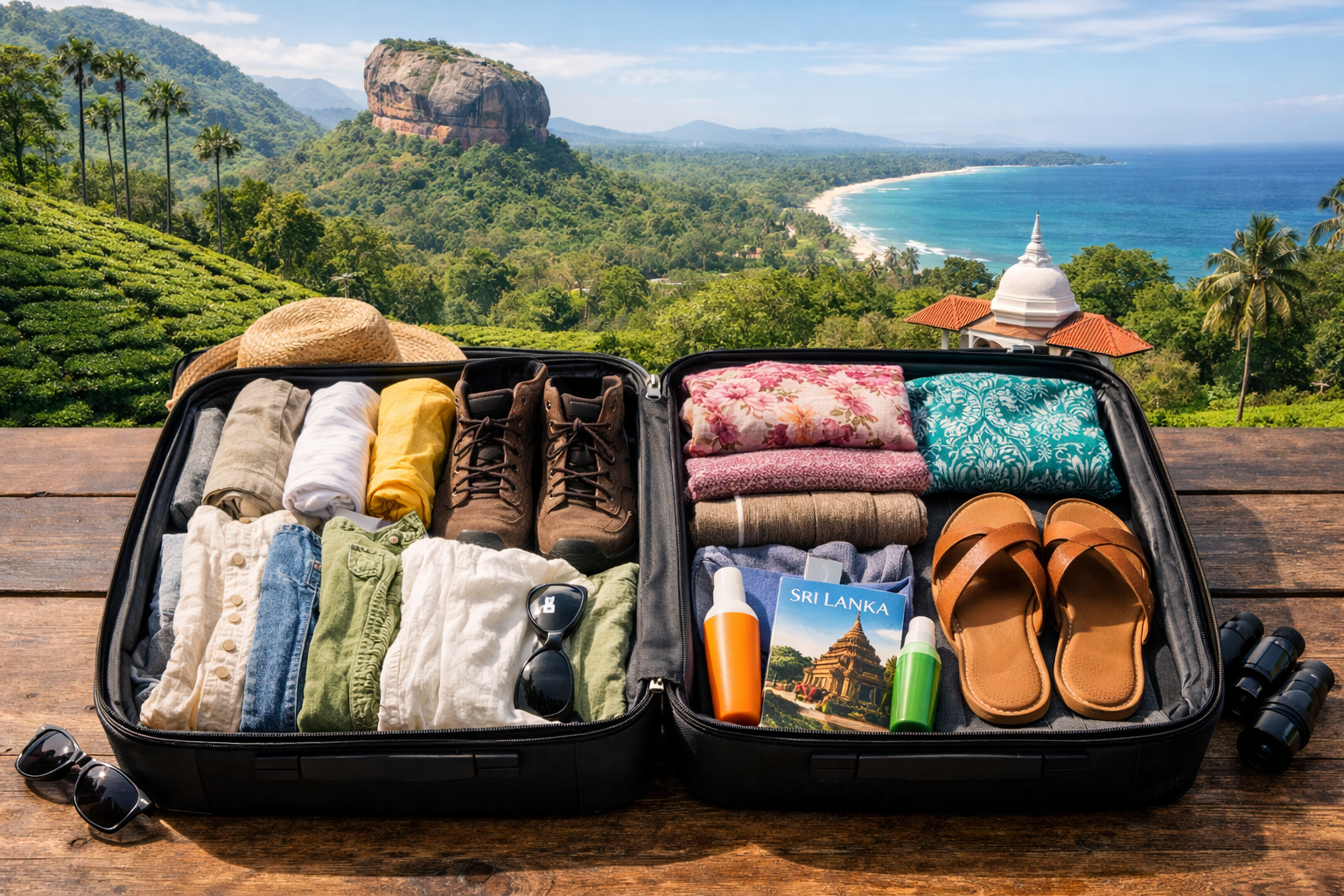
Pack lightweight, breathable cotton clothing for Sri Lanka’s tropical climate, plus modest attire covering shoulders and knees for temple visits. Essential items include a rain jacket for monsoons, sturdy walking shoes, high-SPF sunscreen, DEET insect repellent, and a universal power adapter for Type D, M, and G outlets.
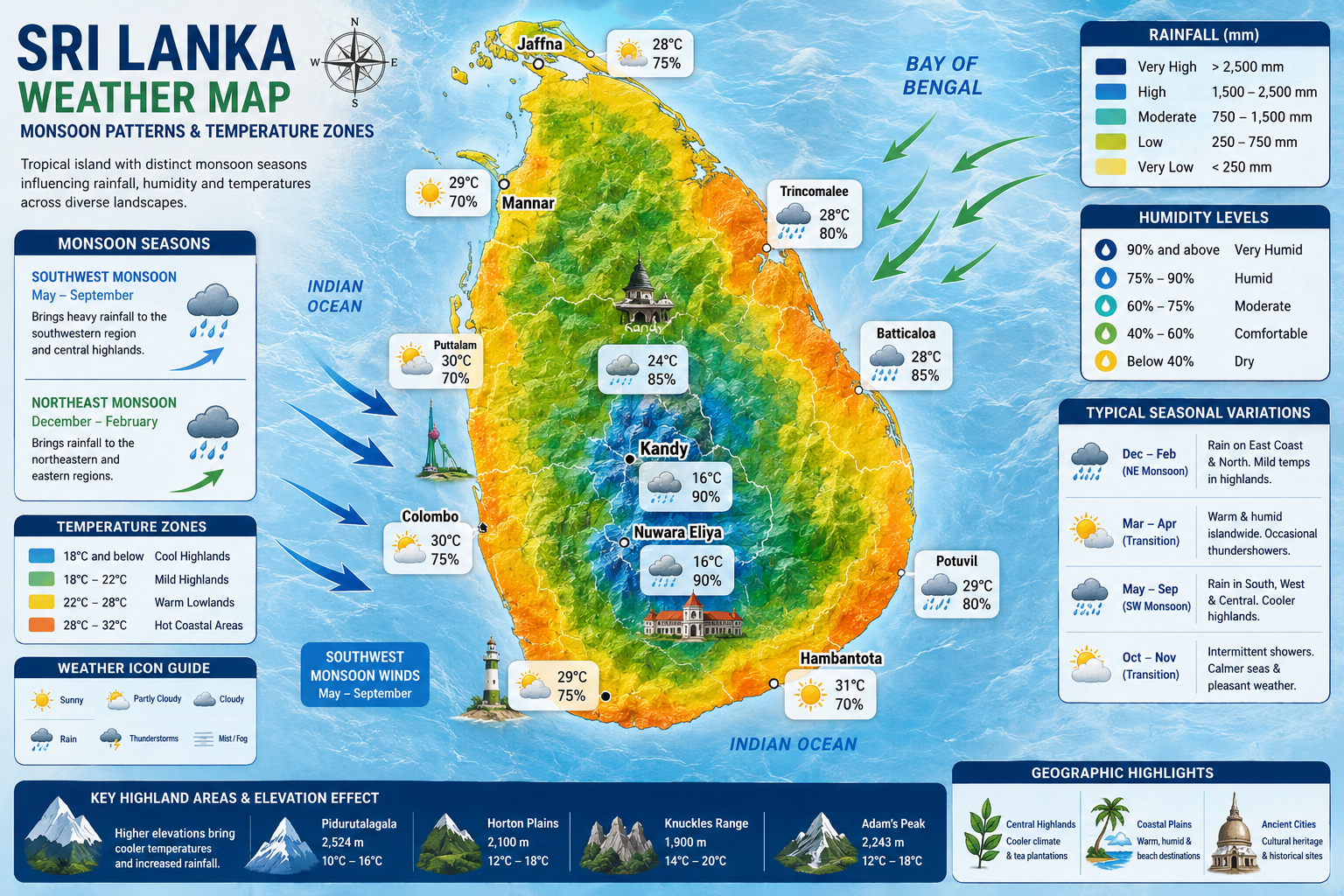
Sri Lanka experiences a tropical climate with two distinct monsoon seasons that vary by region. The southwest monsoon affects the west and south coasts from May to September, while the northeast monsoon impacts the north and east from October to January [1].
Dry Season (December-March):
First Monsoon (April-June):
Inter-monsoon (July-September):
Second Monsoon (October-November):
The hill country around Nuwara Eliya stays cooler year-round, with temperatures dropping to 10-15°C (50-59°F) at night, especially from December to February.
Pack exclusively lightweight, breathable fabrics like cotton and linen to combat Sri Lanka’s intense humidity and heat. Synthetic materials trap moisture and become uncomfortable quickly in the tropical climate [2].
Essential Hot Weather Clothing:
Heat Management Accessories:
Choose light colors that reflect heat rather than absorb it. Avoid dark colors and heavy fabrics that will make you uncomfortably hot and sweaty throughout the day.
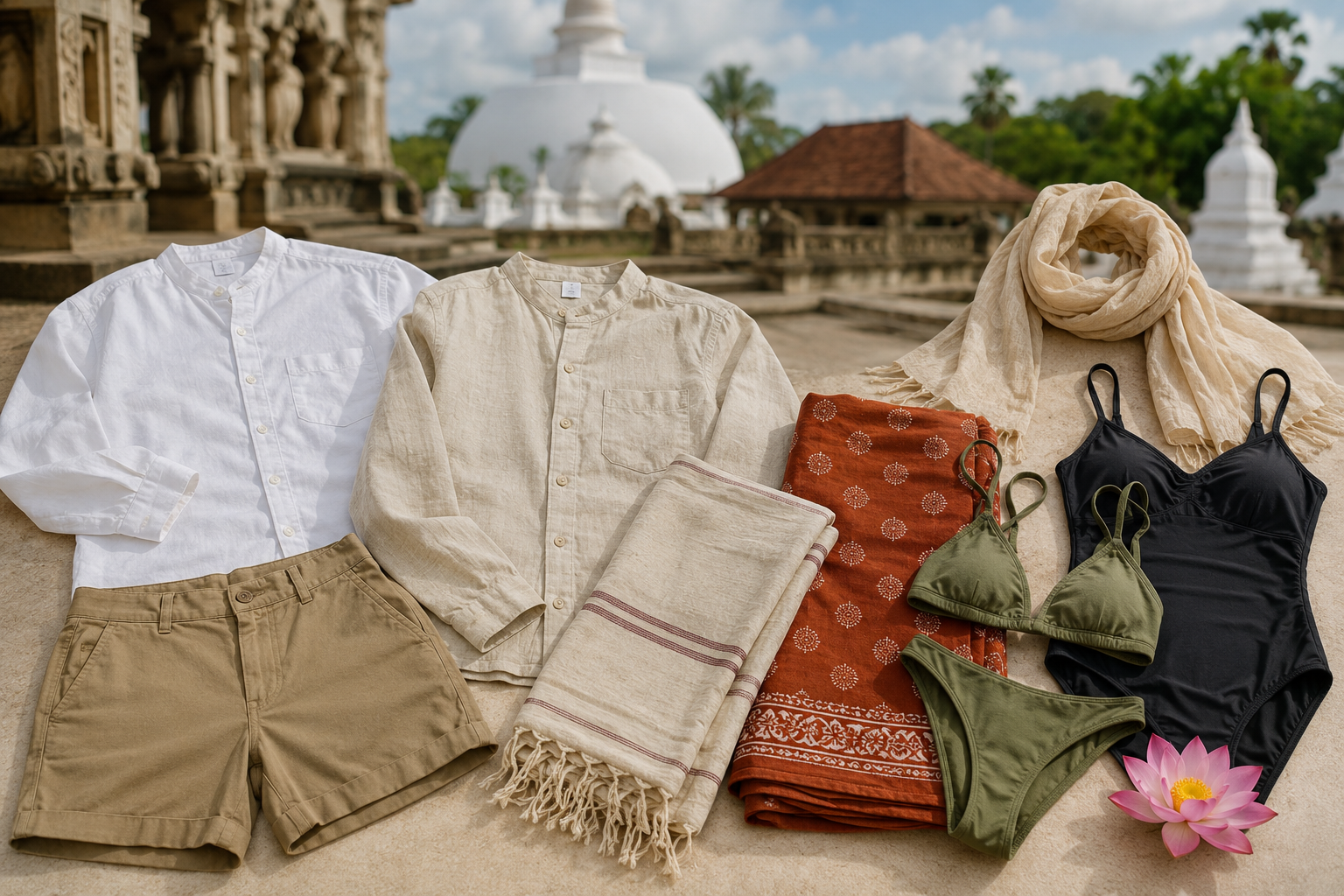
Women should pack clothing that covers shoulders and knees when visiting temples and cultural sites, which is mandatory at religious locations throughout Sri Lanka. A versatile sarong or large scarf serves multiple purposes for quick coverage [1].
Respectful Clothing Essentials:
Cultural Site Guidelines:
Practical Tip: Pack a lightweight scarf in your daypack for unexpected temple visits. Many sites provide sarongs for rent, but having your own ensures you’re always prepared.
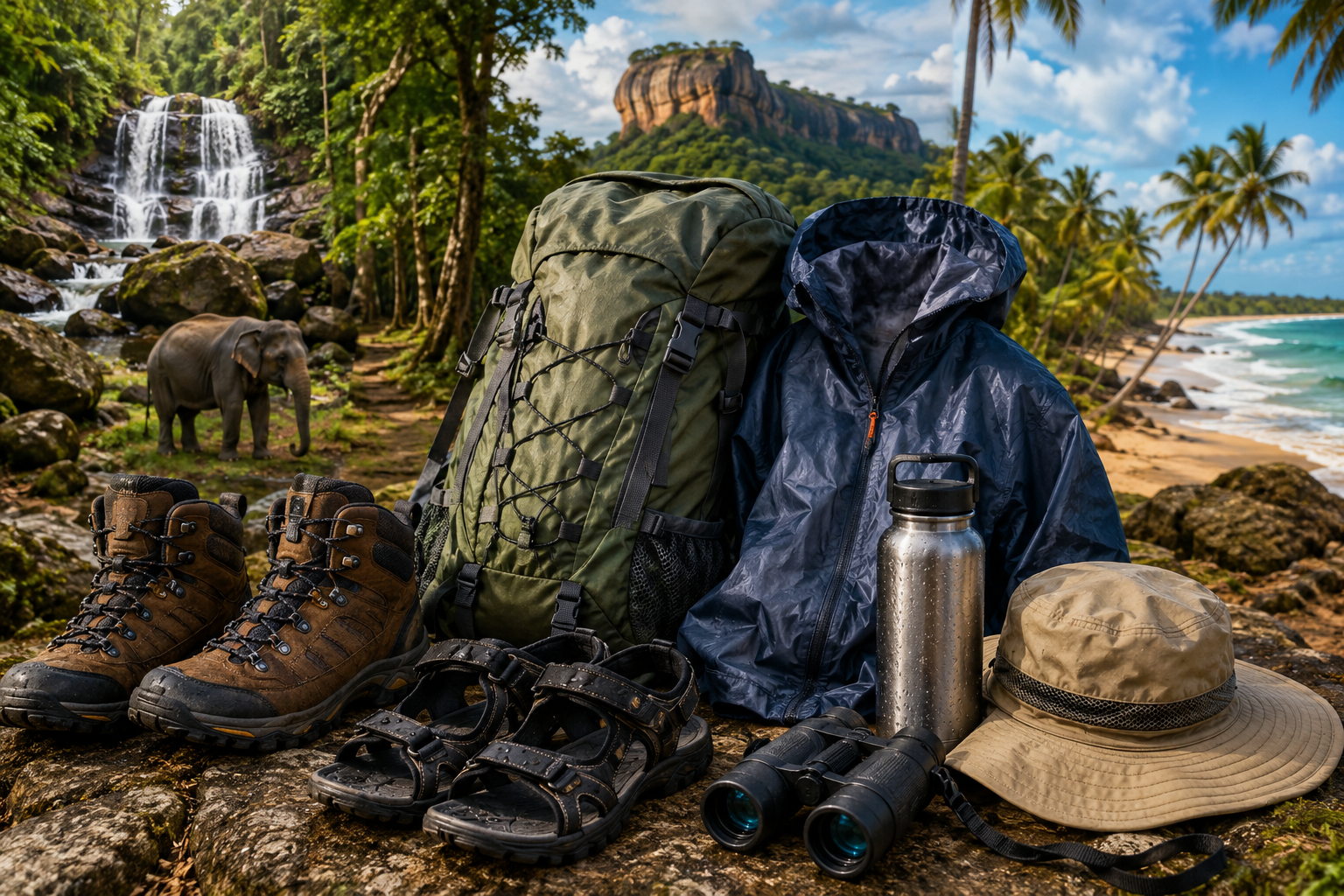
Pack both sturdy hiking boots with good ankle support and comfortable sandals, as Sri Lanka’s diverse terrain requires different footwear for various activities. You’ll encounter everything from rocky mountain trails to sandy beaches [2].
Hiking Footwear:
Beach and City Footwear:
Common Mistake: Bringing only flip-flops for a Sri Lanka trip. You’ll need proper footwear for hiking to attractions like Sigiriya Rock and Adam’s Peak.
Choose shoes that dry quickly, as you’ll encounter water frequently through rain, river crossings, and high humidity.
Yes, pack a lightweight, packable rain jacket as sudden tropical downpours occur year-round in Sri Lanka, regardless of the season. Even during “dry” periods, brief intense showers can soak you completely within minutes [1].
Rain Gear Essentials:
Monsoon Season Considerations:
Fabric Choice: Choose breathable, waterproof materials rather than plastic ponchos, which trap heat and moisture in the humid climate.
A good rain jacket doubles as wind protection in air-conditioned buses and restaurants, making it useful beyond just weather protection.
Pack additional warm layers if visiting Sri Lanka’s hill country, as temperatures in areas like Nuwara Eliya and Ella drop significantly compared to coastal regions like Colombo. The temperature difference can be 15-20°C (27-36°F) between regions [1].
Colombo and Coastal Areas:
Hill Country (Nuwara Eliya, Ella, Kandy):
Elevation Impact:
Packing Strategy: Use the layering system – bring items you can add or remove as you move between regions during your trip.
Pack modest clothing that completely covers shoulders and knees, as this is strictly enforced at all Buddhist temples and Hindu kovils throughout Sri Lanka. Many sites will deny entry if you’re inappropriately dressed [1].
Temple Visit Essentials:
Cultural Site Requirements:
Practical Items:
Many temples provide sarongs for rent (usually 100-200 LKR), but having your own ensures proper fit and availability.
Pack 5-7 complete outfits for a week-long trip, focusing on quick-dry materials that you can wash and reuse due to the hot, humid climate that makes clothes dirty and sweaty quickly [2].
One Week Packing List:
Laundry Considerations:
Space-Saving Strategy: Choose versatile pieces that work for multiple activities. A cotton maxi dress works for temples, dinner, and casual sightseeing with different accessories.
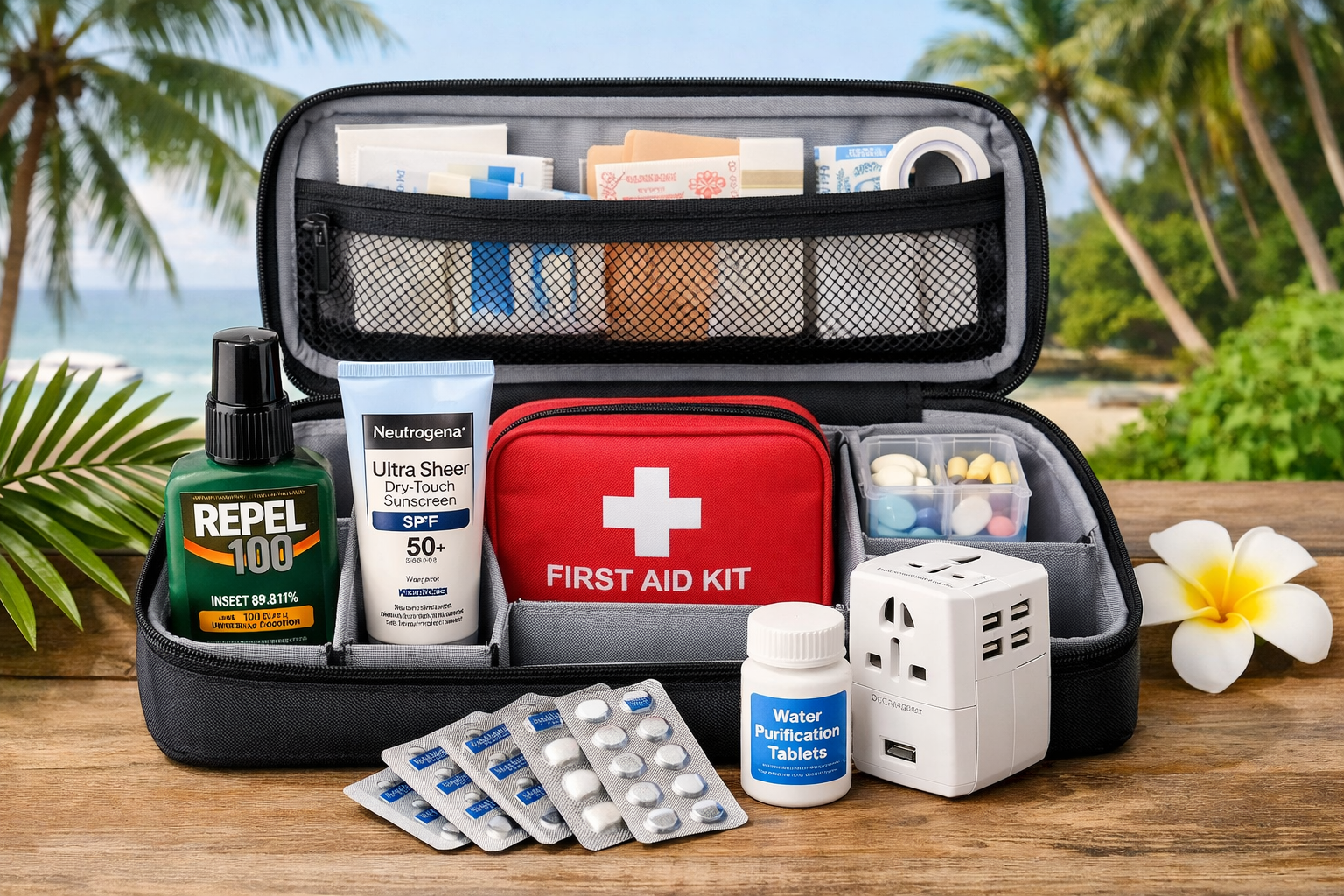
Western-brand toiletries are available in major cities but expensive and limited in rural areas, so pack specialty items like specific sunscreen formulations, contact lens solution, and prescription medications [2].
Pack These Toiletries:
Available Locally:
Rural vs Urban: Colombo and major tourist areas have well-stocked pharmacies, but remote areas may only have basic supplies. Stock up in cities before heading to rural locations.
The biggest mistake is packing too many heavy, synthetic clothes that don’t breathe in the humid climate, leaving travelers uncomfortable and constantly sweaty. Focus on lightweight, natural fabrics instead [2].
Top Packing Mistakes:
Footwear Errors:
Climate Misjudgments:
Smart Strategy: Pack half of what you think you need, then buy locally-made items that are better suited to the climate and support local businesses.
Pack DEET-based insect repellent with at least 20% concentration, long-sleeved clothing for evening wear, and consider permethrin-treated clothing for extended outdoor activities, as mosquitoes in Sri Lanka can carry dengue fever [2].
Mosquito Protection Essentials:
Natural Alternatives:
High-Risk Areas:
Health Consideration: Consult your doctor about malaria prophylaxis if visiting remote areas, though risk is generally low in main tourist regions.
Pack binoculars, a telephoto camera lens, and neutral-colored clothing for wildlife viewing, as Sri Lanka offers excellent opportunities to see elephants, leopards, and diverse bird species in national parks like Yala and Udawalawe.
Wildlife Viewing Gear:
Safari Essentials:
Clothing Colors: Avoid bright colors, white, and black clothing that can spook animals or make you more visible. Stick to khaki, olive, and brown tones.
Park-Specific Needs: Some parks require closed-toe shoes and long pants for safety. Check specific requirements when booking safari tours.
Choose a mid-size, soft-sided suitcase with wheels plus a sturdy daypack, as you’ll encounter various transportation methods from tuk-tuks to trains where rigid luggage becomes problematic [2].
Luggage Recommendations:
Transportation Considerations:
Daypack Features:
Packing Strategy: Use packing cubes to compress clothing and keep items organized when living out of your suitcase in multiple hotels.
Pack one semi-formal outfit for upscale restaurants and cultural performances, but avoid heavy formal wear as most situations in Sri Lanka are casual, even in nice establishments that accommodate the tropical climate.
Semi-Formal Essentials:
When You’ll Need It:
Climate Considerations:
Local Standards: Sri Lankan formal wear tends to be more relaxed than Western standards, so a nice casual outfit often suffices for most “formal” occasions.
Do I need to pack a lot of cash for Sri Lanka? Bring some USD cash for visa fees and rural areas, but ATMs are widely available in cities and tourist areas for local currency (Sri Lankan Rupees).
Should I pack a first aid kit for Sri Lanka? Yes, pack a basic first aid kit with bandages, antiseptic, pain relievers, and any prescription medications, as rural areas may have limited pharmacy access.
Can I buy sunscreen in Sri Lanka? Local sunscreen is available but often lower SPF than Western brands. Pack high-SPF sunscreen (50+) from home for better protection.
Do I need special vaccines for Sri Lanka? Consult your doctor, but generally hepatitis A/B and typhoid vaccines are recommended. Japanese encephalitis may be advised for rural areas.
Is it safe to drink tap water in Sri Lanka? Stick to bottled or filtered water. Pack a reusable water bottle with a built-in filter or water purification tablets.
What electrical adapter do I need for Sri Lanka? Sri Lanka uses Type D, M, and G outlets. A universal adapter covers all three types commonly found in hotels.
Should I pack toilet paper for Sri Lanka? Most hotels provide toilet paper, but pack a small supply for public restrooms and rural areas where it may not be available.
Can I wear shorts in Sri Lanka? Shorts are acceptable for tourists in beach areas and casual settings, but pack longer options for temple visits and more conservative areas.
Do I need malaria medication for Sri Lanka? Malaria risk is low in main tourist areas, but consult your doctor if visiting remote regions or during monsoon season.
Should I pack snacks for Sri Lanka? Pack a few familiar snacks for long travel days, but Sri Lankan cuisine is excellent and widely available throughout the country.
Is it worth packing a mosquito net? Only necessary for budget accommodations or camping. Most hotels provide air conditioning or fans that reduce mosquito problems.
Can I find Western toiletries in Sri Lanka? Major cities have international brands but at higher prices. Rural areas have limited selection, so pack essentials.
[1] Packing List – https://www.withsrilanka.com/info/packing-list?utm_source=openai [2] Sri Lanka Packing List – https://www.halfhalftravel.com/packing-lists/sri-lanka-packing-list.html?utm_source=openai
SEO Meta Title: What to Pack for Sri Lanka: Complete Climate & Culture Guide 2026