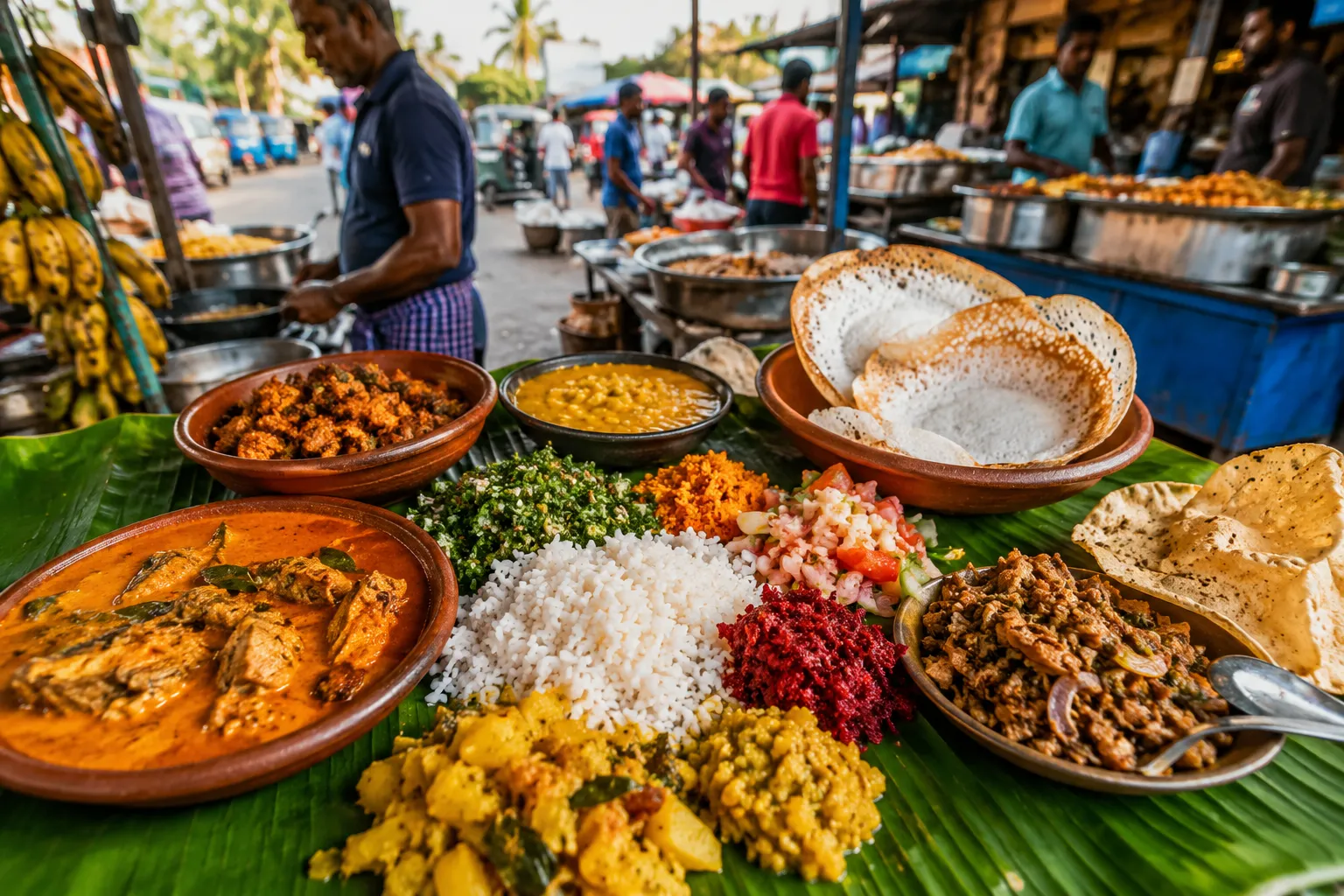
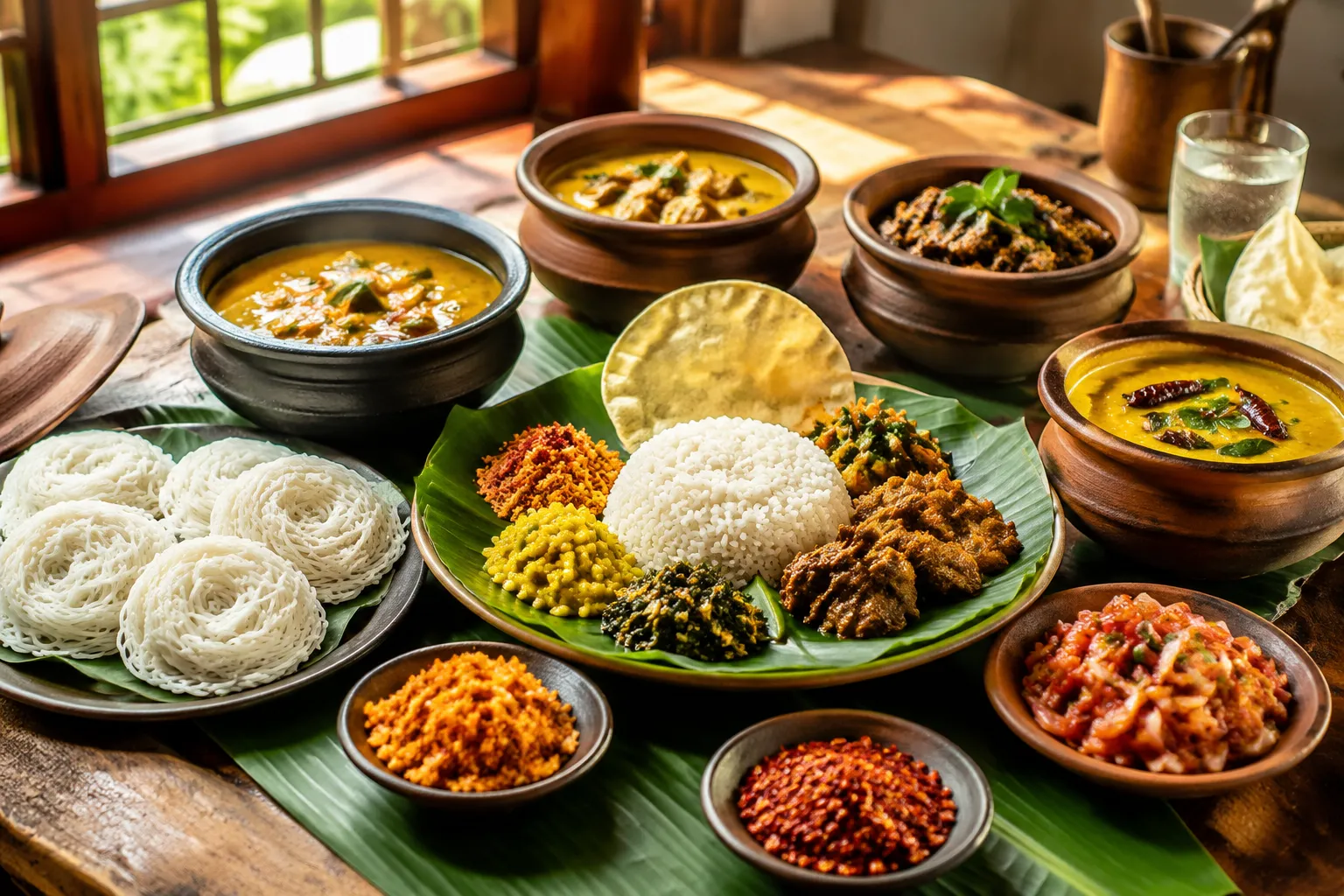
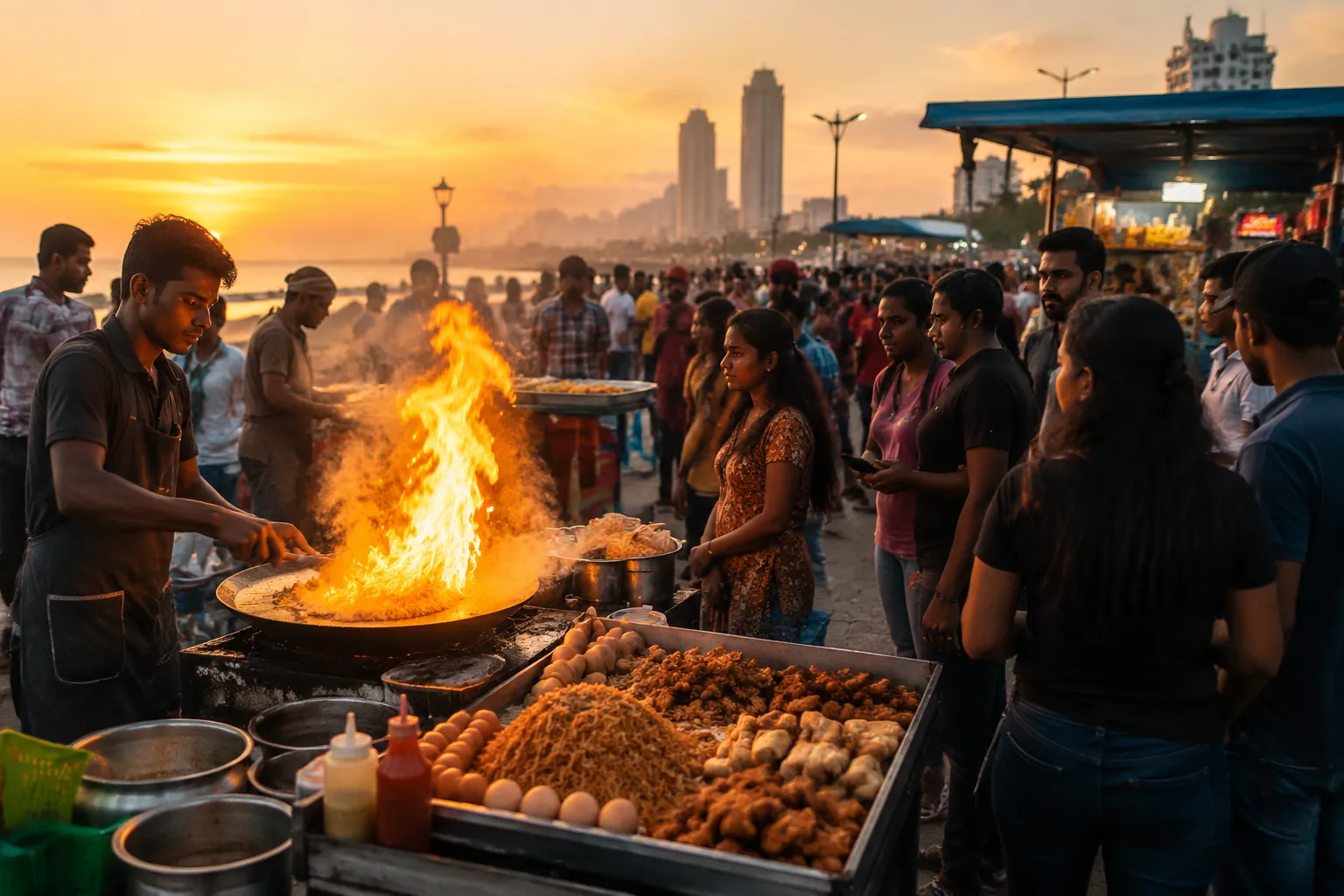
Sri Lanka’s cuisine blends South Indian, Dutch, Portuguese, and Malay influences into one of Asia’s most distinctive food cultures. This comprehensive Sri Lankan food guide covers 35 must-try dishes, the best street food spots, and essential local eating customs to help you navigate the island’s incredible culinary landscape like an insider.
Key Takeaways
• Rice and curry forms the foundation of Sri Lankan meals, typically featuring 5-8 different curries served together
• Street food costs range from 50-200 LKR (roughly $0.15-0.60 USD) per item, making it extremely affordable
• Spice levels vary significantly – always ask for “mild” if you have a low spice tolerance
• Vegetarian options are abundant due to Buddhist influence, with dedicated vegetarian restaurants in most areas
• Best food experiences happen during December-March dry season when street vendors are most active
• Local etiquette includes eating with your right hand and sharing dishes family-style
• Food safety requires choosing busy stalls with high turnover and avoiding tap water
What Are the Most Popular Sri Lankan Dishes to Try
Rice and curry, hoppers, and kottu roti represent Sri Lanka’s holy trinity of must-try dishes, found everywhere from street stalls to upscale restaurants.
Essential Main Dishes (1-15)
Rice and Curry Varieties:
Traditional rice and curry – White rice with 5-8 different curries
Kiribath – Coconut milk rice served on special occasions
Biriyani – Spiced rice with meat or vegetables
Lamprais – Dutch-influenced rice packet wrapped in banana leaves
Ghee rice – Fragrant rice cooked with clarified butter
Hopper Family:
6. String hoppers (idiyappam) – Steamed rice noodle nests
7. Egg hoppers – Bowl-shaped pancakes with egg cooked in center
8. Plain hoppers – Crispy bowl-shaped pancakes
9. Milk hoppers – Hoppers made with coconut milk
10. Pittu – Steamed cylinders of rice flour and coconut
Roti and Bread:
11. Kottu roti – Chopped roti stir-fried with vegetables and meat
12. Paratha – Flaky layered flatbread
13. Pol roti – Coconut flatbread
14. Godamba roti – Thin, crispy flatbread
15. Coconut roti – Sweet coconut-filled bread
Curries and Sides (16-25)
Fish curry – Spicy curry with tuna or mackerel
Chicken curry – Rich coconut-based curry
Dhal curry – Lentil curry, a vegetarian staple
Jackfruit curry – Young jackfruit in spicy gravy
Potato curry – Mild curry perfect for beginners
Pol sambol – Spicy coconut relish
Seeni sambol – Sweet onion relish
Katta sambol – Extremely spicy chili relish
Papadum – Crispy lentil wafers
Pickled vegetables – Tangy preserved vegetables
Desserts and Snacks (26-35)
Wattalappam – Coconut custard with jaggery
Kokis – Deep-fried crispy cookies
Kevum – Oil cake made with rice flour
Aluwa – Sweet confection with rice flour and treacle
Isso wade – Prawn fritters
Fish cutlets – Spiced fish patties
Samosas – Fried pastries with savory filling
Short eats – Various small snacks served at tea time
King coconut water – Fresh coconut water from orange coconuts
Ceylon tea – World-famous black tea served strong and sweet
What Is the Difference Between Sri Lankan and Indian Curry
Sri Lankan curries use more coconut milk, curry leaves, and pandan leaves, creating a sweeter, more aromatic profile than typical Indian curries. The spice blends also differ significantly.
Key Differences:
Coconut Usage:
Sri Lankan curries rely heavily on fresh coconut milk and grated coconut
Indian curries often use dairy (yogurt, cream) instead
Spice Profiles:
Sri Lankan: Heavy on curry leaves, pandan, cinnamon, cardamom
Indian: More emphasis on cumin, coriander, turmeric blends
Heat Levels:
Sri Lankan food tends to be spicier overall
Uses more fresh chilies and chili powder
Cooking Methods:
Sri Lankan curries often start with a “tempered” base of curry leaves and spices
Less use of onion-tomato bases compared to North Indian styles
Best Street Food in Sri Lanka and Where to Find It
Galle Face Green in Colombo, Kandy’s central market area, and Galle Fort offer the best concentration of authentic street food vendors. Look for stalls with high customer turnover and locals eating there.
Top Street Food Locations:
Colombo:
Galle Face Green – Evening food market with ocean views
Pettah Market – Daytime street food and fresh juices
Wellawatta – Tamil-style street snacks
Kandy:
Kandy Market Square – Traditional snacks and fresh fruit
Lake Road – Evening kottu roti specialists
Galle:
Galle Fort – Tourist-friendly street food with quality standards
Main Bus Stand – Authentic local experience
Street Food Safety Tips:
Choose Smart:
Pick stalls with constant customer flow
Watch food being prepared fresh
Avoid pre-cooked items sitting out
What to Avoid:
Tap water and ice cubes
Raw salads at questionable stalls
Meat dishes that smell off
How Spicy Is Authentic Sri Lankan Food
Authentic Sri Lankan food ranges from mild to extremely spicy, with most dishes falling on the medium-hot to hot spectrum. Always specify “mild” when ordering if you’re sensitive to spice.
Spice Level Guide:
Mild Dishes:
Plain hoppers
String hoppers with mild curry
Coconut roti
Most desserts
Medium Spice:
Standard rice and curry
Chicken curry
Fish curry
Kottu roti
Very Spicy:
Katta sambol (chili relish)
Deviled dishes
Some regional fish curries
Traditional village-style preparations
Cooling Options:
King coconut water
Plain rice
Yogurt-based drinks
Sweet lassi
What Should Vegetarians Eat in Sri Lanka
Vegetarian options are abundant in Sri Lanka due to Buddhist influence, with dedicated vegetarian restaurants and clearly marked meat-free dishes available everywhere. Rice and curry naturally offers multiple vegetarian choices.
Best Vegetarian Dishes:
Main Meals:
Vegetarian rice and curry (5-6 different vegetable curries)
Dhal curry with rice
Vegetable kottu roti
String hoppers with vegetable curries
Street Snacks:
Vegetable samosas
Isso wade (if you eat seafood)
Fresh fruit from vendors
Coconut-based sweets
Where to Find Vegetarian Food:
Buddhist temples often serve free vegetarian meals
“Pure vegetarian” restaurants in major cities
Most hotels offer extensive vegetarian breakfast options
Sri Lankan Rice and Curry: What’s in It
A traditional Sri Lankan rice and curry meal includes steamed white rice served with 5-8 different curries, sambols, papadum, and pickles all shared family-style. Each curry features different vegetables, lentils, or proteins in coconut-based gravies.
Typical Rice and Curry Components:
The Rice:
Long-grain white rice (sometimes red rice)
Cooked plain to balance the spicy curries
Essential Curries:
Dhal curry (lentils)
Vegetable curry (usually 2-3 types)
Fish or chicken curry
Potato curry
Accompaniments:
Pol sambol (coconut relish)
Papadum (crispy wafers)
Pickled vegetables
Fresh salad
How to Eat:
Take small portions of each curry
Mix with rice using your right hand
Start with milder curries, work up to spicier ones
How Much Does Street Food Cost in Sri Lanka
Street food in Sri Lanka costs between 50-200 LKR ($0.15-0.60 USD) per item, making it one of the world’s most affordable food destinations. A full street food meal rarely exceeds 500 LKR ($1.50 USD).
Price Breakdown:
Snacks (50-100 LKR):
Samosas
Fish cutlets
Fresh fruit portions
King coconut water
Main Dishes (100-200 LKR):
Kottu roti portion
Rice and curry plate
Hoppers (3-4 pieces)
Paratha with curry
Premium Street Food (200-300 LKR):
Large kottu roti with egg and meat
Fresh seafood preparations
Specialty regional dishes
Budget Tips:
Eat where locals eat for best prices
Lunch packets offer great value
Share large portions between 2 people
What Is Lamprais and How Do You Eat It
Lamprais is a Dutch-influenced dish featuring rice, meat curry, and accompaniments wrapped and steamed in a banana leaf packet. You unwrap the leaf like a gift and eat the contents with a spoon or your hands.
Lamprais Components:
Inside the Packet:
Fragrant rice (often with ghee)
Meat curry (usually beef or chicken)
Blachan (shrimp paste curry)
Ash plantain curry
Seeni sambol
Boiled egg
Fried eggplant
How to Eat:
Carefully unwrap the banana leaf
Use the leaf as your plate
Mix small portions of each item with rice
Eat with a spoon or your right hand
Where to Find:
Traditional restaurants in Colombo
Some hotels serve it as a cultural experience
Specialty lamprais shops in Galle and Kandy
Best Time to Visit Sri Lanka for Food Experiences
December through March offers the best food experiences, with dry weather keeping street vendors active and food festivals happening across the island. This period also coincides with harvest season for many local ingredients.
Seasonal Food Calendar:
December-March (Peak Season):
All street food vendors operating
Food festivals and cultural events
Fresh seafood readily available
Ideal weather for food tours
April-May (Hot Season):
Mango season – incredible fresh fruit
Some street vendors reduce hours
Hotel restaurants maintain full menus
June-November (Monsoon):
Fewer street food options
Indoor restaurant dining preferred
Some seasonal specialties available
Food Festival Timing:
Sinhala New Year (April) – traditional sweets
Vesak Festival (May) – temple food offerings
Christmas season – special lamprais and cake
Can You Eat Sri Lankan Food with a Sensitive Stomach
Yes, but choose carefully – stick to milder dishes like plain hoppers, string hoppers with mild curry, and coconut rice while avoiding spicy sambols and street food from questionable vendors. Many restaurants can prepare dishes with reduced spice levels.
Safe Options for Sensitive Stomachs:
Low-Risk Dishes:
String hoppers with mild vegetable curry
Plain rice with dhal curry
Coconut roti
Fresh king coconut water
Steamed fish preparations
What to Avoid:
Very spicy sambols
Street food from low-turnover stalls
Raw salads
Tap water and ice
Overly oily fried foods
Stomach-Soothing Options:
Ginger tea
Plain rice porridge (kola kenda)
Coconut water
Mild yogurt drinks
Common Mistakes Tourists Make Eating Sri Lankan Food
The biggest mistake is not asking about spice levels and trying to eat everything with utensils instead of hands. Many tourists also miss the communal sharing aspect of Sri Lankan meals.
Avoid These Common Errors:
Spice Mistakes:
Not specifying “mild” when ordering
Eating katta sambol without knowing how hot it is
Not having cooling drinks ready
Cultural Mistakes:
Using left hand to eat
Not sharing dishes family-style
Refusing food offerings at temples
Eating beef in areas with Hindu populations
Food Safety Mistakes:
Drinking tap water
Eating at completely empty restaurants
Not watching food preparation
Ignoring your instincts about cleanliness
What’s the Difference Between Kottu Roti and Paratha
Kottu roti is chopped-up roti stir-fried with vegetables, eggs, and meat, while paratha is a flaky, layered flatbread served whole as an accompaniment. Think of kottu as a main dish and paratha as bread.
Key Differences:
Kottu Roti:
Chopped roti mixed with other ingredients
Cooked on a large griddle with dramatic chopping sounds
Main dish that’s filling on its own
Usually includes vegetables, egg, and/or meat
Paratha:
Whole flatbread with flaky layers
Served alongside curries
Functions as bread/carbohydrate base
Can be plain or stuffed with ingredients
When to Order:
Kottu roti: When you want a complete meal
Paratha: When you want bread to accompany curries
Sri Lankan Food Allergies and Dietary Restrictions
Coconut, seafood, and nuts are the most common allergens in Sri Lankan cuisine, while vegetarian and halal options are widely available. Always communicate dietary restrictions clearly as cross-contamination can occur.
Common Allergens:
High Risk:
Coconut (in most curries and desserts)
Seafood (fish sauce, dried fish, prawns)
Nuts (especially cashews in sweets)
Dairy (in some desserts and drinks)
Dietary Accommodations:
Vegetarian:
Widely available and clearly marked
Buddhist restaurants are completely vegetarian
Many street vendors offer vegetarian options
Vegan:
More challenging but possible
Avoid dishes with ghee or milk
Many traditional dishes are naturally vegan
Halal:
Available in Muslim areas and many restaurants
Look for halal certification signs
Avoid areas serving pork
Gluten-Free:
Rice-based dishes are naturally gluten-free
Avoid wheat-based roti and some sauces
String hoppers and plain rice are safe options
How to Order Food Like a Local in Sri Lanka
Point to dishes you want to try, ask for spice level adjustments, and always order family-style with multiple dishes to share. Learning a few Sinhala or Tamil food words helps tremendously.
Local Ordering Tips:
Key Phrases:
“Kiri kenda” – Can you make it mild?
“Mama vegetarian” – I’m vegetarian
“Mokakda me?” – What is this?
“Bohoma sthuthi” – Thank you very much
Ordering Strategy:
Order multiple dishes to share
Ask locals what they recommend
Point to interesting dishes at other tables
Start with one mild dish to test your spice tolerance
Payment and Tipping:
Pay in local currency (LKR)
Tipping isn’t required but appreciated (10% at restaurants)
Street food is usually pay-as-you-go
Some places only accept cash
Conclusion
This Sri Lankan food guide gives you everything needed to eat like a local across the island. Start with milder dishes like string hoppers and plain rice with dhal curry, then work up to spicier specialties as your palate adjusts.
Focus on the essential experiences: sharing a traditional rice and curry meal, watching kottu roti being prepared at a street stall, and trying fresh hoppers for breakfast. Remember to specify spice levels, eat with your right hand, and embrace the communal dining culture.
The best food adventures happen when you eat where locals eat, ask questions about unfamiliar dishes, and stay open to new flavors. Sri Lanka’s incredible culinary diversity rewards curious eaters with some of Asia’s most memorable food experiences.
SEO Meta Title: Sri Lankan Food Guide: 35 Must-Try Dishes & Local Eating Tips