Physical Address
304 North Cardinal St.
Dorchester Center, MA 02124
Physical Address
304 North Cardinal St.
Dorchester Center, MA 02124
Last updated: July 23, 2026
Quick Answer: Sri Lanka launched its Digital Nomad Visa in February 2026, making it one of the most accessible remote-work destinations in Asia. This Sri Lanka itinerary for digital nomads covers 21 days across three base cities, Colombo, Galle/Ahangama, and Ella, with reliable coworking spaces, beginner-friendly surf breaks, and weekend getaways that fit around a full work schedule. Budget roughly $1,200,$1,800 USD for three weeks, all-in.
Sri Lanka launched its Digital Nomad Visa (DNV) in February 2026, and it’s one of the cleaner visa options in Southeast Asia. The DNV allows foreign remote workers to live and work in Sri Lanka for up to one year, with annual renewal possible [1].
Key requirements:
The first DNV was issued on February 26, 2026, to Ukrainian national Darya Gordiyenko and her spouse [2]. This signals the system is live and processing applications.
If the DNV doesn’t fit your situation, Sri Lanka also extended its standard tourist visa to 180 days in early 2026 [3]. For a 21-day trip, a standard e-visa (30 days, extendable) works fine and is far simpler to obtain.
Choose the DNV if you’re planning a stay longer than 90 days and want legal clarity on working remotely. For a three-week trip, a standard tourist e-visa is sufficient.
This itinerary balances productive work blocks with surf sessions and weekend exploration. It’s structured around three bases so you’re not moving every two days.
Colombo is the practical starting point. It has the best airport connections, fast urban internet, and a growing café-and-coworking scene in Colombo 3 (Kollupitiya) and Colombo 7.
Work base: Hatch (Colombo 3) or any of the established coworking cafés in Colombo 7. Expect speeds of 50-100 Mbps on fiber connections.
Weekend getaway: Day trip to Negombo (30 minutes north) or a one-night stay in Kandy (3 hours by train). Kandy’s Temple of the Tooth and the surrounding lake make it a strong two-day break.
The south coast is the heart of Sri Lanka’s nomad scene. Base yourself in Ahangama or Weligama, both have dedicated coworking spaces, surf schools, and a strong community of remote workers.
Work base options:
Weekend getaway: Galle Fort is 20 minutes from Ahangama by tuk-tuk. Spend a Saturday exploring the Dutch colonial ramparts, independent cafés, and bookshops. It’s one of the best half-day breaks on the south coast.
End the trip in the hill country. Ella is cooler, quieter, and surprisingly well-connected for a mountain town. It’s ideal for focused work and a complete change of scenery.
Work base: Several guesthouses in Ella now offer fiber Wi-Fi. Confirm speeds before booking, aim for 20 Mbps minimum for video calls.
Weekend activity: Hike Little Adam’s Peak (easy, 1.5 hours) or take the famous Ella Rock trail. The train from Ella to Kandy is one of the most scenic rail journeys in Asia.
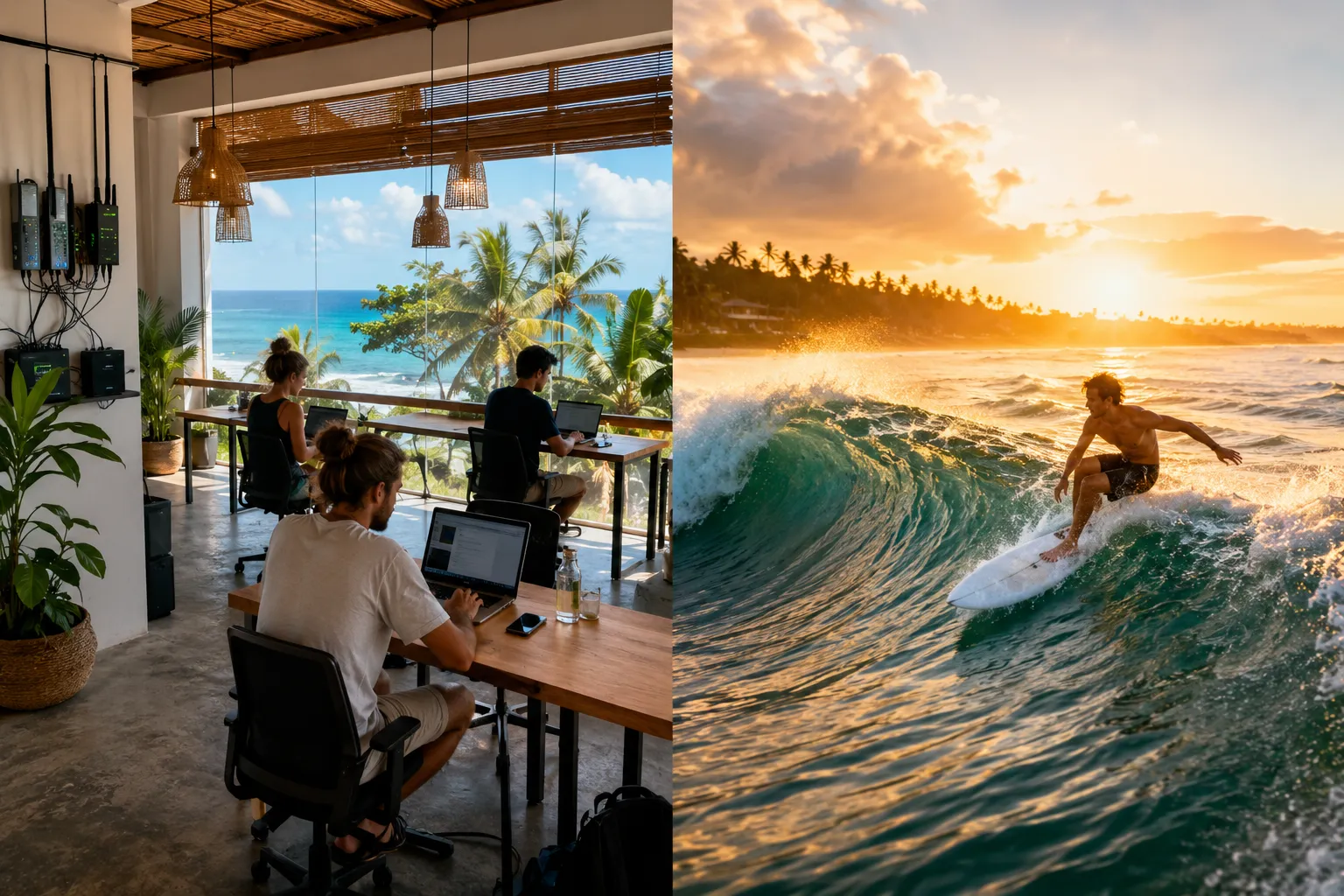
The best coworking spaces for digital nomads in Sri Lanka are concentrated on the south coast, particularly in Ahangama and Weligama. Colombo has solid options for city-based work, but the south coast wins for lifestyle.
Top picks by location:
| Space | Location | Key Feature |
|---|---|---|
| Hari Hari House | Ahangama | Fiber optic, rooftop bar, beach access [6] |
| NETS Cowork & Colive | Ahangama | 24/7 AC, meeting rooms, community events [7] |
| Outsite Sri Lanka | Weligama | Beachfront coliving + coworking [8] |
| Surf and Zen Villa | Habaraduwa | Surf classes + yoga + coworking [4] |
| Surfing Elephant | Polhena Beach | Oceanfront, social atmosphere [5] |
| Surf & Retreat Hostel | Weligama | Budget option, surf + work combo [9] |
Coworksurf also lists vetted coliving-coworking combos across Sri Lanka and connects nomads with a community of over 3,500 remote workers worldwide [10].
Common mistake: Booking a beach bungalow and assuming the Wi-Fi will be work-grade. Always ask for a speed test screenshot before confirming any booking.
Dedicated coworking spaces on the south coast offer fiber optic connections that handle video calls without issues. General guesthouses and cafés are hit-or-miss.
What to expect:
Practical tip: Buy a local SIM at the airport on arrival. A Dialog 4G SIM with a 10GB data pack costs under $5 USD and gives you a reliable backup for any connectivity gaps.
Weligama Bay is the best spot for beginners, it has a long, gentle wave, a sandy bottom, and dozens of surf schools operating year-round. Intermediate surfers should look at Ahangama, Midigama, and Hikkaduwa for more consistent reef breaks.
By skill level:
Surf and Zen Villa in Habaraduwa offers daily surf classes alongside coworking and yoga, making it one of the most practical all-in-one setups for nomads who want to surf before or after work [4].
Best time for south coast surf: November through April. The east coast (Arugam Bay) flips to May through October.
The south and west coasts are best from November to April, dry, sunny, and consistent surf. The east coast peaks from May to October. There’s no single “best” month for the whole island because the two coasts run on opposite monsoon cycles.
For a 21-day nomad trip focused on the south coast and hill country, December through March is the sweet spot: reliable weather, good surf, and cooler temperatures in the highlands.
Avoid the south coast during May, September (southwest monsoon) if surf is a priority. The hill country is beautiful year-round, though expect afternoon rain showers from April onward.
Three weeks in Sri Lanka costs approximately $1,200,$1,800 USD for most nomads, depending on accommodation choices.
Estimated weekly breakdown:
Key cost factors:
Ahangama and Weligama offer the best balance of affordable accommodation and work-grade internet. Ella is cheaper still, but internet quality varies more.
Best-value bases:
Avoid booking the cheapest option on the beach without checking reviews specifically mentioning Wi-Fi reliability. Filter by “work from here” reviews on Hostelworld or Nomad List.
Short weekend trips fit naturally into a three-week Sri Lanka itinerary without disrupting the work week.
From Colombo:
From the South Coast:
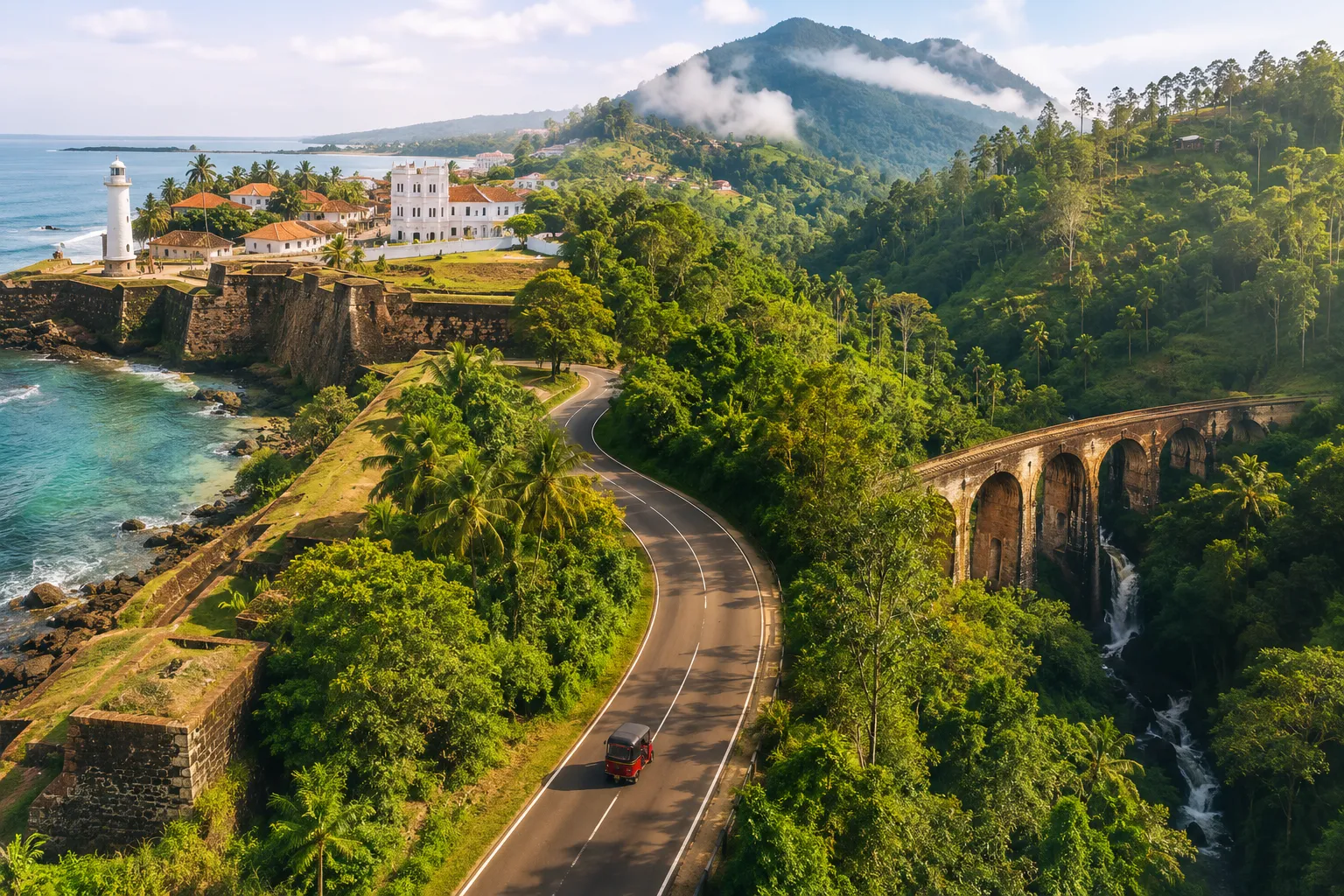
Getting around Sri Lanka without a car is straightforward and affordable. Trains, tuk-tuks, and intercity buses cover all the main nomad destinations.
Best transport options:
Common mistake: Trying to take a tuk-tuk from Colombo to the south coast. It takes 4+ hours and costs far more than the express bus. Use the bus or train for intercity travel.
Sri Lanka is generally safe for solo nomads, including solo female travelers. Petty theft in crowded areas is the main risk, not violent crime. The nomad community on the south coast is well-established and welcoming.
Practical safety tips:
Solo travelers consistently rate Sri Lanka as one of the friendlier destinations in Asia for first-time nomads.
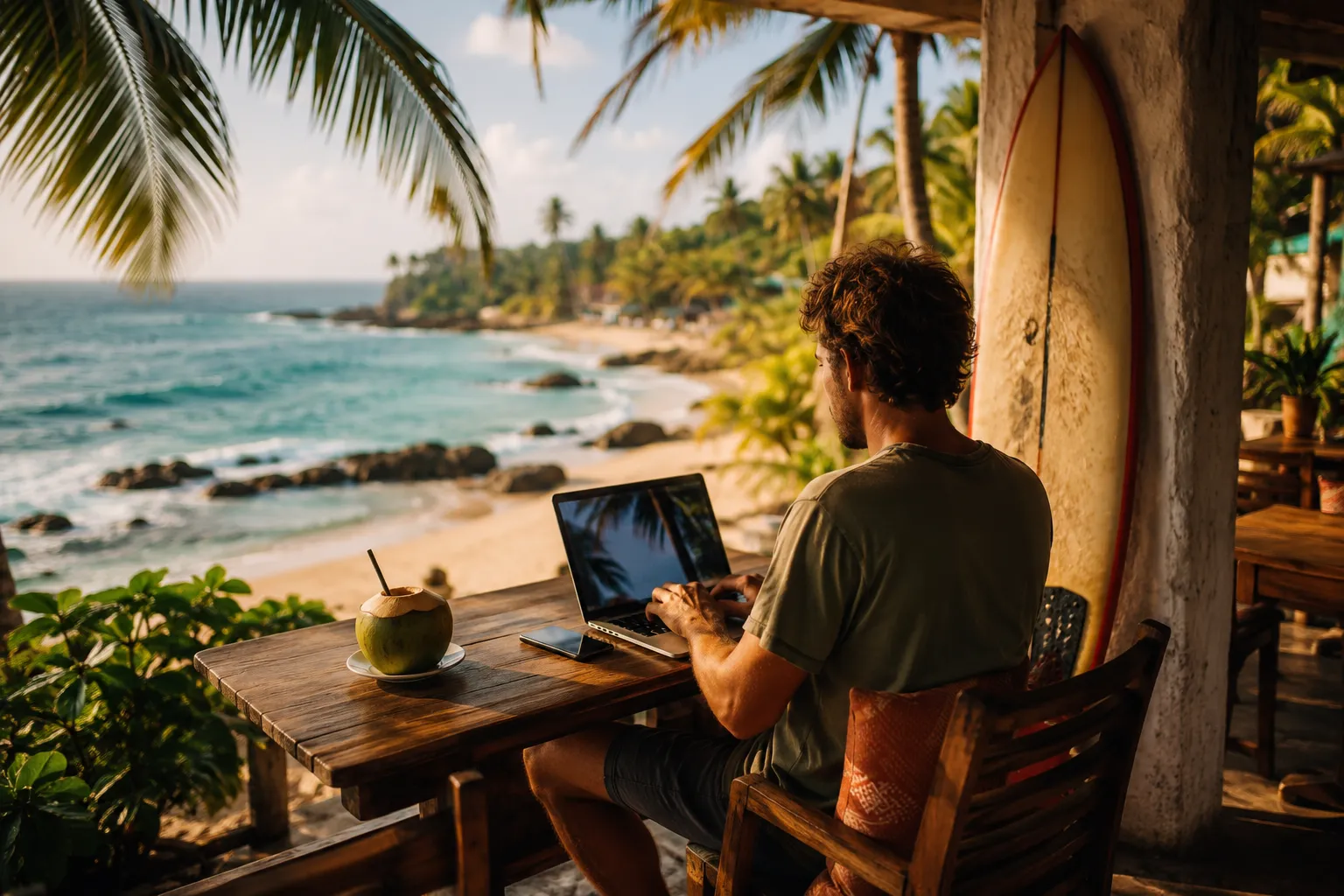
Working directly on the beach is impractical for focused, connected work, sand, glare, and inconsistent mobile data make it unreliable for video calls. The better setup is a coworking space or coliving property that’s a short walk from the beach.
The south coast model works well: work from a proper coworking space in the morning, surf or swim in the afternoon. Spaces like NETS in Ahangama [7] and Outsite in Weligama [8] are designed exactly for this rhythm.
Cities (Colombo) offer more coworking variety and faster internet overall, but less of the lifestyle balance that makes Sri Lanka attractive for nomads.
Pack light. Sri Lanka is hot and humid on the coast, cooler in the hills. Most things you forget can be bought cheaply in Colombo or Galle.
Essential packing list:
Leave the heavy gear at home. Laundry services are cheap and fast across the country.
The biggest mistakes on a Sri Lanka digital nomad trip are over-scheduling, booking the wrong accommodation, and underestimating travel times between locations.
Top mistakes and fixes:
Q: Do I need the Digital Nomad Visa for a 21-day trip? No. A standard tourist e-visa (30 days, extendable) is sufficient for a three-week stay. The DNV is better suited for stays of 90 days or more.
Q: What’s the minimum monthly income required for the Sri Lanka DNV? $2,000 USD per month, as set by the Department of Immigration and Emigration [1].
Q: Is Arugam Bay worth visiting on a 21-day itinerary? Only if you’re visiting between May and October (east coast surf season). It’s a 6-8 hour journey from Colombo, so it works better as a dedicated base than a side trip.
Q: Can I extend a tourist visa in Sri Lanka? Yes. Tourist visas can be extended at the Department of Immigration in Colombo. The extended tourist visa now allows stays of up to 180 days [3].
Q: What’s the best coworking space for a day pass on the south coast? NETS Cowork in Ahangama [7] and Outsite Weligama [8] both offer day passes and are consistently rated well by nomads for internet reliability and atmosphere.
Q: Is Colombo worth spending a week in? Yes, especially for the first week. It eases the transition, has the best airport connections, and gives you time to sort a local SIM, do any admin, and explore the city before heading south.
Q: How do I book the Ella train? Book at Colombo Fort station in person (arrive early) or through a third-party booking platform like 12GoAsia. Second-class observation seats are the most popular and worth the small premium.
Q: Is it easy to find vegetarian and vegan food in Sri Lanka? Yes. Sri Lankan cuisine is naturally vegetable-forward. Dal, coconut sambol, and rice-and-curry are staples available everywhere, and most restaurants cater to plant-based diets without any special requests.
Q: What’s the best mobile carrier for data in Sri Lanka? Dialog is the most widely recommended for coverage and speed. Mobitel is a solid alternative. Both offer affordable prepaid data packs available at the airport and convenience stores.
Q: Can I surf as a complete beginner in Sri Lanka? Yes. Weligama Bay is one of the most beginner-friendly surf spots in Asia. Most surf schools offer a first lesson package that includes board, instructor, and rash guard for around $20,$30 USD.
Sri Lanka in 2026 is one of the most practical and rewarding destinations for a three-week remote work trip. The combination of a new Digital Nomad Visa, established coworking spaces on the south coast, world-class beginner surf at Weligama, and genuinely affordable living costs makes it hard to beat in the region.
Actionable next steps:
Three weeks is enough to find a real rhythm: productive mornings, surf in the afternoon, and weekend adventures that don’t eat into your work output.
[1] Govt launches Digital Nomad Visas to professionals – https://www.ft.lk/front-page/Govt-launches-Digital-Nomad-Visas-to-professionals/44-788157?utm_source=openai
[2] Sri Lanka issues first Digital Nomad Visa – https://www.ft.lk/front-page/Sri-Lanka-issues-first-Digital-Nomad-Visa/44-788961?utm_source=openai
[3] Dreamy Beaches And Incredible Wildlife Sri Lanka Just Launched A Digital Nomad Visa – https://www.euronews.com/travel/2026/02/05/dreamy-beaches-and-incredible-wildlife-sri-lanka-just-launched-a-digital-nomad-visa?utm_source=openai
[4] surfandzen – https://www.surfandzen.com/?utm_source=openai
[5] surfingelephant.vercel.app – https://surfingelephant.vercel.app/?utm_source=openai
[6] hari-hari-house.squarespace – https://hari-hari-house.squarespace.com/?utm_source=openai
[7] netscowork – https://netscowork.com/?utm_source=openai
[8] Weligama Outpost – https://www.outsite.co/locations/weligama-outpost?utm_source=openai
[9] Surf And Retreat Hostel Weligama Coliving Coworking – https://www.hostelworld.com/hostels/p/335867/surf-and-retreat-hostel-weligama-coliving-coworking/?utm_source=openai
[10] Sri Lanka – https://www.coworksurf.com/sri-lanka?utm_source=openai