Physical Address
304 North Cardinal St.
Dorchester Center, MA 02124
Physical Address
304 North Cardinal St.
Dorchester Center, MA 02124
Last updated: July 22, 2026
Quick Answer: A well-planned eco-friendly Sri Lanka itinerary covers the Cultural Triangle, Hill Country, and southern wildlife zones in 10 days using trains instead of cars, staying in certified eco-lodges, and booking ethical safari operators. It’s genuinely doable without rushing, and it costs roughly $80,$150 per person per day depending on accommodation choices.
An eco-friendly Sri Lanka itinerary prioritizes low-carbon transport, locally owned accommodation, and wildlife experiences that don’t disturb natural behavior. It also means spending money in ways that benefit communities directly rather than large foreign-owned chains.
Here’s what separates a genuinely low-impact trip from a “greenwashed” one:
The Sri Lanka Tourism Development Authority (SLTDA) has made sustainable destination management a formal priority, partnering with the UNDP to implement policies that protect both natural ecosystems and cultural heritage [1].
Choose this itinerary if: You want meaningful experiences over ticking boxes, you’re comfortable with some planning, and you’d rather spend money on quality wildlife encounters than on convenience.
Yes, 10 days is a realistic and comfortable window for the classic eco-route, provided you don’t try to cover the whole island.
The key is picking one coherent circuit rather than zigzagging. The route below, Colombo → Sigiriya → Kandy → Ella → Udawalawe → Mirissa or Galle, flows logically and avoids backtracking.
Day-by-day overview:
| Day | Location | Key Activity |
|---|---|---|
| 1 | Colombo | Arrive, explore Pettah market, rest |
| 2 | Sigiriya | Rock Fortress, Dambulla Cave Temples [6] |
| 3 | Sigiriya/Polonnaruwa | Cycling through ancient ruins |
| 4 | Kandy | Temple of the Tooth, Peradeniya Gardens |
| 5 | Kandy → Ella | Iconic train journey (7 hours) |
| 6 | Ella | Nine Arches Bridge, Little Adam’s Peak hike |
| 7 | Ella → Udawalawe | Bus transfer, afternoon safari |
| 8 | Udawalawe | Full-day ethical elephant safari |
| 9 | Mirissa or Galle | Coastal walk, whale watching (seasonal) |
| 10 | Colombo | Depart |
This leaves one buffer day you can use for rest, a cooking class, or an extra hike, which is exactly the kind of flexibility low-impact travel needs.
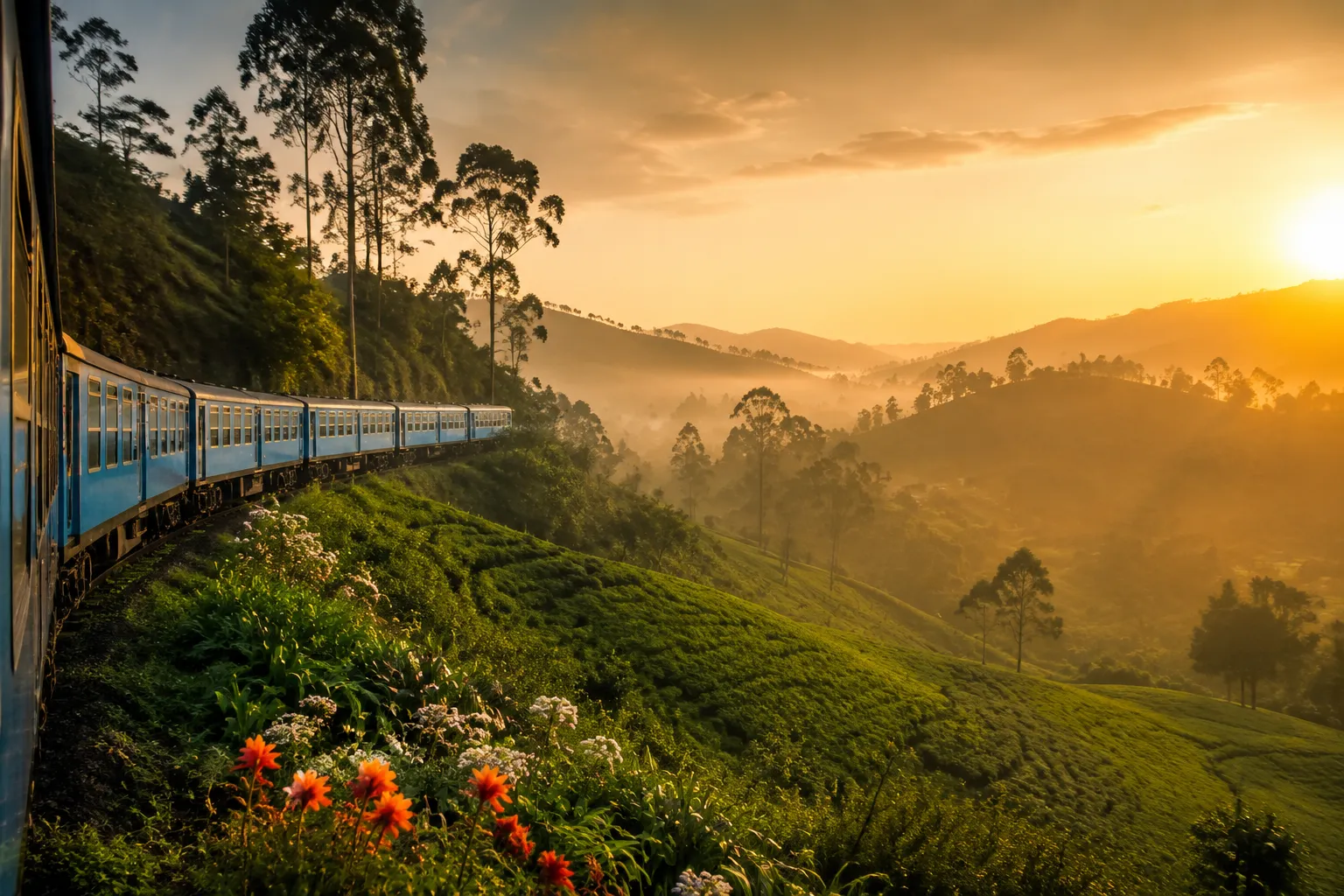
The Kandy-to-Ella train is the standout route, and it’s genuinely worth the hype. It runs through tea-covered hills, past waterfalls, and over colonial-era viaducts for roughly 7 hours [5].
Top train routes for eco-conscious travelers:
Practical tips:
Are Sri Lanka train journeys worth it or just touristy? They’re both, and that’s fine. The Kandy-Ella route is popular because it’s genuinely spectacular. Taking the train instead of a private car also cuts your per-journey emissions significantly. It’s not a compromise; it’s the better option on every level.
Mostly yes. Sri Lanka has no domestic commercial flights between major tourist destinations, so the real question is train versus private car or bus.
For the eco-route described here, trains cover the two most important legs (Colombo, Kandy and Kandy, Ella). The Ella, Udawalawe leg requires a bus or shared taxi because no train serves that route. From Udawalawe to the coast, a shared minibus or tuk-tuk to the nearest bus hub works well.
How to travel Sri Lanka without a rental car:
Avoiding a rental car also means avoiding the stress of driving on narrow mountain roads, a genuine bonus.
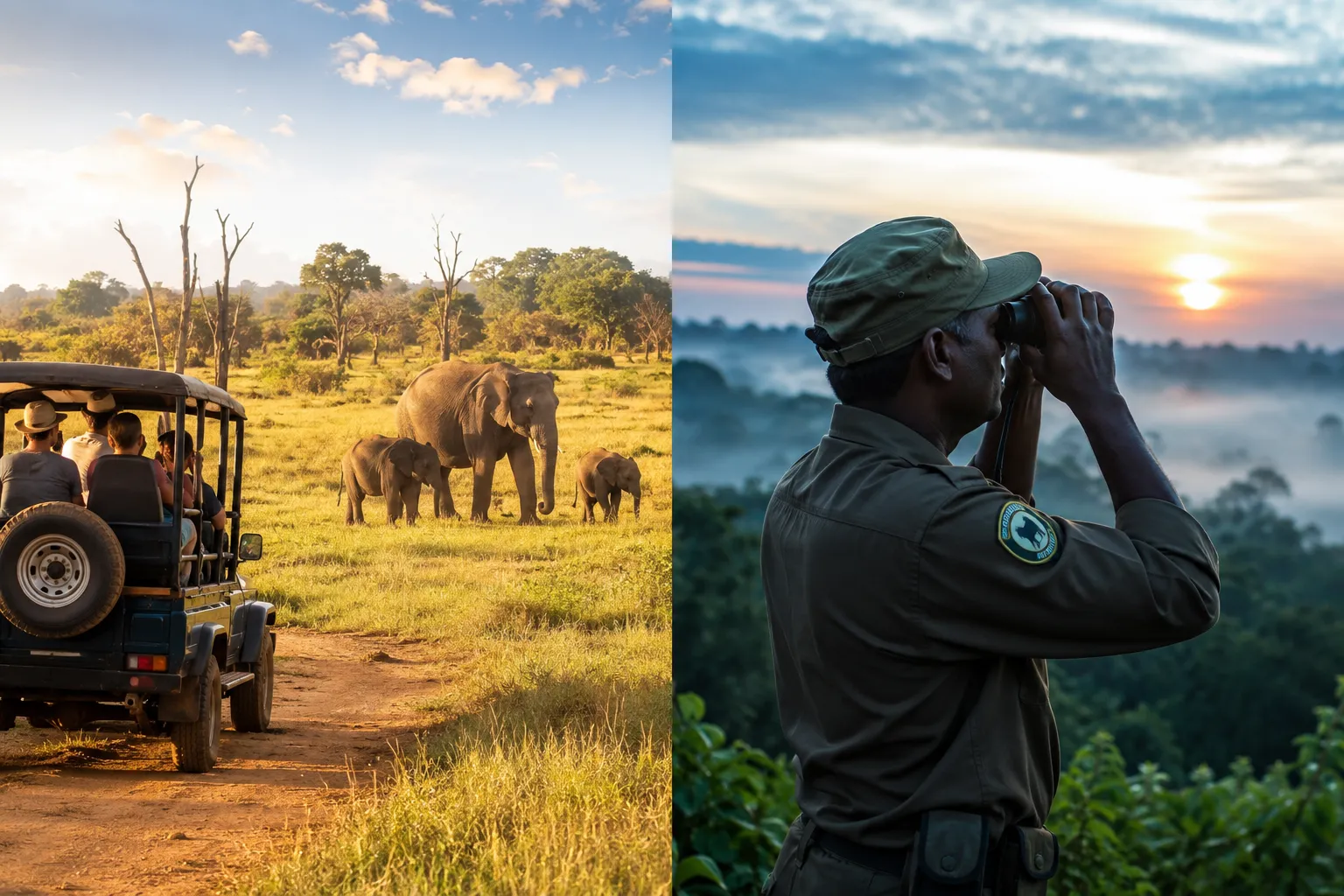
Ethical safari operators use shared jeeps, maintain respectful distances from wildlife, employ local naturalist guides, and contribute a portion of fees to conservation. They do not offer elephant rides, pose-with-animal photo ops, or guarantee sightings by baiting.
What to look for when booking:
What’s the difference between ethical and regular safaris in Sri Lanka?
Regular jeep safaris in popular parks like Yala can involve dozens of vehicles crowding around a single leopard sighting. Ethical operators limit group sizes, avoid peak-hour congestion, and brief visitors on behavior guidelines before entering the park [4].
Udawalawe National Park is widely considered the best choice for ethical elephant viewing, wild herds are large, sightings are frequent, and the park’s layout discourages the vehicle pile-ups common at Yala.
Udawalawe is the top recommendation for ethical wildlife viewing in 2026. It has Sri Lanka’s highest density of wild elephants, a well-managed jeep track system, and fewer crowds than Yala.
Park comparison:
| Park | Best For | Crowd Level | Ethical Rating |
|---|---|---|---|
| Udawalawe | Wild elephants | Moderate | ⭐⭐⭐⭐⭐ |
| Sinharaja | Birdwatching, endemic species | Low | ⭐⭐⭐⭐⭐ |
| Yala | Leopards, sloth bears | High (peak season) | ⭐⭐⭐ (operator-dependent) |
| Minneriya | Elephant gathering (Aug, Oct) | Moderate | ⭐⭐⭐⭐ |
Sinharaja Forest Reserve is a UNESCO World Heritage site and one of the last viable areas of tropical rainforest in Sri Lanka, ideal for birdwatchers and anyone wanting a genuinely off-the-beaten-path experience [6].
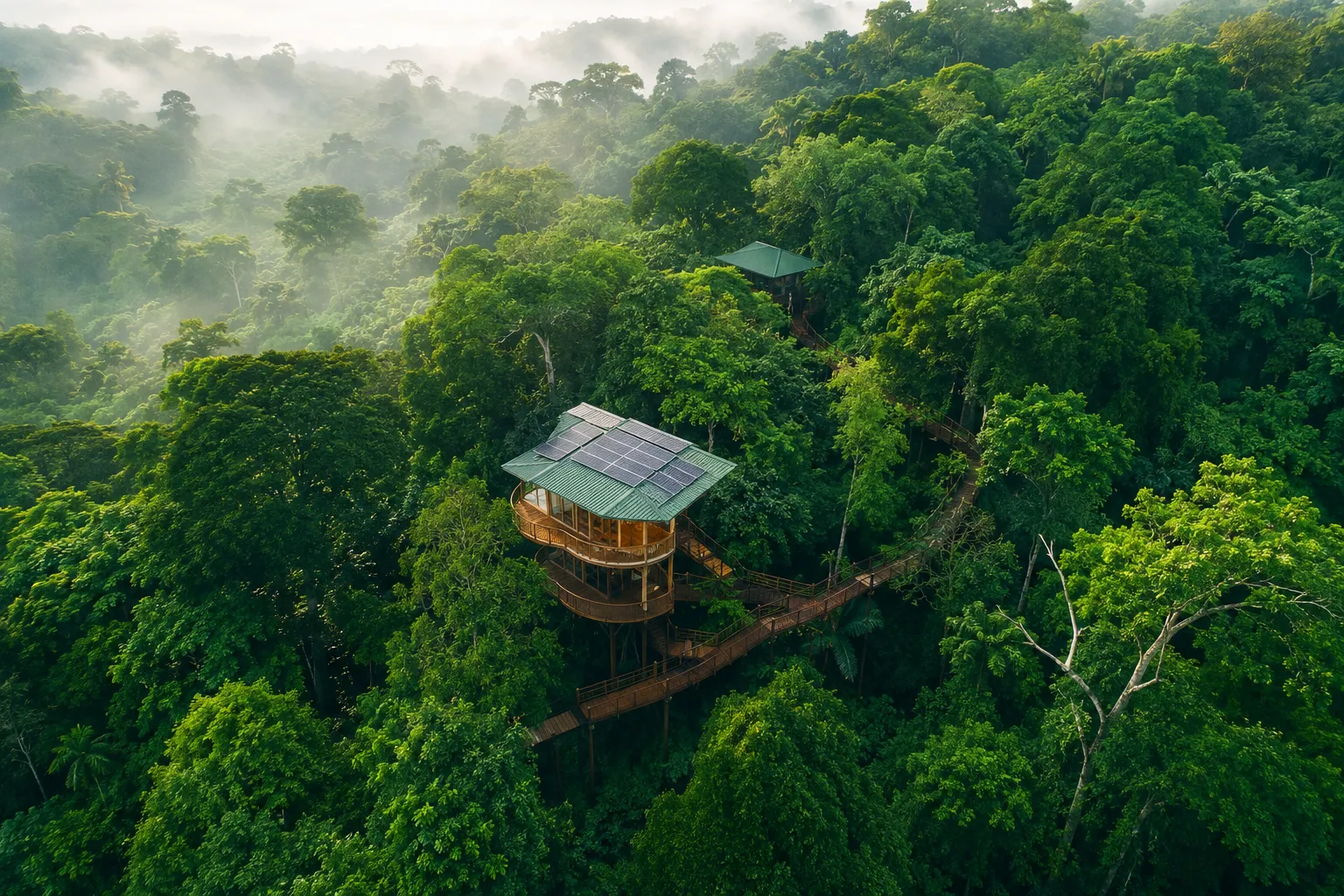
Eco-lodges and community guesthouses are the best accommodation choices for low-impact travel. They typically use solar power, rainwater harvesting, and locally sourced food, and your money stays in the local economy.
Accommodation options by region:
What to check before booking:
Certification from the SLTDA’s sustainable tourism program is a useful signal, though many excellent small properties haven’t yet gone through formal certification [1].
February to April is the best window for most of the eco-route described here. Rainfall is low in the south and hill regions, wildlife is active, and the Kandy-to-Ella train journey is at its most scenic.
Seasonal breakdown:
Avoid visiting Yala in September, October when it partially closes for the inter-monsoon season.
Budget roughly $80,$150 per person per day for a genuine eco-friendly experience. The SLTDA’s revised 2026 methodology puts average tourist spending at $148 per day [2], eco travelers who stay in locally owned guesthouses and use public transport often come in below that figure.
Rough cost breakdown (per person):
| Category | Budget Option | Mid-Range |
|---|---|---|
| Accommodation | $20,$35/night | $50,$80/night |
| Food | $10,$15/day | $20,$30/day |
| Train/bus transport | $5,$15/day | $15,$25/day |
| Safari (Udawalawe) | $30,$50 per trip | $60,$90 per trip |
| Entry fees (Sigiriya, etc.) | $30,$40 total | $30,$40 total |
A 10-day trip for one person comes to roughly $800,$1,500 excluding international flights. Couples traveling together save on accommodation costs.
The single biggest lever is transport. Replacing a private car with trains and buses cuts per-journey emissions by an estimated 60-80% on the Colombo, Kandy, Ella corridor.
Practical steps:
Common mistakes tourists make on Sri Lanka eco tours:
Q: Do I need to book trains in Sri Lanka in advance? Yes, especially the Kandy-to-Ella observation car. Book at least 2 weeks ahead through the Sri Lanka Railways website or a reputable local agent. Walk-up tickets are available but unreserved.
Q: Is elephant riding available in Sri Lanka, and should I do it? Elephant riding is still offered at some facilities but is widely condemned by conservation organizations. Ethical operators and eco-itineraries avoid it entirely. Udawalawe offers far more rewarding wild elephant encounters.
Q: Can solo travelers do this itinerary comfortably? Yes. Trains, guesthouses, and shared safari jeeps are all well-suited to solo travel. Sri Lanka consistently ranks as safe and welcoming for solo visitors.
Q: What’s the best way to get from Ella to Udawalawe? Take a public bus from Ella to Wellawaya, then connect to Embilipitiya or directly to Udawalawe. The journey takes 2-3 hours and costs under $3. Shared taxis are faster but cost more.
Q: Are eco-lodges significantly more expensive than regular guesthouses? Not always. Many eco-lodges in Sri Lanka are family-run and price competitively with standard guesthouses, roughly $25,$60 per night. The premium, if any, is modest.
Q: Is Sri Lanka safe for travelers in 2026? Sri Lanka has stabilized significantly since 2022 and tourism has grown strongly through 2025 and into 2026 [3]. Standard travel precautions apply, and most eco-routes are well-trodden and safe.
Q: Do I need a visa for Sri Lanka? Most nationalities require an Electronic Travel Authorization (ETA), which is applied for online before travel. Check the official Sri Lanka ETA portal for current requirements.
Q: What should I pack for an eco-friendly trip to Sri Lanka? Key items: reusable water bottle with filter, reef-safe sunscreen, lightweight rain jacket, insect repellent (DEET-free options available), and a small dry bag for rain on open train carriages.
A 10-day eco-friendly Sri Lanka itinerary is one of the most rewarding ways to see the island, and one of the most practical. Trains are faster than you’d expect, eco-lodges are genuinely comfortable, and ethical safaris deliver wildlife encounters that stick with you far longer than a crowded jeep scrum around a single leopard.
Your next steps:
Sri Lanka rewards travelers who move slowly and spend thoughtfully. The eco-friendly route isn’t a compromise, it’s the better trip.
[1] Sustainable Tourism – https://sltda.gov.lk/index.php/en/sustainable-tourism?utm_source=openai
[2] 44 788571 – https://www.ft.lk/front-page/Tourism-earnings-stable-despite-revised-spending-methodology-Minister/44-788571?utm_source=openai
[4] 10 Day Wildlife Eco Adventure Sri Lanka – https://orinway.com/product/10-day-wildlife-eco-adventure-sri-lanka/?utm_source=openai
[5] 10 Days Sri Lanka Itinerary 2026 Yala Safari – https://www.yalawildlife.com/blog/10-days-sri-lanka-itinerary-2026-yala-safari?utm_source=openai
[6] 10 Days Sri Lanka Itinerary – https://www.srilanka-maldives.com/10-days-sri-lanka-itinerary/?utm_source=openai
[7] Eco Friendly Sri Lanka Itinerary Low Impact Travel Ideas – https://lankawebsites.com/blog/mega-guides-itineraries/eco-friendly-sri-lanka-itinerary-low-impact-travel-ideas?utm_source=openai