Physical Address
304 North Cardinal St.
Dorchester Center, MA 02124
Physical Address
304 North Cardinal St.
Dorchester Center, MA 02124
Last updated: July 22, 2026
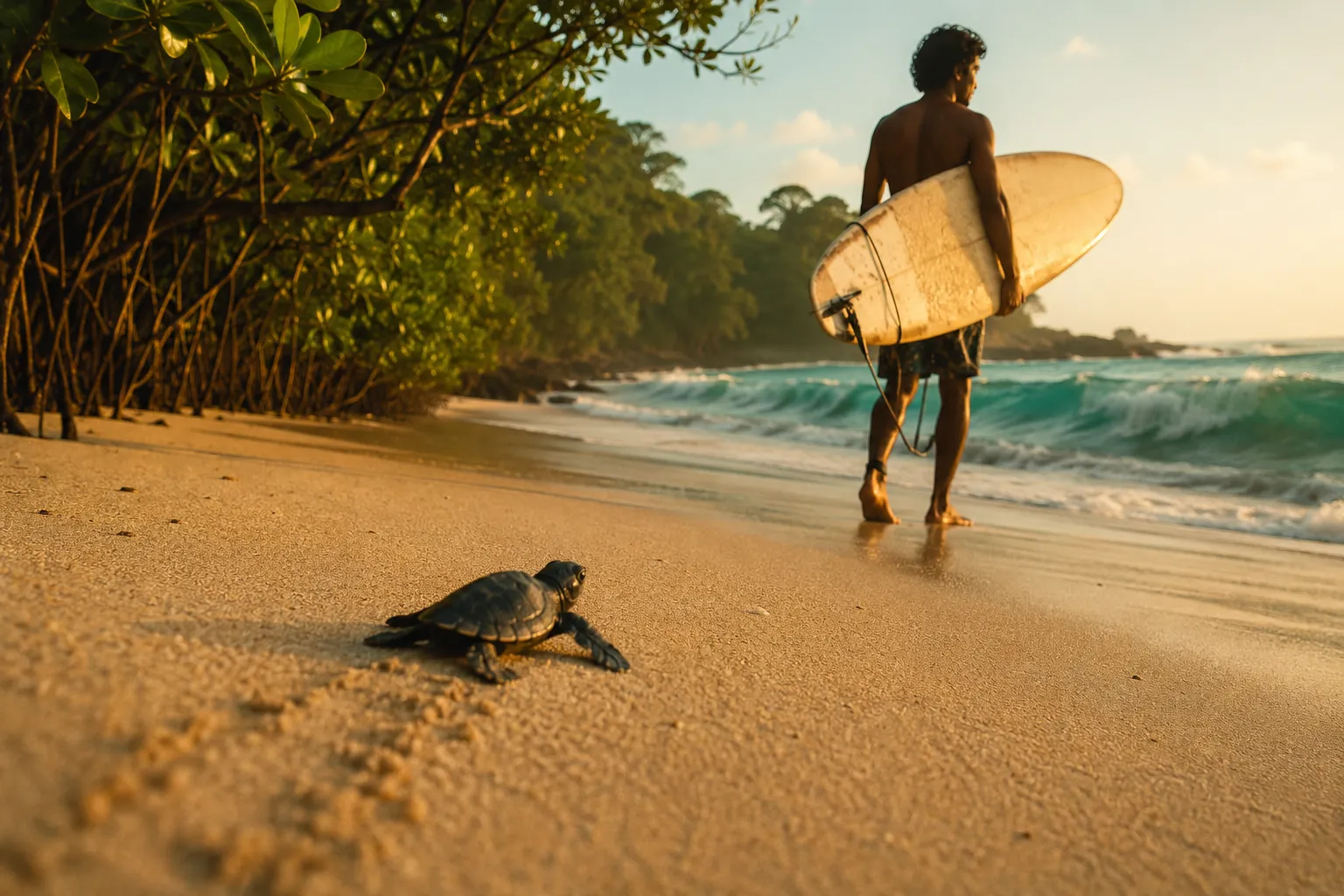
Quick Answer: A Sri Lanka Eco-Surf & Conservation Itinerary covering 10 days of waves, turtle projects & mangrove tours is absolutely doable for non-experts. You’ll surf beginner-friendly breaks at Arugam Bay or Mirissa, volunteer at working turtle hatcheries on the south coast, and paddle through protected mangrove waterways, all without needing advanced surf skills or a science background. Budget roughly $1,200,$2,500 USD for 10 days, depending on accommodation and package choices.
Eco-surf tourism combines wave riding with low-impact travel practices, reef protection, and active conservation work. Unlike a standard surf holiday, where you book a board, find a break, and repeat, an eco-surf trip weaves in wildlife volunteering, community-led tours, and reef-safe commitments throughout the itinerary.
The practical difference comes down to three things:
“The best eco-surf trips don’t feel like a compromise, they feel like a fuller version of a surf holiday.”
This Sri Lanka Eco-Surf & Conservation Itinerary covering 10 days of waves, turtle projects & mangrove tours is built on exactly that principle: surfing and conservation reinforce each other rather than compete for your time.
The answer depends entirely on which coast you’re targeting. Sri Lanka has two distinct surf seasons driven by opposing monsoons.
South & West Coast (Mirissa, Unawatuna, Hikkaduwa):
East Coast (Arugam Bay):
For a 10-day eco-surf and conservation itinerary, November to March is the sweet spot. You get surfable south-coast waves, calm seas for mangrove boat tours, and active turtle nesting and hatching season, all aligned [3].
Quick rule: If you’re a beginner, plan for December, February on the south coast. If you want bigger waves and don’t mind skipping the turtle season peak, head east in June, August.
A realistic budget for 10 days runs $1,200,$2,500 USD per person, not including flights.
Here’s a rough breakdown:
| Category | Budget Option | Mid-Range |
|---|---|---|
| Accommodation (10 nights) | $200,$350 | $400,$700 |
| Surf lessons/board hire | $80,$120 | $150,$250 |
| Turtle project fees | $30,$80 | $80,$200 |
| Mangrove tours | $20,$40 | $40,$80 |
| Food (local restaurants) | $100,$150 | $200,$350 |
| Transport (tuk-tuks, buses) | $50,$80 | $100,$180 |
| Total estimate | ~$480,$820 | ~$970,$1,760 |
Packaged eco-surf itineraries from operators like KimKim or Ocean Fever bundle accommodation, lessons, and some activities, typically pricing at $150,$250/day all-in [7][6].
Common mistake: Budgeting only for surf lessons and ignoring conservation activity fees. Reputable hatchery programs charge a small fee that funds the project directly, it’s worth it [2].
Several legitimate, hands-on turtle conservation projects operate along Sri Lanka’s south coast, particularly around Kosgoda and Rekawa.
Kosgoda Sea Turtle Conservation Project is one of the most accessible. Visitors can:
The project protects five of the seven sea turtle species found in Sri Lankan waters, including Loggerhead, Green, and Leatherback turtles [4].
Career Break / Volunteer Programs offer longer stays (1-4 weeks) where participants assist with nest monitoring, data recording, and beach patrols at night [2][8]. These are ideal if you want more than a day visit.
What to expect on a day visit:
Edge case: Hatchling releases depend on natural incubation cycles. Not every visit guarantees a release, ask operators about current hatch rates before booking a specific date.
No prior surfing experience is needed for most eco-surf packages in Sri Lanka. The south coast breaks at Mirissa and Weligama are among the most beginner-friendly in Asia, long, slow-rolling waves on sandy bottoms with minimal hazards [7].
Most packages include:
Choose this itinerary if: You can swim confidently in open water, are reasonably fit, and are comfortable being in the ocean. You don’t need to know how to surf before you arrive.
Skip the surf component if: You have a strong fear of open water or a physical condition that limits balance and core strength. The conservation and mangrove portions of the trip remain fully accessible regardless.
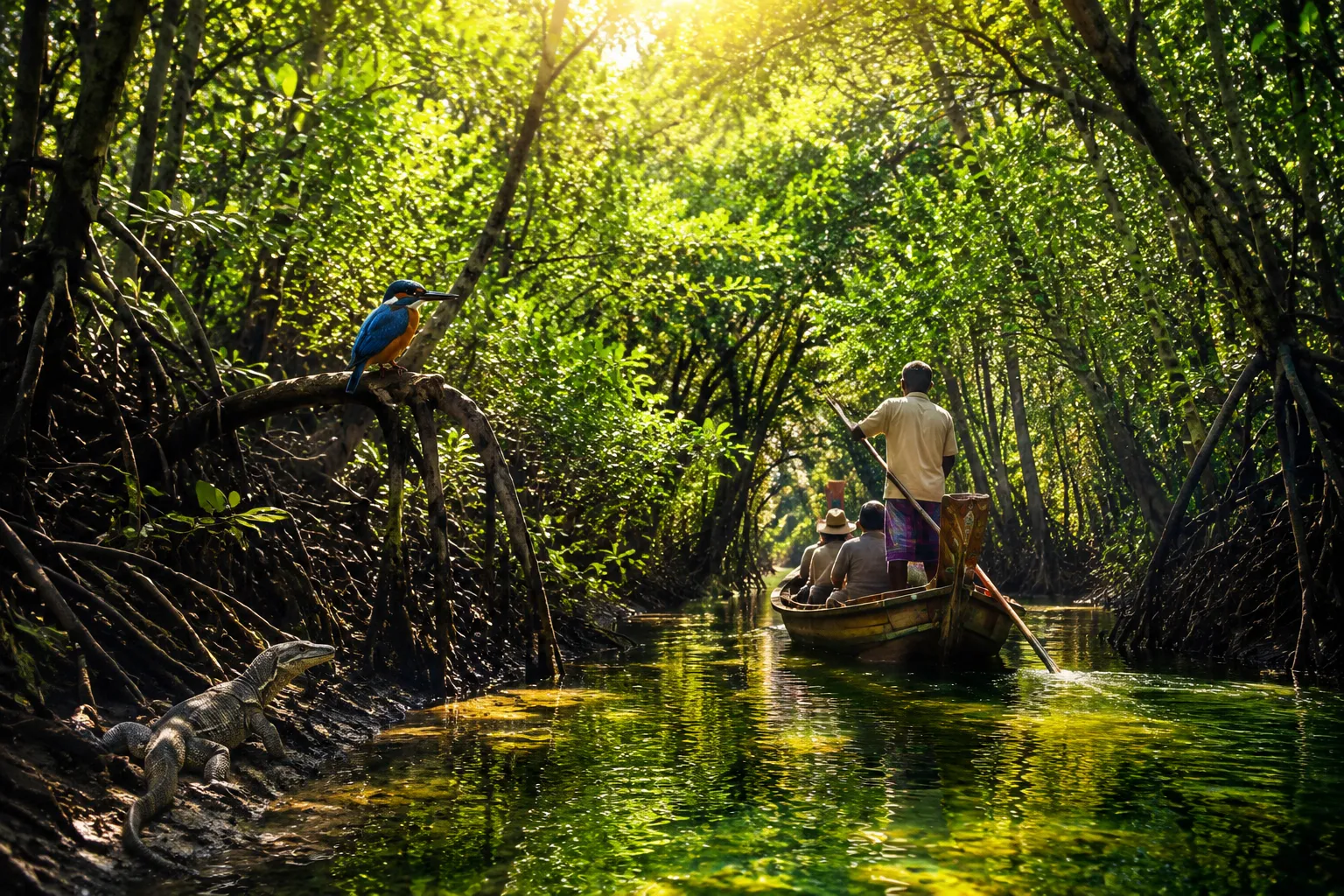
Mangrove tours in Sri Lanka take 2-4 hours by boat and pass through some of the most biodiverse coastal ecosystems in South Asia. The Balapitiya mangrove forest and Madu River estuary are the two most visited sites [5][9].
Wildlife you’re likely to see:
Why mangroves matter (practically):
Three eco-tour operators currently run certified mangrove tours from Bentota and Balapitiya, including guided boat circuits and community-run village visits [5][9].
Common mistake: Booking a standard “river cruise” that passes through mangroves without a trained naturalist guide. The difference in ecological insight, and conservation impact, is significant. Always ask if the guide is locally trained and if fees support community conservation programs.
Each spot suits a different traveler. Here’s a direct comparison:
Weligama / Mirissa (South Coast)
Unawatuna (South Coast)
Arugam Bay (East Coast)
For this 10-day eco-surf and conservation itinerary: Start at Weligama or Mirissa for surf lessons, then move south to Kosgoda for turtle work and Balapitiya for mangroves. This route keeps everything within a 2-hour drive and aligns with the November, March season.
Some operators are genuinely conservation-focused; others use “eco” as a marketing label. The distinction matters for both your experience and the communities you visit.
Signs of a legitimate eco-operator:
Red flags:
Community-run projects like the Kosgoda hatchery and the Balapitiya mangrove tours operate with direct community benefit and have verifiable conservation outcomes [1][5][9].
Practical tip: Email operators before booking and ask two questions: “Who leads your conservation activities?” and “What percentage of fees goes to local projects?” Legitimate operators answer clearly.
Pack light. Most surf gear is available to hire locally, and conservation sites provide gloves and tools for hatchery work.
Non-negotiables:
Leave at home:
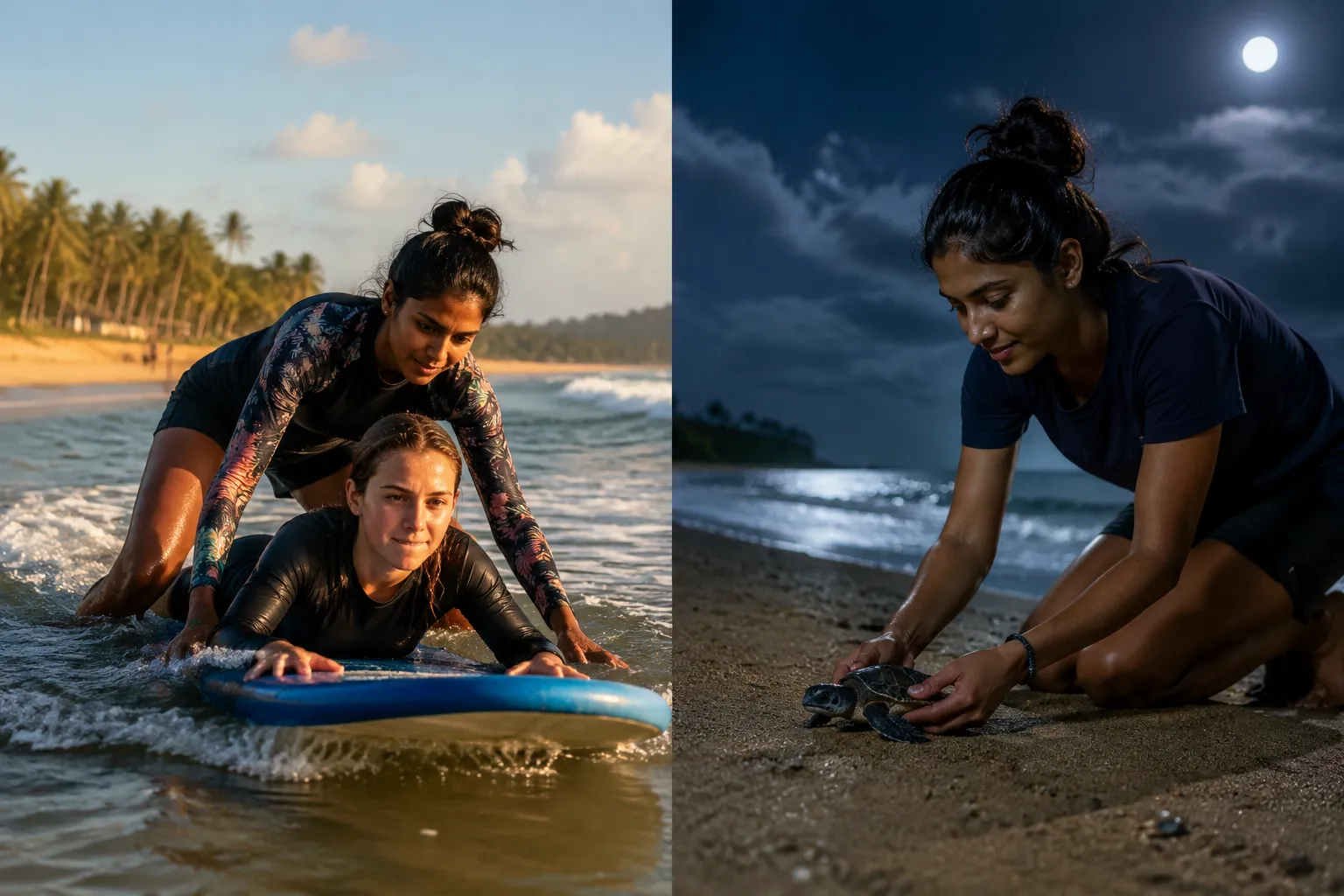
Yes, and the schedule works naturally. Surf sessions typically run early morning (6-9am) when winds are calm and waves are cleanest. Conservation activities, turtle hatchery visits and mangrove tours, run in the afternoon and evening, or at dawn before surf.
A typical day on this Sri Lanka Eco-Surf & Conservation Itinerary: 10 Days of Waves, Turtle Projects & Mangrove Tours might look like:
The activities don’t compete, they complement each other. Surf in the morning, conserve in the afternoon. [7][3]
Most mistakes come from under-researching operators or misunderstanding what “eco” actually involves on the ground.
Top mistakes:
This itinerary is moderate in physical demand, accessible to most healthy adults, but not entirely passive.
Surfing: Paddling out and popping up on a board is a full-body workout. Expect sore shoulders and core muscles for the first 2-3 days. Beginners typically surf 1-1.5 hours per session.
Mangrove tours: Seated boat tours require minimal exertion. Some operators offer optional kayaking through narrower channels, which adds a moderate upper-body workout.
Turtle hatchery work: Light physical activity, walking beach transects at night, carefully moving eggs, or crouching near hatchling tanks. Suitable for most fitness levels.
Are there eco-surf trips for non-swimmers? Some operators offer mangrove tours and hatchery visits as standalone activities that don’t require swimming. However, surf lessons require basic swimming ability in open water. If swimming isn’t possible, the conservation half of the itinerary remains fully accessible [8].
This sample itinerary focuses on the south coast for the November, March season.
| Day | Location | Activity |
|---|---|---|
| 1 | Colombo → Weligama | Arrive, settle in, evening beach walk |
| 2 | Weligama | Beginner surf lesson (morning), rest |
| 3 | Weligama | Surf session + intro to reef-safe practices |
| 4 | Kosgoda | Turtle hatchery visit, afternoon hatchling observation |
| 5 | Kosgoda | Overnight beach patrol (volunteer program) [2][8] |
| 6 | Balapitiya | Mangrove boat tour (morning), community lunch [5] |
| 7 | Mirissa | Surf lesson + whale watching option (seasonal) |
| 8 | Mirissa | Free surf morning, local fishing village visit |
| 9 | Hikkaduwa | Coral reef snorkel + reef restoration briefing |
| 10 | Colombo | Travel day, depart |
Q: Do I need a visa to visit Sri Lanka for an eco-surf trip? Most nationalities can obtain an Electronic Travel Authorization (ETA) online before arrival. Check the Sri Lanka Immigration website for current requirements.
Q: Is Arugam Bay better than Mirissa for eco-surf trips? Mirissa and Weligama are better for eco-surf itineraries combining turtle projects and mangrove tours, because those conservation sites are concentrated on the south coast. Arugam Bay offers better waves for experienced surfers but fewer integrated conservation options nearby.
Q: Can children join turtle hatchery visits? Yes. Most hatcheries welcome families and have child-friendly guided tours. Nighttime releases may have age restrictions, check with the specific operator [1][4].
Q: Are there eco-surf packages that don’t require swimming skills? Yes. Several operators offer conservation-only programs (hatchery volunteering, mangrove tours) that don’t involve the ocean. Surf components require basic open-water swimming ability [8].
Q: How far in advance should I book? Book conservation volunteer slots at least 6-8 weeks ahead for peak season (December, February). Day visits to hatcheries can often be booked 1-2 weeks out [2].
Q: Is it safe to surf in Sri Lanka as a solo female traveler? Yes. Weligama and Mirissa have well-established surf schools with female instructors available. The eco-surf community in these towns is welcoming and safety-conscious.
Q: What currency is used and can I pay by card? Sri Lankan Rupees (LKR) are the local currency. Cards are accepted at most hotels and tour operators, but carry cash for local restaurants, tuk-tuks, and smaller conservation projects.
Q: What’s the difference between a hatchery visit and a volunteer program? A hatchery visit is a 2-3 hour guided tour. A volunteer program is a structured stay of 1-4 weeks where you actively assist with data collection, nest monitoring, and releases [2][8].
A Sri Lanka Eco-Surf & Conservation Itinerary covering 10 days of waves, turtle projects & mangrove tours is one of the most practical ways to combine active travel with genuine conservation impact. You don’t need to be an experienced surfer, a marine biologist, or a big-budget traveler to make it work.
Actionable next steps:
Sri Lanka’s coastline offers something rare: world-class surf right next to active, community-run conservation work. The two don’t just coexist, each makes the other more meaningful.
[1] D24419 A22550 – https://www.viator.com/Bentota-attractions/Kosgoda-Sea-Turtle-Conservation-Project/d24419-a22550/2
[2] Turtle Conservation Project In Sri Lanka – https://careerbreak.com/trip/turtle-conservation-project-in-sri-lanka/
[3] 10 Day Sri Lanka Family – https://www.thesrilankanguideline.com/itineraries/10-day-sri-lanka-family
[4] Kosgoda Sea Turtle Conservation Project Sri Lanka L165374 – https://www.getyourguide.com/kosgoda-sea-turtle-conservation-project-sri-lanka-l165374/
[5] Balapitiya Kosgoda Trip – https://www.civitatis.com/en/bentota/balapitiya-kosgoda-trip/
[6] Surf In Arugam Bay – https://oceanfever.com/packages/surf-in-arugam-bay/
[7] Surfing Adventure Culture Sri Lanka 11 Days – https://www.kimkim.com/c/surfing-adventure-culture-sri-lanka-11-days
[8] Sri Lanka Turtle Conservation – https://adventure360.com/trips/sri-lanka-turtle-conservation
[9] Three Eco Tours To Experience Sri Lankas Mangrove Forests – https://silverkris.singaporeair.com/experience/ecotourism/three-eco-tours-to-experience-sri-lankas-mangrove-forests/