Physical Address
304 North Cardinal St.
Dorchester Center, MA 02124
Physical Address
304 North Cardinal St.
Dorchester Center, MA 02124
Last updated: July 19, 2026
Quick Answer: Sri Lanka packs more wildlife photography opportunities per square mile than almost anywhere in Asia. The best Sri Lanka itinerary for wildlife photographers covering 10 days of safaris, birding, and golden hour landscapes runs a south-to-east circuit: Sinharaja → Udawalawe → Bundala → Yala → Kumana, with optional whale-watching off Mirissa or Trincomalee. Ten days is enough for serious results if you pre-book jeeps, arrive at park gates before sunrise, and position yourself for golden-hour light. [1][5]
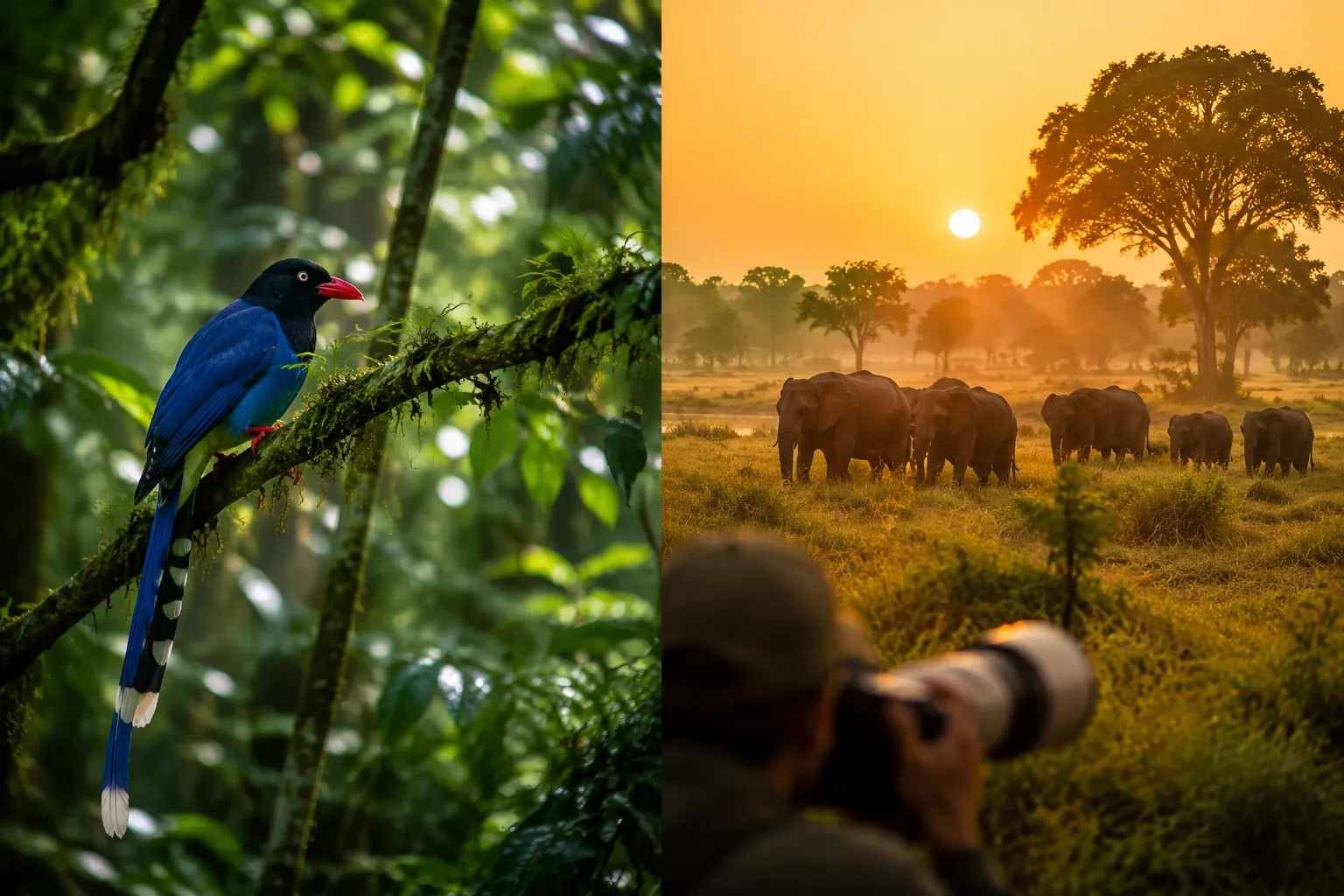
January through April is the prime window for wildlife photographers targeting the south and east of Sri Lanka. Dry conditions concentrate animals around waterholes, vegetation is low enough for clean sightlines, and the light quality during these months is exceptional. [6]
Seasonal breakdown for photographers:
| Season | Months | Best Regions | Photography Conditions |
|---|---|---|---|
| Dry (south/east) | Jan, Apr | Yala, Udawalawe, Bundala | Excellent, low vegetation, concentrated wildlife |
| Dry (north/west) | May, Sep | Wilpattu, Kaudulla | Good for elephants; Wilpattu for leopards |
| Whale watching | Nov, Jan | Mirissa coast | Blue whales, sperm whales |
| Birding peak | Oct, Mar | Sinharaja, Kitulgala | Migratory birds swell endemic counts |
Common mistake: Booking around school holidays without checking park closures. Yala Block 1 closes annually from September 1 to October 15 for the dry season rest period. Plan around this.
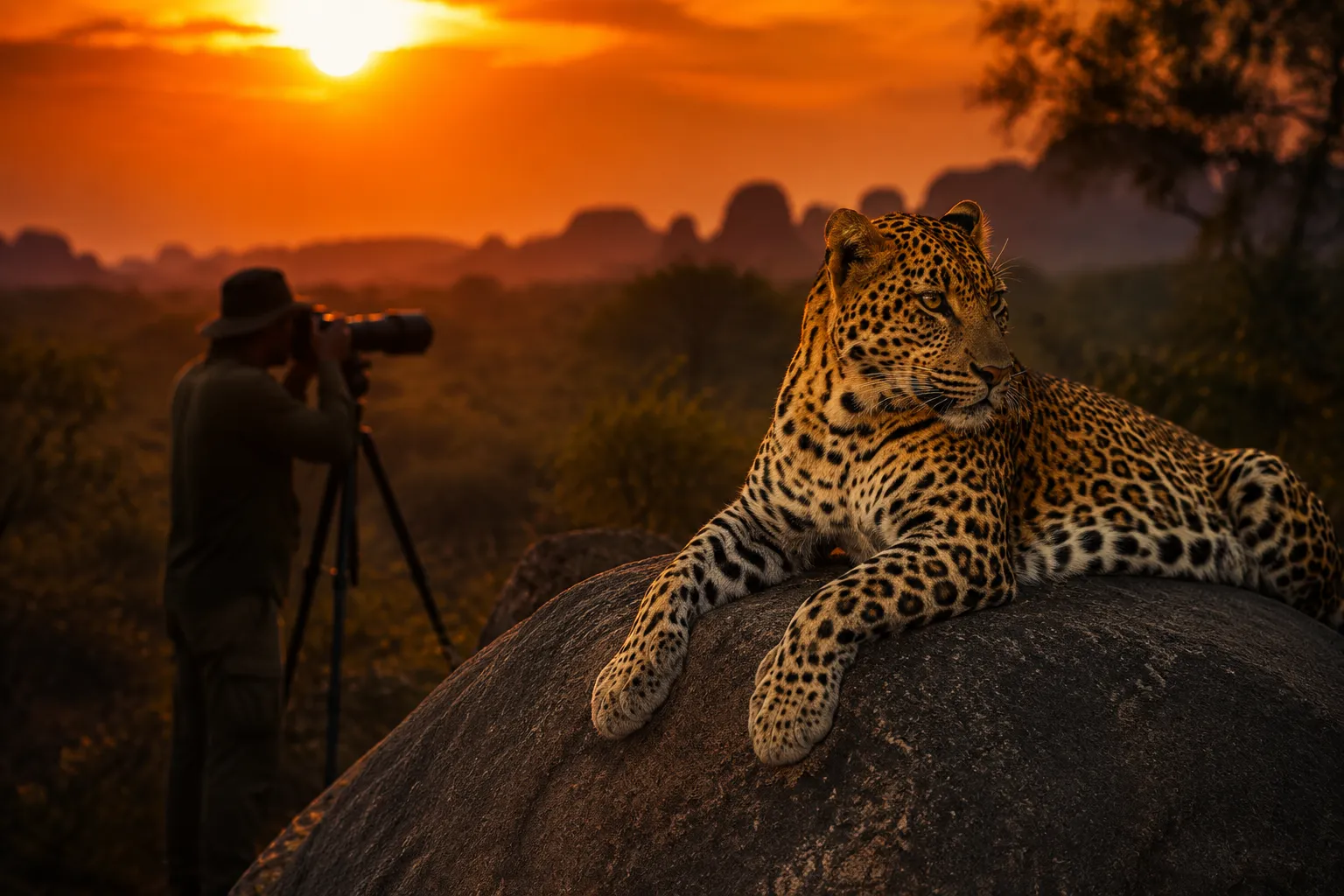
Yala Block 1 holds one of the highest leopard densities recorded anywhere in the world, making it the top choice for leopard photography. Udawalawe is the undisputed elephant park, open plains, predictable elephant family groups, and almost no forest cover to obstruct shots. [5][6]
Park-by-park guide for photographers:
Yala is a leopard park with dense scrub and dramatic rock formations. Udawalawe is an elephant park with open grasslands and a large reservoir. Choose based on your primary subject.
Both parks deserve at least two full days each on this 10-day route.
This circuit is validated by multiple specialist photography tour operators running the same core route in 2025-2026. [1][2][8]
Day-by-day breakdown:
Budget between USD $2,500 and $5,000 per person for a self-arranged trip. Guided specialist photography tours run higher, typically $4,000,$7,500 per person, and include expert naturalist guides, optimized park timing, and photography-specific jeep setups. [2][7]
Cost breakdown (approximate per person):
Money-saving tip: Booking a private jeep rather than sharing is worth every dollar for photographers. You control the positioning, the stops, and the timing.
A 400-600mm telephoto lens is the core tool. Most subjects, leopards on rocks, elephants at distance, waterbirds in lagoons, require reach. A 100-400mm zoom works for versatile shooting; a 500mm or 600mm prime delivers sharper results when subjects cooperate. [5][9]
Recommended kit list:
Beginner note: You don’t need the most expensive gear. A crop-sensor camera with a 100-400mm zoom produces publishable results in Sri Lanka’s bright conditions.
Yes, Sri Lanka is one of the best places in the world to photograph blue whales. The deep waters off Mirissa (south coast) and Trincomalee (east coast) are reliable blue whale and sperm whale locations. [6][9]
For photographers, bring a 300-500mm lens on a boat with a stabilized platform. Early morning departures (6 a.m.) offer calmer seas and better light.
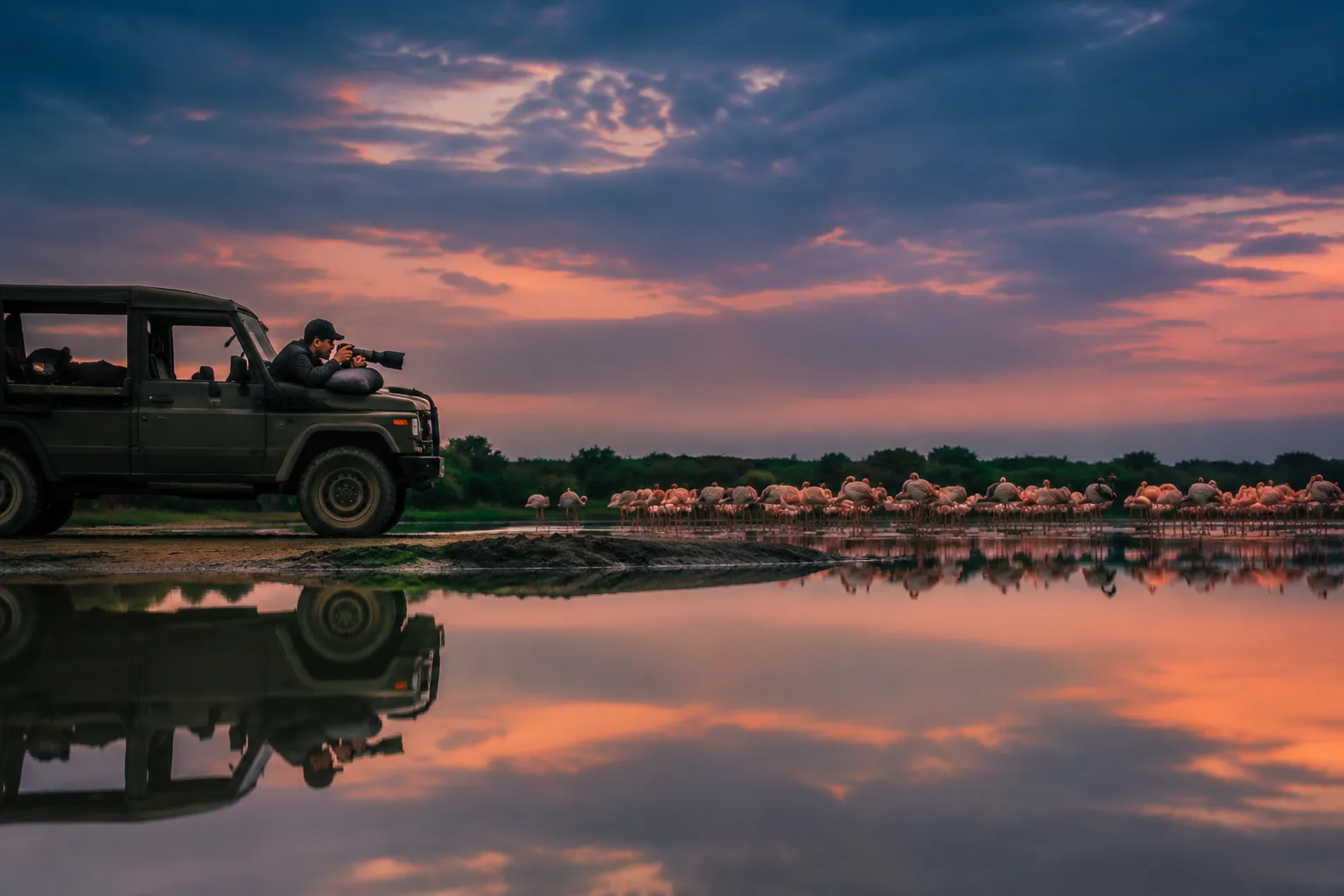
The best golden hour spots combine wildlife and landscape in a single frame. Udawalawe tank bund at sunrise, Yala’s Patanangala beach at sunset, and Bundala’s flamingo lagoons at dawn are the top three. [6][8]
Golden hour location guide:
Stay in the jeep whenever possible, vehicles act as mobile hides and birds habituate to them far faster than to humans on foot. For rainforest birding in Sinharaja, move slowly, wear muted colors, and let the guide locate birds by call before you raise the camera. [3][4]
Ethical birding photography rules:
Sri Lanka has 34 endemic bird species. Specialist birding guides from operators like Walk With Jith or Darter Photography Tours know exact perch spots and feeding trees for endemic species. [3][4]
Ten days is enough to cover the core south-east circuit well, but only if you avoid wasting time on tourist sites and keep transfers short. The biggest time-killers are long road transfers and midday sightseeing that eats into golden-hour sessions. [1][8]
Make 10 days work by:
If you have 14 days, add Wilpattu in the northwest and Kaudulla for the elephant gathering (August, October).
Sri Lanka has two monsoon seasons that affect different regions at different times. The southwest monsoon (May, September) brings heavy rain to Sinharaja, the hill country, and Colombo. The northeast monsoon (October, January) affects the north and east coast. [6]
The most costly mistake is arriving at park gates after sunrise. By 7:30 a.m., the best light is gone and most predators have retreated to shade. [5][9]
Other mistakes to avoid:
Yes. Sri Lanka is one of the most beginner-friendly wildlife photography destinations in Asia. Open-terrain parks like Udawalawe and Bundala give clear sightlines, animals are relatively habituated to jeeps, and subjects like elephants are large enough to capture with mid-range zoom lenses. [7][9]
Beginners should:
Specialist photography tour operators outperform general safari guides because they understand light, composition, and jeep positioning. The following operators run dedicated wildlife photography itineraries in Sri Lanka: [1][2][3][4][5][7][8][9]
Tip: Always confirm that your guide has a dedicated photography background, not just a wildlife guiding license. Ask to see sample itineraries and client photos before booking.
The jeep is your hide. Position it broadside to the animal at the same level, never above. Ask your driver to cut the engine and coast to a stop rather than braking sharply. For birds, approach from downwind and use the jeep door as a natural frame support for your beanbag. [4][5]
Practical positioning tips:
Q: Do I need a visa to visit Sri Lanka for a photography trip? Most nationalities can obtain an Electronic Travel Authorization (ETA) online before arrival. Apply at least 48 hours before departure.
Q: How many park drives can I do per day in Yala? Yala Block 1 allows two drives per day: a morning drive (opens at 5:30 a.m., closes at 10 a.m.) and an afternoon drive (opens at 2 p.m., closes at 6:30 p.m.). Serious photographers should do both.
Q: Is a 100-400mm lens enough for Sri Lanka? Yes, for most subjects. Elephants and waterbirds at Bundala and Udawalawe are approachable enough for a 100-400mm. For leopards at distance in Yala, a 500-600mm gives you more reach and better subject isolation.
Q: What’s the best lodge for photography near Yala? Lodges inside or on the boundary of Yala Block 1 allow you to be at the gate at opening time without a long transfer. Ask operators for options near the Palatupana entrance.
Q: Can I photograph elephants at Pinnawala Elephant Orphanage? Pinnawala is a popular tourist stop, but most wildlife photographers skip it. The conditions don’t produce natural behavior shots. Udawalawe’s wild herds are far more rewarding.
Q: Is Sri Lanka safe for solo wildlife photographers? Sri Lanka is generally very safe for tourists. Solo photographers should hire a reputable guide and inform their accommodation of daily plans when entering remote parks.
Q: What’s the best way to photograph the Sinharaja rainforest birds? Hire a specialist birding guide who knows the feeding trees and perch spots for endemic species. Early morning (5:30-9 a.m.) is the only productive window before heat and humidity reduce bird activity.
Q: Can I bring a drone into Sri Lanka’s national parks? Drones require special permits and are generally not allowed inside national parks. Check current Civil Aviation Authority of Sri Lanka regulations before traveling.
Q: How far in advance should I book jeeps and guides? Book at least 3-4 months ahead for peak season (January, April). Private jeeps in Yala Block 1 sell out quickly during high season.
Q: What’s the best single day for a first-time visitor to Sri Lanka’s parks? A full day in Udawalawe, sunrise drive, midday rest, afternoon drive, gives the most guaranteed wildlife sightings and the cleanest photographic conditions of any park on the circuit.
The best Sri Lanka itinerary for wildlife photographers covering 10 days of safaris, birding, and golden hour landscapes is a focused south-to-east circuit: Sinharaja for endemic birds, Udawalawe for elephants, Bundala for flamingos, Yala for leopards, and Kumana for waterbird colonies. The formula is simple, private jeep, pre-dawn starts, golden-hour positioning, and a guide who thinks like a photographer.
Actionable next steps:
Sri Lanka rewards photographers who plan ahead and move with intention. Ten days is enough to come home with a portfolio that covers leopards, elephants, endemic birds, and landscapes, if every hour of golden light is used well.
[1] Photography Tour Sri Lanka – https://www.naturetalks.com/product/photography-tour-sri-lanka/ [2] Wildlife Photography Tour – https://www.akorndmc.com/destinations/sri-lanka/recommendeditineraries/wildlife-photography-tour/ [3] Sri Lanka Endemic Birds Herps Photography Tour – https://darter.in/photography-tours/wildlife/sri-lanka-endemic-birds-herps-photography-tour/ [4] Bird Wildlife And Nature Photography Tours Sri Lanka – http://www.walkwithjith.com/bird-wildlife-and-nature-photography-tours-sri-lanka [5] Sri Lanka Wildlife – https://www.wildimages-phototours.com/photography-tours/sri-lanka-wildlife/ [6] Sri Lanka Wildlife Itineraries A Guide For Ecotravellers – https://www.jetwingeco.com/wp-content/uploads/2025/09/sri-lanka-wildlife-itineraries-a-guide-for-ecotravellers.pdf [7] Wildlife Photography Tour – https://www.epicsrilankaholidays.com/tours/general-tour/wildlife-photography-tour.html [8] Sri Lanka The Wild Island Photographic Tour Sri Lanka – https://justexplorers.com/en/product/sri-lanka-the-wild-island-photographic-tour-sri-lanka/ [9] Sri Lanka – https://wildlensnature.tours/tours/sri-lanka/ [10] Lke01 – https://www.saiyulanka.com/itinerary/LKE01/