Physical Address
304 North Cardinal St.
Dorchester Center, MA 02124
Physical Address
304 North Cardinal St.
Dorchester Center, MA 02124
Last updated: July 18, 2026
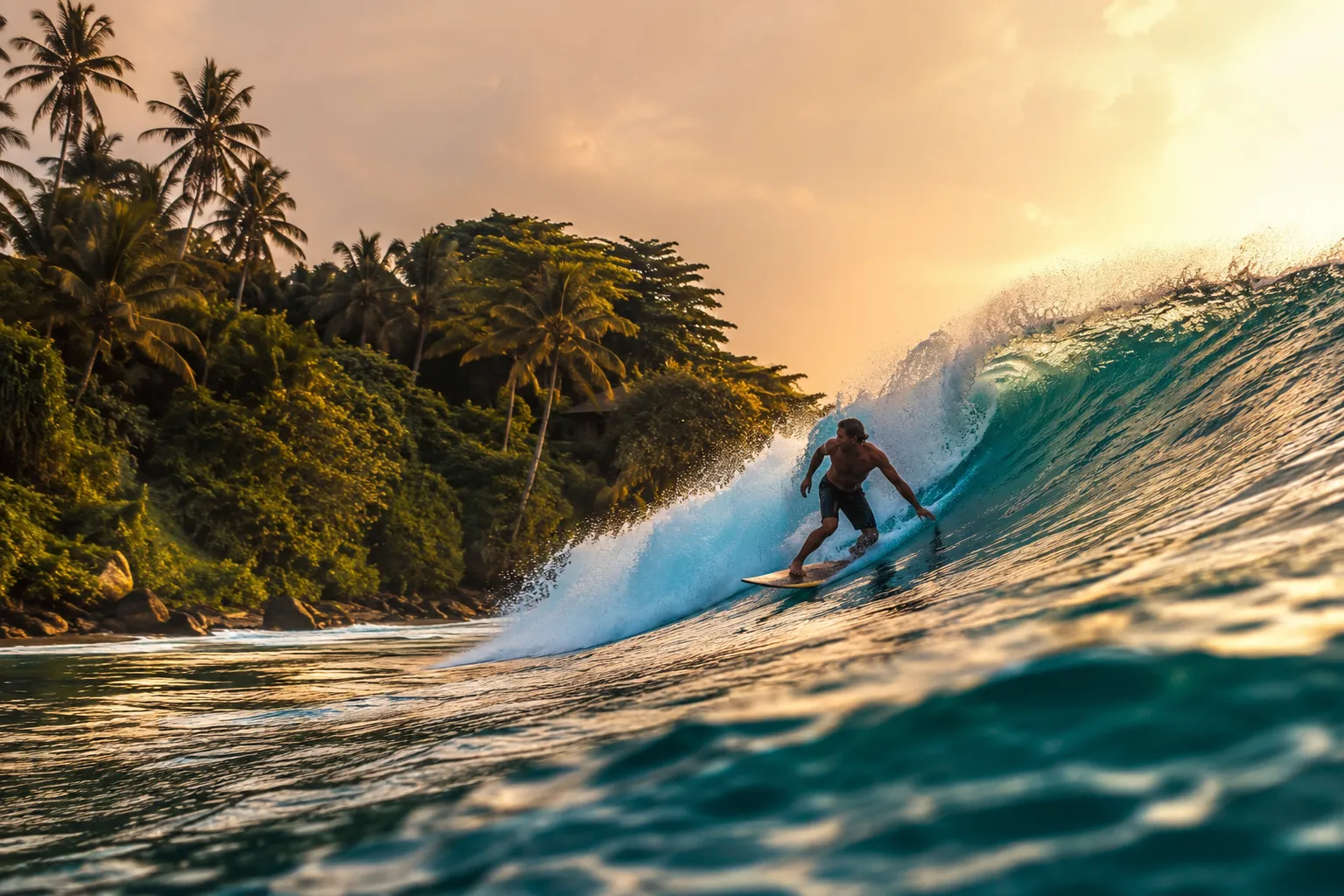
Quick Answer: The best Sri Lanka surf trip itinerary for intermediate surfers covers 10 days split between Arugam Bay on the east coast (peak season May, September) and the south coast spots of Hiriketiya and Mirissa. Intermediate surfers get the most value from Sri Lanka’s right-hand point breaks and reef breaks, which reward surfers who can already trim, turn, and read a lineup, not just stand up.
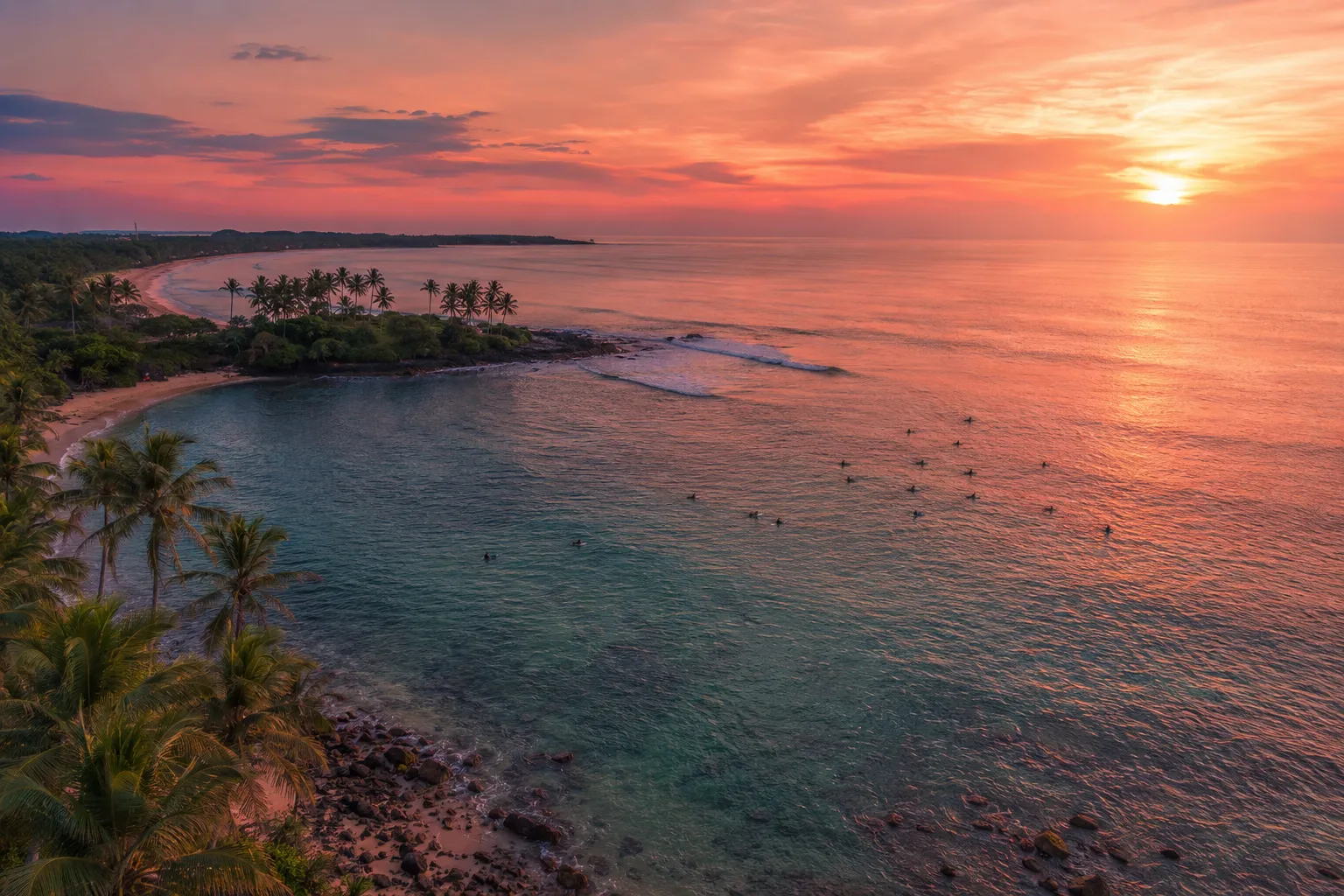
Sri Lanka has both, and knowing which is which helps you pick the right spot for your skill level.
Point breaks form where a headland or rocky point sticks into the ocean, bending the swell into a long, peeling wave. Arugam Bay’s Main Point is the classic example, waves peel right for 300-400 meters, giving you time to link turns and build speed. [2] They’re more forgiving on timing because the wave walls up gradually.
Reef breaks form over submerged coral or rock. They tend to be faster, hollower, and less predictable than point breaks. Whiskey Point, about 5 km north of Arugam Bay, is a right-hand reef break that offers faster, punchier waves than Main Point. [2] Reef breaks reward surfers who can read a lineup and commit to drops, a good reason why intermediate skill is genuinely the minimum here.
Choose a point break if you want longer rides and room to practice turns. Choose a reef break if you’re ready to push your speed and tube-riding skills, and you’re wearing reef booties.
The answer depends entirely on which coast you’re surfing.
For a 10-day trip focused on reef and point breaks, June to August on the east coast is the sweet spot for intermediates. Swells are consistent, crowds are manageable outside of peak weekends, and the dry weather means you’re not paddling through rain squalls.
Swell forecast note: Sri Lanka’s east coast picks up south and southeast groundswells generated in the Southern Ocean. These swells tend to be most consistent in June and July. Arugam Bay’s Main Point needs at least 3 feet of swell to perform well, below that, the wave gets mushy and loses its shape. [2] Check Surfline or Windguru in the two weeks before your trip to fine-tune your travel window.
For intermediates focused on point breaks and reef waves, Arugam Bay wins, but Mirissa earns a spot on a 10-day itinerary for variety.
Arugam Bay offers multiple breaks within a short radius, consistent swell during the east coast season, and a full surf infrastructure (board rentals, camps, repair shops). Main Point is one of the best right-hand point breaks in Asia for intermediates. [2]
Mirissa (south coast) is better suited to the November, April window. The wave is a beach and reef mix, fun and punchy, but shorter rides than Arugam Bay. It works well as a warm-up destination if you’re arriving in Sri Lanka before heading east.
Hiriketiya (near Dikwella on the south coast) is a horseshoe bay with a right-hand reef that’s become one of the most talked-about spots in Sri Lanka. It’s more sheltered than Mirissa, which means it handles bigger swells better and stays surfable in cross-shore winds.
| Spot | Break Type | Best Season | Crowd Level | Best For |
|---|---|---|---|---|
| Arugam Bay Main Point | Right point break | May, Sept | Moderate, High | Intermediate, Advanced |
| Whiskey Point | Right reef break | May, Sept | Low, Moderate | Intermediate |
| Hiriketiya | Right reef/bay | Nov, Apr | Moderate | Intermediate |
| Mirissa | Beach/reef mix | Nov, Apr | Moderate | Beginner, Intermediate |
| Peanut Farm | Beach break | May, Sept | Low | Beginner, Intermediate |
Some Sri Lanka breaks are beginner-friendly, but the reef and point breaks on this itinerary genuinely require intermediate ability.
Peanut Farm, about 3 km south of Arugam Bay, is a softer beach break where beginners can practice safely. [2] Weligama on the south coast is Sri Lanka’s most established beginner zone, with gentle beach break waves and dozens of surf schools.
Main Point, Whiskey Point, and Hiriketiya are not suitable for true beginners. The reef entries are rocky, the currents can be strong, and the wave speed at Whiskey Point in particular will punish anyone who hesitates on the drop.
The honest minimum for this itinerary: You should be able to consistently catch unbroken waves, ride down the line (not just straight to the beach), and do at least a basic bottom turn. If you’re still working on popping up reliably, spend a few days at Peanut Farm or Weligama first.
Excluding international flights, a 10-day surf trip to Sri Lanka costs roughly USD 600-1,100 per person, depending on your accommodation and board rental choices.
Here’s a realistic breakdown:
Total estimate: USD 620-1,050, not including flights or travel insurance. Travel insurance is strongly recommended, reef injuries happen, and medical evacuation is expensive.
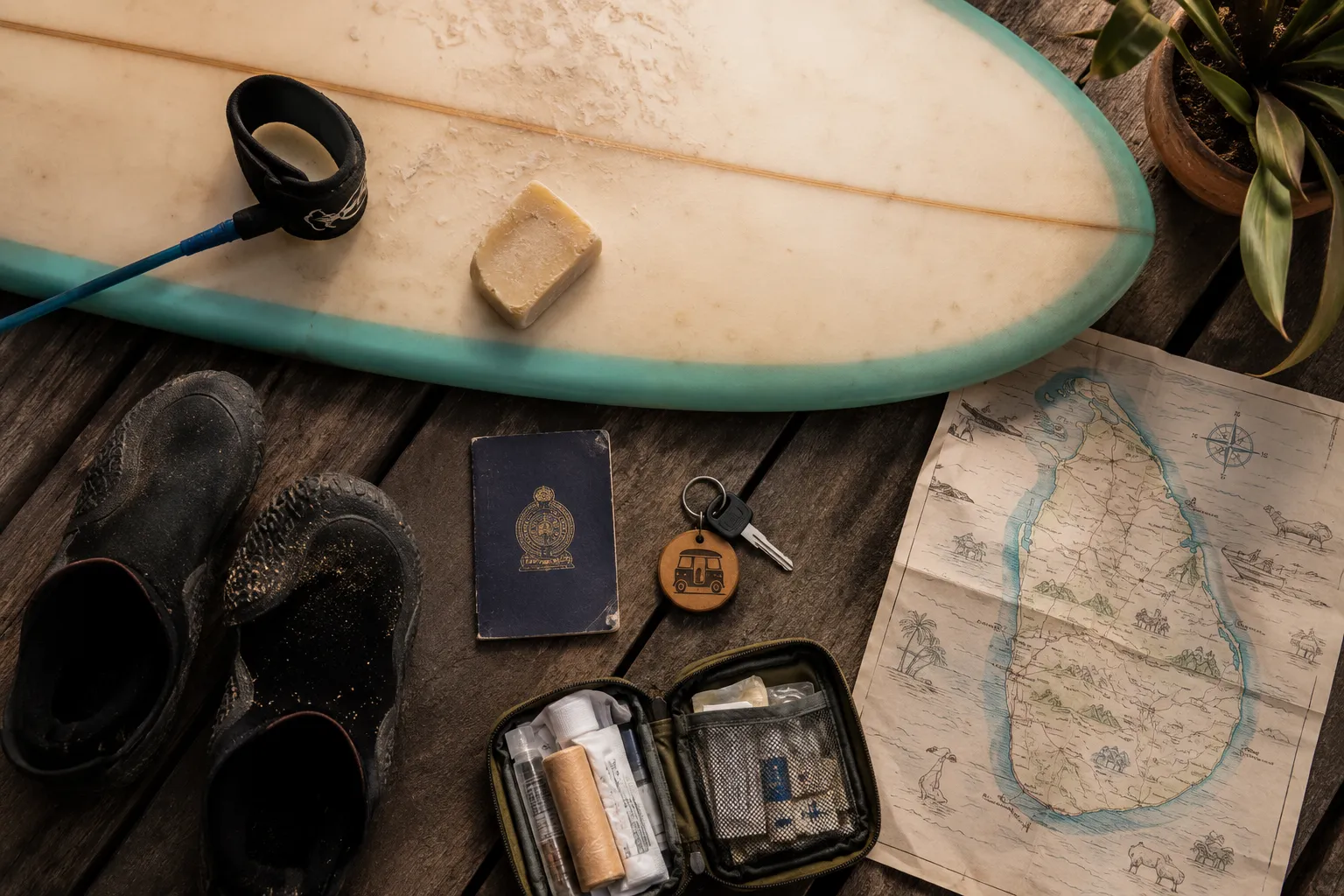
Pack smart. Sri Lanka’s reef breaks make certain items non-negotiable.
Must-bring gear:
Board options:
Leave at home:
Getting between surf spots is straightforward, but plan ahead when traveling with boards.
Colombo to Arugam Bay:
Between breaks near Arugam Bay:
South coast to east coast transition:
Flat days are part of every surf trip. Sri Lanka makes them easy to fill.
Knowing these in advance saves you time, money, and skin.
Sri Lanka is generally safe for solo travelers, including solo women. The main surf towns, Arugam Bay, Mirissa, Hiriketiya, are well-established tourist areas with good infrastructure.
Practical safety notes:
Most of Sri Lanka’s main surf breaks are easy to find independently, no guide required for Arugam Bay, Hiriketiya, or Mirissa.
That said, hiring a local guide for one or two days is worth USD 30-50 and pays off in two ways: you’ll find lesser-known spots that don’t appear on surf maps, and you’ll get real-time advice on which break is working best given the current swell direction and tide.
Guides are especially useful for Pottuvil Point and the breaks north of Whiskey Point, which require local knowledge to access safely.
Arugam Bay has the widest range of surf-specific accommodation in Sri Lanka. [2]
Booking tip: For Arugam Bay during June, August, book at least a month ahead. For the south coast in November, April, two weeks’ notice is usually enough outside of Christmas and New Year’s week.
Q: What’s the best month to visit Arugam Bay for surfing? June and July offer the most consistent swell and dry weather on Sri Lanka’s east coast. August is also good but can get crowded. [1][3]
Q: How big do waves get at Arugam Bay’s Main Point? Main Point needs at least 3 feet of swell to work well. During peak season, it regularly hits 4-6 feet, with occasional larger swells. [2]
Q: Can I rent a surfboard in Arugam Bay? Yes. Board rentals are widely available at USD 10-20 per day, covering shortboards, mid-lengths, and funboards. [2]
Q: Is Arugam Bay suitable for intermediate surfers traveling solo? Yes. The town is compact, the surf community is welcoming, and the breaks are well-signposted. Solo surfers regularly visit without issues.
Q: Do I need travel insurance for a Sri Lanka surf trip? Strongly recommended. Reef cuts, wipeouts, and potential medical evacuation costs make travel insurance with adventure sports coverage essential.
Q: How long does it take to get from Colombo airport to Arugam Bay? About 6 hours by private transfer (USD 80-100) or 7-8 hours by bus. [2]
Q: What’s the water temperature in Sri Lanka? Around 27-29°C year-round. Boardshorts and a rashguard are all you need.
Q: Is Hiriketiya better than Arugam Bay for intermediates? They serve different seasons. Hiriketiya (November, April) is a sheltered bay with a fun reef break. Arugam Bay (May, September) has longer, more consistent point break waves. Both are excellent for intermediates.
Q: Can I do a 10-day trip covering both the east and south coasts? Yes, but only if your travel window overlaps with good conditions on both coasts (rare). Most surfers pick one coast per trip and go deeper into the local breaks.
Q: What’s the crowd situation like at Main Point? Moderate to busy during peak season (June, August), especially on weekends. Paddle out early (before 7am) for the best conditions and fewer people in the lineup.
The best Sri Lanka surf trip itinerary for intermediate surfers rewards those who plan around the season, pack the right gear, and don’t rush straight to the most famous break on day one.
Your action plan:
Sri Lanka’s reef and point breaks are genuinely world-class for intermediate surfers. The infrastructure is solid, the cost is accessible, and the waves are consistent enough to justify the journey. Plan it right, and 10 days here will push your surfing further than a month at a crowded tourist beach break anywhere else.
[1] Surfing Sri Lanka – https://www.thesrilankaguides.com/things-to-do/surfing-sri-lanka/?utm_source=openai
[2] Surf East Coast Arugam 10 Days – https://www.srilanka-spirit.com/itineraries/surf-east-coast-arugam-10-days/?utm_source=openai
[3] Sri Lanka Weather July – https://www.weather-atlas.com/en/sri-lanka-weather-july?utm_source=openai