Physical Address
304 North Cardinal St.
Dorchester Center, MA 02124
Physical Address
304 North Cardinal St.
Dorchester Center, MA 02124
Last updated: July 17, 2026
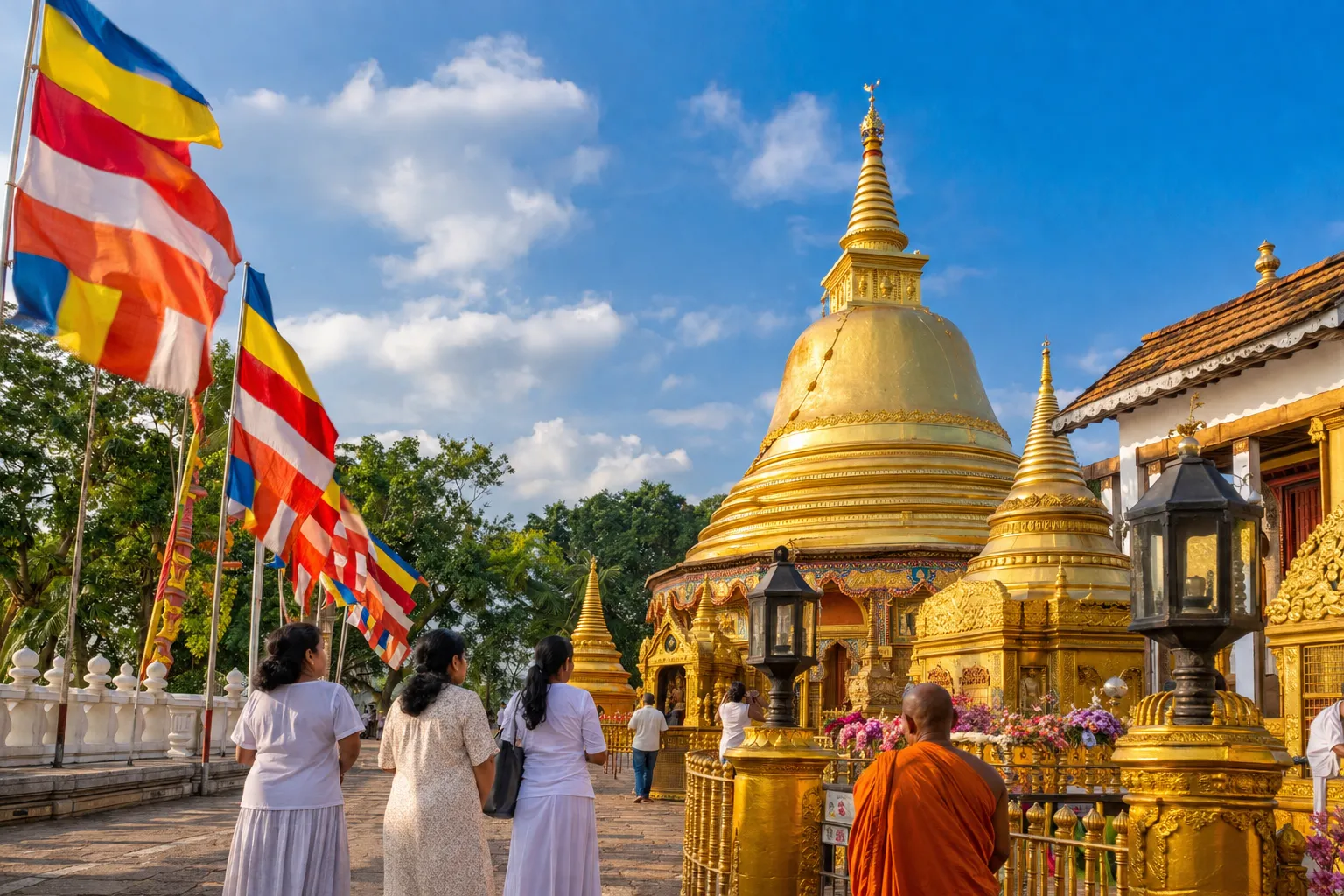
Sri Lankan cultural customs center around Buddhist traditions, respect for elders, and conservative dress codes, especially at religious sites where covering shoulders and knees is mandatory. Understanding these customs prevents unintentional offense and creates meaningful connections with locals who deeply value cultural respect.
• Dress modestly at temples and religious sites – cover shoulders, knees, and remove shoes • Never touch someone’s head or point feet toward Buddha statues – both are considered deeply offensive • Use your right hand for eating, greeting, and giving/receiving items • Show special respect to Buddhist monks – women should never touch monks directly • Remove shoes when entering homes, temples, and some shops • Greet with palms together (Ayubowan) rather than handshakes in formal situations • Ask permission before photographing people or religious ceremonies • Avoid public displays of affection and revealing clothing in public spaces
Sri Lankan culture blends Buddhist principles with centuries-old traditions emphasizing respect, hierarchy, and community harmony. The most important customs revolve around religious reverence, family honor, and social etiquette that visitors should understand before arriving [1].
Core Cultural Values: • Religious devotion – Buddhism influences daily life and social interactions • Respect for elders – Age and wisdom command automatic deference • Community over individual – Group harmony takes priority over personal preferences • Hospitality traditions – Guests receive exceptional care and attention • Conservative social norms – Modesty in dress and behavior is expected
Daily Social Customs: • Morning and evening temple visits for many locals • Extended family involvement in major decisions • Shared meals as community bonding time • Gift-giving protocols for special occasions • Formal greetings based on age and social status
Visitors must cover shoulders and knees completely when entering any Buddhist or Hindu temple in Sri Lanka. Tank tops, shorts, mini-skirts, and revealing clothing will result in denied entry at most religious sites [2].
Temple Dress Requirements: • Shoulders covered – No sleeveless tops or off-shoulder clothing • Knees covered – Long pants or skirts that reach below the knee • Shoes removed – Always take off footwear before entering temple grounds • Head covering – Not required but respectful at some Hindu temples • Avoid tight clothing – Loose-fitting garments show greater respect
Practical Temple Clothing Tips: • Carry a lightweight scarf to cover bare shoulders quickly • Wear slip-on shoes for easy removal at multiple sites • Choose breathable fabrics in Sri Lanka’s tropical climate • Pack long pants even if you prefer shorts elsewhere • Consider buying traditional clothing locally as respectful souvenirs
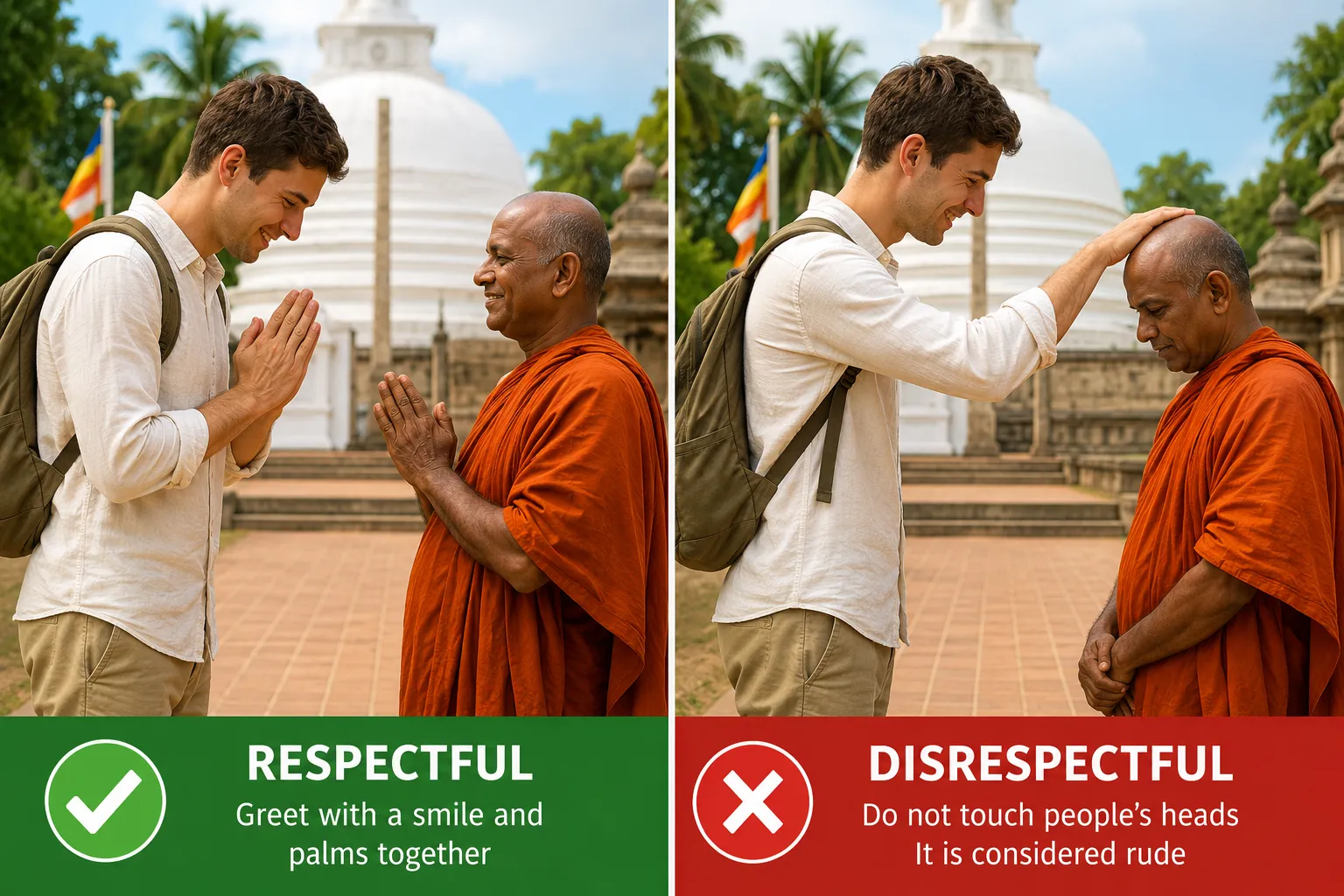
Touching anyone’s head in Sri Lanka is extremely offensive and considered one of the most disrespectful acts possible. The head is viewed as the most sacred part of the body in Buddhist culture, and even casual hair ruffling of children by tourists causes serious offense [3].
Head-Related Cultural Rules: • Never touch heads – Not even children or close friends • Avoid pointing over heads – Don’t reach across someone’s head space • Remove hats respectfully – Take off caps when greeting elders • No head patting – Western gestures of affection don’t translate • Keep your head lower – Bow slightly when greeting respected individuals
Related Body Language Guidelines: • Don’t point feet toward people or Buddha statues • Use both hands when giving or receiving important items • Avoid pointing with a single finger – use an open palm instead • Keep public displays of affection minimal • Stand when elders enter a room
Most Sri Lankans follow Buddhist dietary guidelines that discourage alcohol consumption and often include vegetarianism, though practices vary by individual and region. Beef is particularly sensitive since many Hindus consider cows sacred [4].
Dietary Sensitivities: • Beef restrictions – Many locals avoid beef for religious reasons • Alcohol limitations – Buddhism discourages drinking, though it’s not universally followed • Pork considerations – Some Muslim communities avoid pork entirely • Vegetarian preferences – Many Buddhists eat vegetarian on religious days • Halal requirements – Muslim areas follow Islamic dietary laws
Respectful Dining Approach: • Ask about dietary restrictions before ordering for groups • Respect alcohol-free zones around temples • Don’t assume everyone eats meat or drinks alcohol • Try local vegetarian dishes – they’re often exceptional • Follow your host’s lead during shared meals
The traditional Sri Lankan greeting “Ayubowan” involves pressing palms together at chest level with a slight bow, meaning “may you live long.” This greeting shows more respect than casual handshakes, especially with elders or in formal situations [5].
Traditional Greeting Protocol: • Ayubowan gesture – Palms together, slight bow, sincere eye contact • Age hierarchy – Younger people greet elders first • Gender considerations – Some conservative families prefer same-gender greetings • Religious contexts – Always use traditional greetings at temples • Business settings – Handshakes are acceptable but Ayubowan shows cultural awareness
Modern Greeting Adaptations: • Urban areas often blend traditional and Western greetings • Tourist areas accommodate handshakes readily • Younger generations may prefer casual approaches • International business contexts typically use handshakes • When in doubt, follow the local person’s lead
Women should never touch Buddhist monks directly or hand items to them personally – instead, place objects on a surface for monks to collect. All visitors should dress conservatively around monks and avoid sitting higher than them [6].
Monk Interaction Guidelines: • Women’s restrictions – No direct physical contact or private conversations • Seating etiquette – Sit lower than monks or stand respectfully • Gift protocol – Place offerings on tables, not in monks’ hands directly • Photography rules – Always ask permission before taking photos • Conversation topics – Keep discussions respectful and appropriate
Showing Proper Reverence: • Bow slightly when monks pass by • Step aside to let monks walk first • Dress extra conservatively in monastery areas • Speak quietly in temple compounds • Remove sunglasses and hats when addressing monks
Tourists are generally welcome to observe and participate respectfully in most Sri Lankan festivals, but should follow dress codes, ask permission for photos, and avoid disrupting religious ceremonies. Local guides can help navigate appropriate participation levels [7].
Festival Participation Guidelines: • Dress appropriately – Follow temple dress codes even at street celebrations • Ask before photographing – Especially during religious ceremonies • Follow crowd behavior – Observe how locals participate before joining • Respect sacred spaces – Some areas may be restricted to devotees only • Bring small offerings – Flowers or fruits show respect at religious festivals
Popular Tourist-Friendly Festivals: • Kandy Esala Perahera – Spectacular elephant procession • Vesak celebrations – Buddhist New Year with lantern displays • Sinhala and Tamil New Year – Community celebrations in April • Local temple festivals – Smaller, intimate cultural experiences • Full moon Poya days – Monthly Buddhist observances
The most frequent tourist mistakes include wearing inappropriate clothing to temples, touching people’s heads, using the left hand for eating, and taking photos without permission. These errors often stem from not researching Sri Lankan cultural customs tourists should know before arrival [8].
Top Cultural Mistakes: • Improper temple attire – Shorts and tank tops at religious sites • Inappropriate touching – Head patting or casual physical contact • Wrong hand usage – Eating or greeting with the left hand • Disrespectful photography – Taking pictures without asking permission • Ignoring shoe removal – Keeping footwear on in homes and temples
Easy Prevention Strategies: • Research customs before traveling • Pack conservative clothing options • Observe local behavior before acting • Ask questions when uncertain about protocols • Hire local guides for cultural site visits
Always ask permission before photographing people, religious ceremonies, or inside temples in Sri Lanka. While outdoor temple architecture is usually acceptable to photograph, interior spaces and active worship require explicit consent from authorities [9].
Photography Etiquette Rules: • Ask permission first – For people, ceremonies, and temple interiors • Respect “no photo” signs – Many sacred areas prohibit cameras entirely • Avoid flash photography – Especially in temples and during ceremonies • Don’t photograph monks – Without explicit permission • Tip for posed photos – Small payments are appreciated for portrait subjects
Safe Photography Practices: • Photograph temple exteriors and landscapes freely • Ask tour guides to help request photo permissions • Respect people who decline to be photographed • Keep cameras away during solemn religious moments • Focus on architecture and nature when unsure about protocols
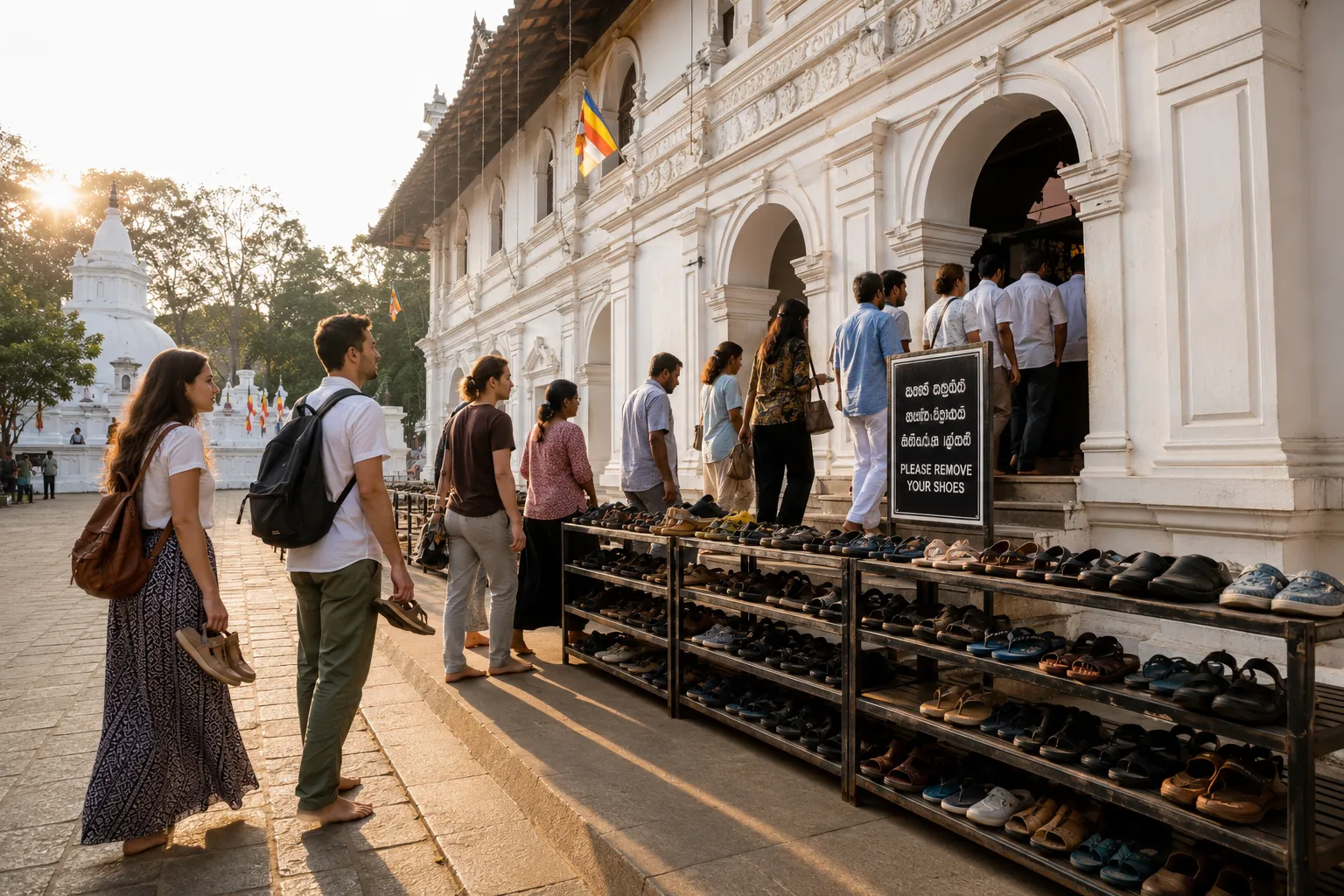
Removing shoes before entering homes, temples, and many traditional shops is mandatory in Sri Lankan culture and shows basic respect for sacred and clean spaces. Keeping shoes on is considered deeply disrespectful and unhygienic [10].
Shoe Removal Requirements: • All temples – Buddhist, Hindu, and other religious sites • Private homes – Even brief visits require shoe removal • Some shops – Traditional stores and those selling religious items • Sacred grounds – Any area considered spiritually significant • Clean spaces – Areas with carpets or where people sit on floors
Practical Shoe Tips: • Wear slip-on shoes for easy removal • Bring socks to protect feet on hot surfaces • Watch where locals remove their shoes as your guide • Keep shoes organized and easily accessible • Don’t step on thresholds while removing footwear
Avoid pointing with a single finger, showing the soles of your feet, or using your left hand for eating and greeting, as these gestures can cause offense in Sri Lankan culture. The left hand is traditionally considered unclean for social interactions [2].
Gestures to Avoid: • Single finger pointing – Use an open palm to indicate directions • Left hand usage – For eating, greeting, or giving items • Foot pointing – Never point feet toward people or Buddha statues • Thumbs up – Can be misinterpreted in some contexts • Beckoning with palm down – Use palm up when calling someone over
Appropriate Gesture Alternatives: • Point with open palm or full hand • Use right hand for all social interactions • Keep feet flat on ground when sitting • Nod or use verbal acknowledgment instead of potentially confusing hand signals • Copy local gestures when uncertain
You must cover shoulders and knees at all religious sites, but beach areas and tourist hotels typically allow more casual dress. Conservative clothing is recommended for local markets, government buildings, and when visiting rural communities where traditional values are stronger [3].
Dress Code by Location: • Religious sites – Mandatory shoulder and knee coverage • Beach resorts – Swimwear acceptable in designated areas • Local markets – Conservative dress shows respect • Government offices – Formal, covered clothing required • Rural villages – More conservative dress expected
Practical Clothing Strategy: • Pack versatile pieces that can be layered • Carry a lightweight cover-up for quick modesty adjustments • Choose breathable fabrics suitable for tropical climate • Respect local standards even when they seem strict • When in doubt, err on the side of more conservative coverage
Use your right hand for eating, wait for elders to begin meals first, and bargain respectfully at markets without becoming aggressive. Tipping is appreciated but not mandatory, and sharing food shows friendship in Sri Lankan dining culture [4].
Restaurant Etiquette: • Right hand eating – Even when using utensils • Elder precedence – Let older diners start eating first • Shared dishes – Try multiple items when eating with locals • Moderate tipping – 10% is generous, not expected everywhere • Compliment the food – Appreciation is always welcome
Market Behavior: • Polite bargaining – Negotiate prices respectfully without aggression • Right hand transactions – For money and item exchanges • Patience with vendors – Allow time for explanations and demonstrations • Small talk – Brief conversations build rapport • Respect for goods – Handle merchandise carefully
Q: Can I wear shorts in Sri Lanka? A: Shorts are acceptable at beaches and hotels, but you must wear long pants when visiting temples, government buildings, and conservative rural areas.
Q: Is it safe to drink tap water in Sri Lanka? A: Stick to bottled water for drinking. Tap water is generally safe for brushing teeth but may cause stomach upset for tourists not accustomed to local water.
Q: How much should I tip in Sri Lanka? A: Tipping 10% at restaurants is generous. For tour guides and drivers, $5-10 per day is appropriate depending on service quality.
Q: Can I use my left hand for anything in Sri Lanka? A: Use your left hand for personal hygiene and carrying bags, but always use your right hand for eating, greeting, and social interactions.
Q: Are there any colors I should avoid wearing? A: Avoid bright saffron/orange clothing as it’s associated with Buddhist monks. White is appropriate for temple visits.
Q: Can I show affection to my partner in public? A: Keep public displays of affection minimal. Hand-holding is generally acceptable, but kissing and embracing in public can cause discomfort.
Q: Is bargaining expected at markets? A: Yes, bargaining is expected at local markets and with tuk-tuk drivers, but negotiate respectfully without becoming aggressive or demanding.
Q: What should I do if I accidentally offend someone? A: Apologize sincerely and ask how to show proper respect. Most Sri Lankans are forgiving of tourists who make honest cultural mistakes.
Q: Can I visit temples during religious ceremonies? A: You can usually observe from designated areas, but avoid disrupting active worship and always ask permission before entering ceremony spaces.
Q: Is English widely spoken in Sri Lanka? A: English is commonly spoken in tourist areas, hotels, and by educated locals, but learning basic Sinhala or Tamil phrases shows respect.
Q: What’s the best way to learn about local customs quickly? A: Hire a local guide for your first few days, observe how locals behave in different situations, and don’t hesitate to ask respectful questions.
Q: Are there any topics I should avoid discussing? A: Avoid sensitive political topics related to the civil war, ethnic tensions, and controversial government policies unless locals bring them up first.
Understanding Sri Lankan cultural customs tourists should know transforms your visit from a simple vacation into a meaningful cultural exchange. The key principles – dressing modestly at temples, using your right hand for social interactions, removing shoes in sacred spaces, and showing special respect to Buddhist monks – form the foundation of respectful tourism in Sri Lanka.
Start preparing by packing conservative clothing that covers shoulders and knees, practicing the traditional Ayubowan greeting, and researching specific customs for regions you plan to visit. Most importantly, approach each cultural interaction with genuine curiosity and respect – Sri Lankans deeply appreciate visitors who make the effort to honor their traditions.
Your cultural sensitivity will be rewarded with warmer welcomes, deeper conversations, and access to experiences that remain hidden from less respectful tourists.
[1] Health & safety etiquettes for tour guides & drivers – https://sltda.gov.lk/storage/common_media/Health%20&%20Safety%20Etiquettes%20for%20Tour%20Guides%20&%20Drivers%20-%2014th%20Jan%202021969585359.pdf [2] 10 Rules For Sri Lanka – https://www.gesar-travel.com/10-rules-for-sri-lanka/?lang=en [3] Dos Donts Of Travelling In Sri Lanka – https://www.exodustravels.com/us/insights/dos-donts-of-travelling-in-sri-lanka [4] Sri Lanka – https://travel.gc.ca/destinations/sri-lanka [5] Cultural Dos And Donts – https://www.nathab.com/know-before-you-go/asia-the-pacific/sri-lanka/cultural-dos-and-donts [6] Essential Tourist Rules For Sri Lanka – https://www.lonelyplanet.com/articles/essential-tourist-rules-for-sri-lanka [7] facebook – https://www.facebook.com/groups/srilanka.travel.tours/posts/7423578237748742/ [8] Sri Lanka Tourist Etiquette – https://www.timeout.com/sri-lanka/travel/sri-lanka-tourist-etiquette [9] Culture – https://opentravelguide.com/sri-lanka/culture/ [10] Customs Etiquette – https://www.roughguides.com/sri-lanka/customs-etiquette/
SEO Meta Title: Sri Lankan Cultural Customs Tourists Should Know in 2026
SEO Meta Description: Essential guide to Sri Lankan cultural customs for tourists. Learn temple etiquette, dress codes, greeting traditions, and respectful behavior tips.