Physical Address
304 North Cardinal St.
Dorchester Center, MA 02124
Physical Address
304 North Cardinal St.
Dorchester Center, MA 02124
Last updated: July 16, 2026
Quick Answer: The Sri Lanka monsoon season itinerary (April, September) works best when you follow the weather rather than fight it. The southwest monsoon soaks the west and south coasts during this period, but the east coast stays sunny and dry from May through September, making beaches like Arugam Bay, Trincomalee, and Pasikuda the smart starting point. Pair those with the Cultural Triangle and short hill-country stops for a rain-smart trip that rarely gets rained out.
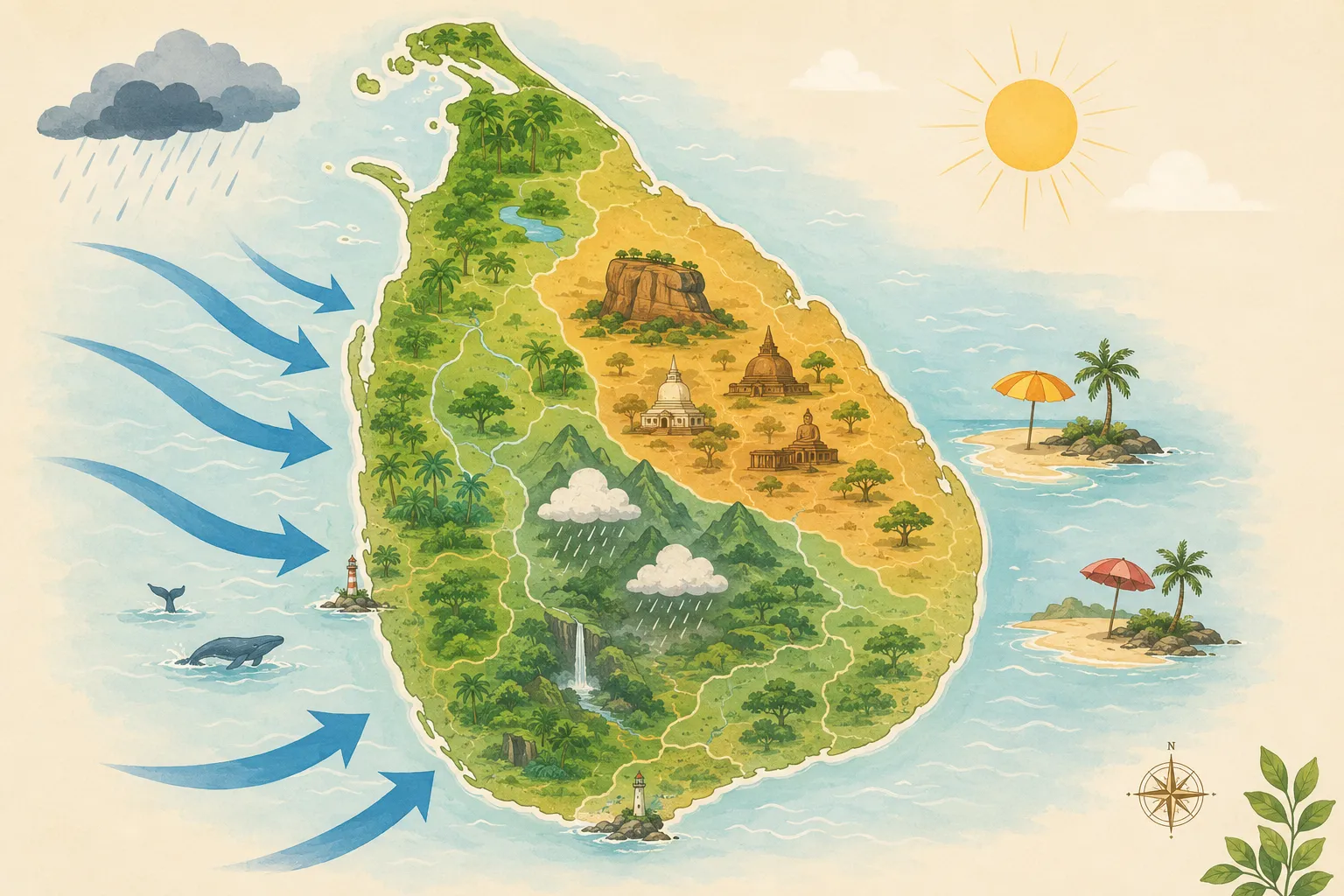
Sri Lanka has two distinct monsoon systems, and understanding them is the single most useful thing you can do before booking. The southwest monsoon (Yala) runs from May to September and brings heavy rain to the south and west coasts, Colombo, Galle, and the southern beaches. The northeast monsoon (Maha) hits from October to January, affecting the north and east coasts instead [1][10].
This means the island is almost never entirely wet at the same time. When the west is rainy, the east is sunny, and vice versa.
Practical takeaway:
🌦️ Rule of thumb: Follow the dry coast, not the calendar date.
Yes, with preparation. The east coast is genuinely safe and sunny for most of this window. The risks are concentrated on the west coast, in the hill country during heavy rain, and along coastal roads during storm warnings [9].
In July 2026, Sri Lanka’s meteorological department issued strong wind warnings across 23 districts and flagged rough seas affecting coastal travel and aviation [9]. These events are real but not constant, they typically last 24-72 hours.
Safety checklist for monsoon travel:
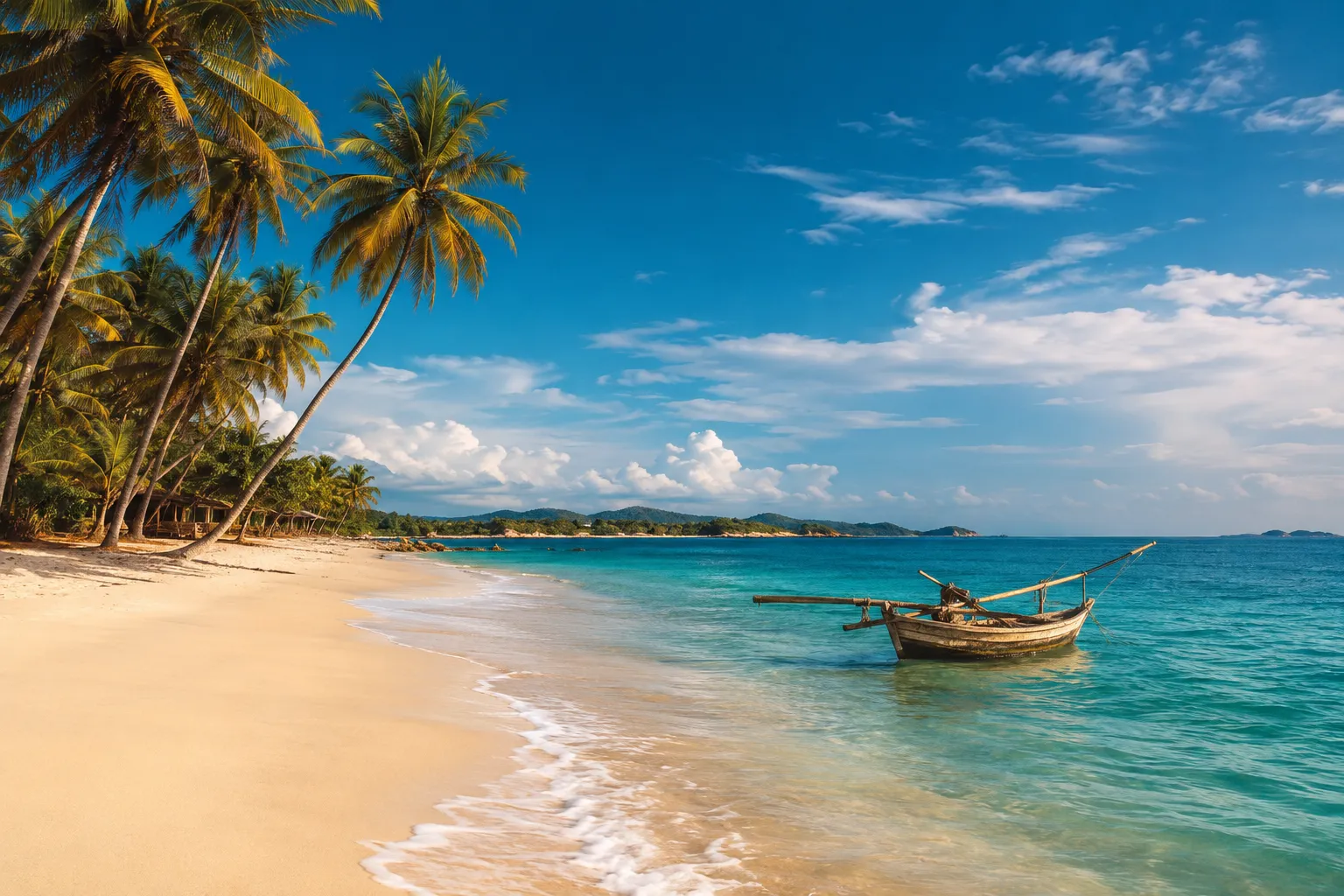
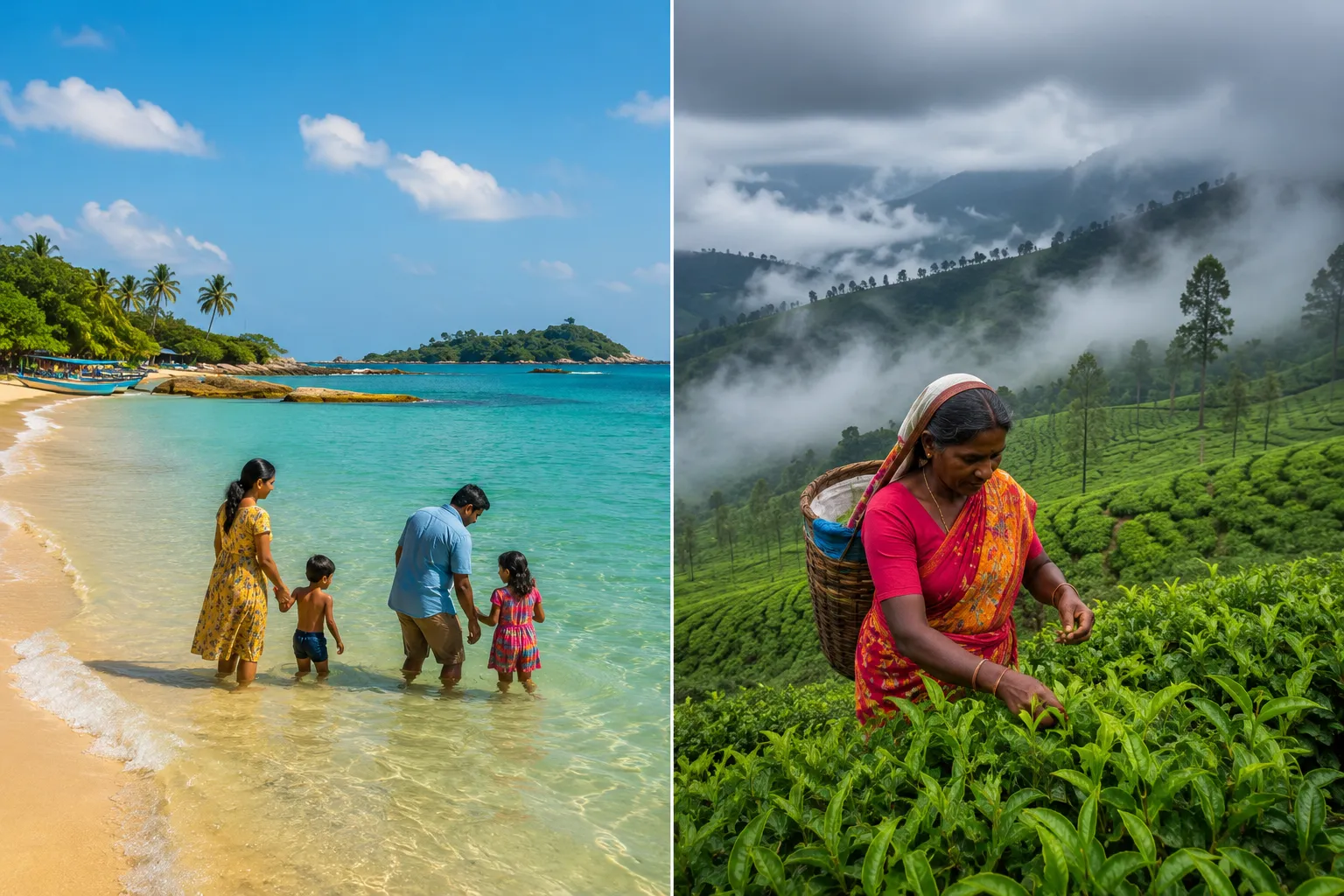
The east coast is the star of any Sri Lanka monsoon season itinerary (April, September). Three beaches stand out for different reasons [2][3][7][8].
Arugam Bay, Best for surfers and backpackers. The surf season runs May, October, peaking June, August. The main break is world-class. Nightlife, cheap guesthouses, and a laid-back vibe make it the most social option [7].
Trincomalee (Nilaveli & Uppuveli), Best for snorkelling and whale watching. Calm, clear water from May, August. Pigeon Island National Park sits just offshore, snorkelling there is one of the best experiences on the island [8].
Pasikuda, Best for families and calm-water swimming. The bay is naturally sheltered, with almost no waves. The dry season runs April, September, with flat, calm seas and minimal rain in May, August. October, March brings rough seas and heavy rain, making Pasikuda unsuitable outside this window [5].
| Beach | Best For | Peak Months | Avoid |
|---|---|---|---|
| Arugam Bay | Surfing, budget travel | June, August | October, April |
| Trincomalee | Snorkelling, families | May, August | November, March |
| Pasikuda | Calm swimming, luxury | May, September | October, March |
On the east coast, yes, conditions are excellent from May through August and still good in September [5][8]. The sea is calm, warm (around 27-29°C), and clear enough for snorkelling.
On the west and south coasts, no, the southwest monsoon creates strong rip currents, rough surf, and dangerous conditions from May through September. Many beaches on that side of the island are flagged with red warning flags during this period.
Quick rules:
Tea country is beautiful in the rain, misty hills, green terraces, and waterfalls in full flow. But it does get wet. Hill-country rainfall runs 250-350 mm per month from May to September, with cooler temperatures around 20-26°C [4][9].
The smart approach is to keep your hill-country stay to 2-3 days and fill it with indoor and sheltered activities rather than long hikes.
Best things to do in tea country during monsoon:
What to skip in wet weather: Long hikes to Little Adam’s Peak or Horton Plains in heavy rain, trails get slippery and views disappear in cloud.
Rainy days are a real part of any Sri Lanka monsoon season itinerary (April, September), even on the east coast. The good news: Sri Lanka has excellent indoor and sheltered cultural options that hold up in any weather [8].
Cultural Triangle (mostly dry May, September):
Colombo on a rainy day:
Practical tip: Build at least one “indoor culture day” into every 3-day block of your itinerary. It removes the stress of watching weather forecasts.
Both work well, the difference is depth, not quality.
7-Day Sri Lanka Monsoon Itinerary (April, September)
10-Day Sri Lanka Monsoon Itinerary (April, September)
Choose 7 days if you want maximum beach time with minimal travel. Choose 10 days if you want the full contrast of coast, hills, and culture.
Location choice matters more during the monsoon than any other time of year. These towns consistently deliver good experiences from April, September [2][8].
Avoid basing yourself in Galle, Mirissa, or Hikkaduwa from May, September, these west and south coast towns are directly in the path of the southwest monsoon [1][10].
Costs vary by travel style, but here’s a realistic breakdown for 2026.
Budget traveller (USD per person per day):
Mid-range traveller:
Practical cost notes:
Pack light but pack smart. The east coast is hot and humid (30-33°C); hill country is cool and damp (18-24°C). You need gear for both [9].
Essential packing list:
Skip: Heavy boots (unnecessary weight), multiple pairs of jeans (they won’t dry), or a large umbrella (impractical in wind).
Yes, Colombo is actually one of the best places to be on a rainy day in Sri Lanka. The city gets wet from May, September as part of the southwest monsoon zone, but it’s a functional, interesting city that doesn’t depend on sunshine [1][9].
Why Colombo works in the rain:
Honest caveat: Don’t plan more than 2 days in Colombo during monsoon season. The city floods in heavy rain, traffic becomes chaotic, and the outdoor attractions (Galle Face Green, harbour walks) are unpleasant when wet.
Transport during monsoon season requires flexibility. Roads in hill country can close after landslides; coastal roads flood; and tuk-tuks in heavy rain are miserable [9].
Best transport options by situation:
Common mistake: Booking non-refundable buses or shared vans for hill-country routes during heavy rain. A private driver costs more but saves hours of delay.
Most rain-related disappointments come from planning errors, not bad luck.
Top mistakes and how to avoid them:
Q: What is the best month to visit Sri Lanka’s east coast? June and July are the most reliable months, sunshine is at its peak, seas are calm, and surf conditions at Arugam Bay are excellent. May and August are close runners-up [8].
Q: Can I visit Sigiriya during the monsoon season? Yes. The Cultural Triangle including Sigiriya stays mostly dry from May, September, making it one of the best regions to visit during this period. Climb early morning to avoid afternoon showers [8].
Q: Is the Kandy to Ella train running during monsoon season? Yes, it runs year-round. Occasional delays happen after heavy rain, but cancellations are rare. Book the observation car (2nd class) in advance through the Sri Lanka Railways website.
Q: How long does it take to get from Colombo to Arugam Bay? About 7-8 hours by bus or private car. Many travellers fly into Colombo, spend a night, then travel east the next morning.
Q: Are there jellyfish on the east coast during monsoon season? Jellyfish can appear on any Sri Lankan beach at any time of year, but they’re not a consistent problem on the east coast during May, September. Ask locals at your specific beach before swimming.
Q: Is Yala National Park open during monsoon season? Yala’s main sections close in September for the annual maintenance period. Check current status before planning a visit in late August or September [7].
Q: Do I need a visa to visit Sri Lanka? Most nationalities need an Electronic Travel Authorization (ETA) before arrival. Apply at eta.gov.lk at least a few days before travel.
Q: What currency does Sri Lanka use? The Sri Lankan Rupee (LKR). ATMs are widely available in Colombo, Kandy, and tourist towns. Carry some cash for small guesthouses and tuk-tuks on the east coast.
Q: Is it cheaper to travel Sri Lanka during monsoon season? On the west coast, yes, prices drop significantly. On the east coast, May, August is peak season, so prices are higher and availability tighter. Book early.
Q: What vaccinations do I need for Sri Lanka? Consult your doctor or travel clinic, but standard recommendations include Hepatitis A, Typhoid, and ensuring routine vaccinations are up to date. Malaria prophylaxis may be recommended for rural areas.
A Sri Lanka monsoon season itinerary (April, September) doesn’t mean settling for bad weather, it means being smart about where you go and when. The east coast beaches at Arugam Bay, Trincomalee, and Pasikuda offer some of the best beach conditions in Asia during this window. The Cultural Triangle stays dry and uncrowded. Hill country is best in short, focused doses with indoor plans ready.
Your next steps:
The monsoon season is not a reason to skip Sri Lanka. For many travellers, it’s the best time to go.
[1] Sri Lanka Monsoon Season – https://blog.wego.com/sri-lanka-monsoon-season/ [2] Best Time To Visit Sri Lanka In 2026 A Comprehensive Month By Month Regional Guide – https://www.sithiyam.com/post/best-time-to-visit-sri-lanka-in-2026-a-comprehensive-month-by-month-regional-guide [3] Best Time To Visit Sri Lanka – https://feelfreetravel.com/blog/sri-lanka/best-time-to-visit-sri-lanka/ [4] Best Time To Visit – https://ceylonroute.com/best-time-to-visit/ [5] Pasikuda Beach Sri Lanka 2026 East Coast Complete Guide – https://srilankatourhelp.org/articles/pasikuda-beach-sri-lanka-2026-east-coast-complete-guide [7] Arugam Bay To Yala East Coast Sri Lanka Guide 2026 – https://www.yalawildlife.com/blog/arugam-bay-to-yala-east-coast-sri-lanka-guide-2026 [8] Sri Lanka East Coast May September Season Guide 2026 – https://ceylonroute.com/blog/sri-lanka-east-coast-may-september-season-guide-2026/ [9] Sri Lanka Weather Monsoons Guide 2026 – https://www.yalawildlife.com/blog/sri-lanka-weather-monsoons-guide-2026 [10] Weather – https://www.selectiveasia.com/sri-lanka-holidays/weather