Physical Address
304 North Cardinal St.
Dorchester Center, MA 02124
Physical Address
304 North Cardinal St.
Dorchester Center, MA 02124
Last updated: July 15, 2026
Quick Answer: December through March is the single best window to visit Sri Lanka’s south and west coasts. Skies are clear, seas are calm, and blue whales are actively feeding off Mirissa. A 10-14 day loop from Colombo through Galle, Mirissa, Yala, Ella, and Kandy covers beaches, wildlife, and hill country in one efficient trip, no wasted days chasing dry weather.
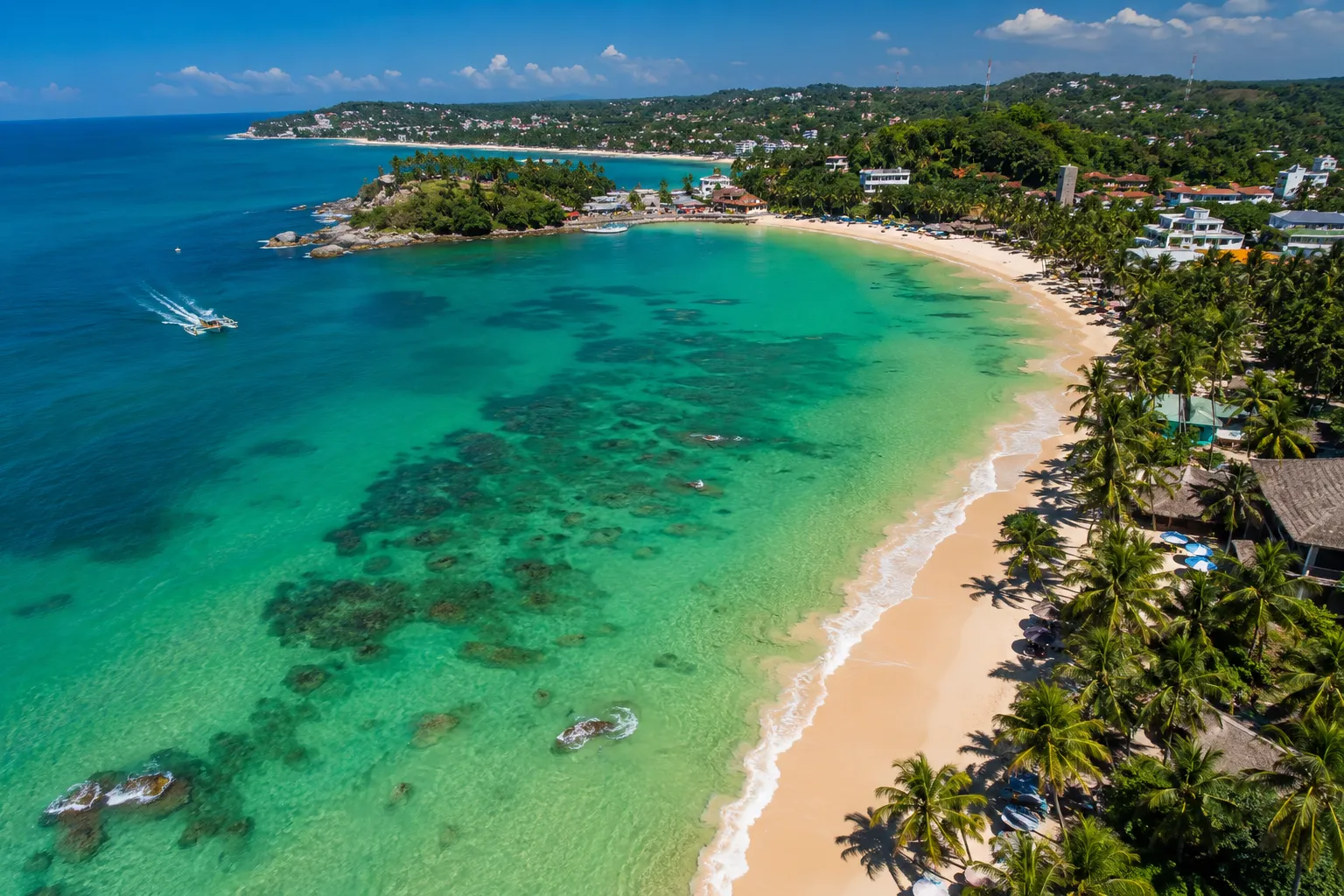
December to March is consistently the best time for Sri Lanka’s south and west coast beaches. The southwest monsoon fades by late November, leaving Galle, Hikkaduwa, Mirissa, and Bentota with calm seas, low humidity, and reliable sunshine through to late March. [2][5]
Average temperatures sit between 27-30°C on the coast, warm enough for swimming but not oppressively hot. [2]
Key beach windows by month:
| Month | South/West Coast | East Coast | Hill Country |
|---|---|---|---|
| December | ✅ Excellent | ⚠️ Wet (NE monsoon) | ✅ Good, cooler |
| January | ✅ Excellent | ⚠️ Still wet | ✅ Good |
| February | ✅ Peak | ❌ Avoid | ✅ Good |
| March | ✅ Peak | 🔄 Improving | ✅ Good |
Common mistake: Many first-timers assume “dry season” means the whole island. It doesn’t. The north and east coasts are wet December through January. Stick to the south and west during this window. [2][8]
10 days is the realistic minimum for a south coast + hill country loop. Anything shorter means spending too much time in transit and not enough time at each destination.
14 days is the sweet spot, it adds buffer for a Yala safari day, a slower pace in Ella, and a proper day in Colombo.
Both work. The choice depends on budget, pace, and whether wildlife is a priority.
Mirissa, Galle, Hikkaduwa, and Bentota are the top four for this season. Each has a different personality.
Choose Mirissa if whale watching is a priority. Choose Bentota if you want calm water and a quieter pace. Choose Hikkaduwa if you’re on a tighter budget and want water sports.
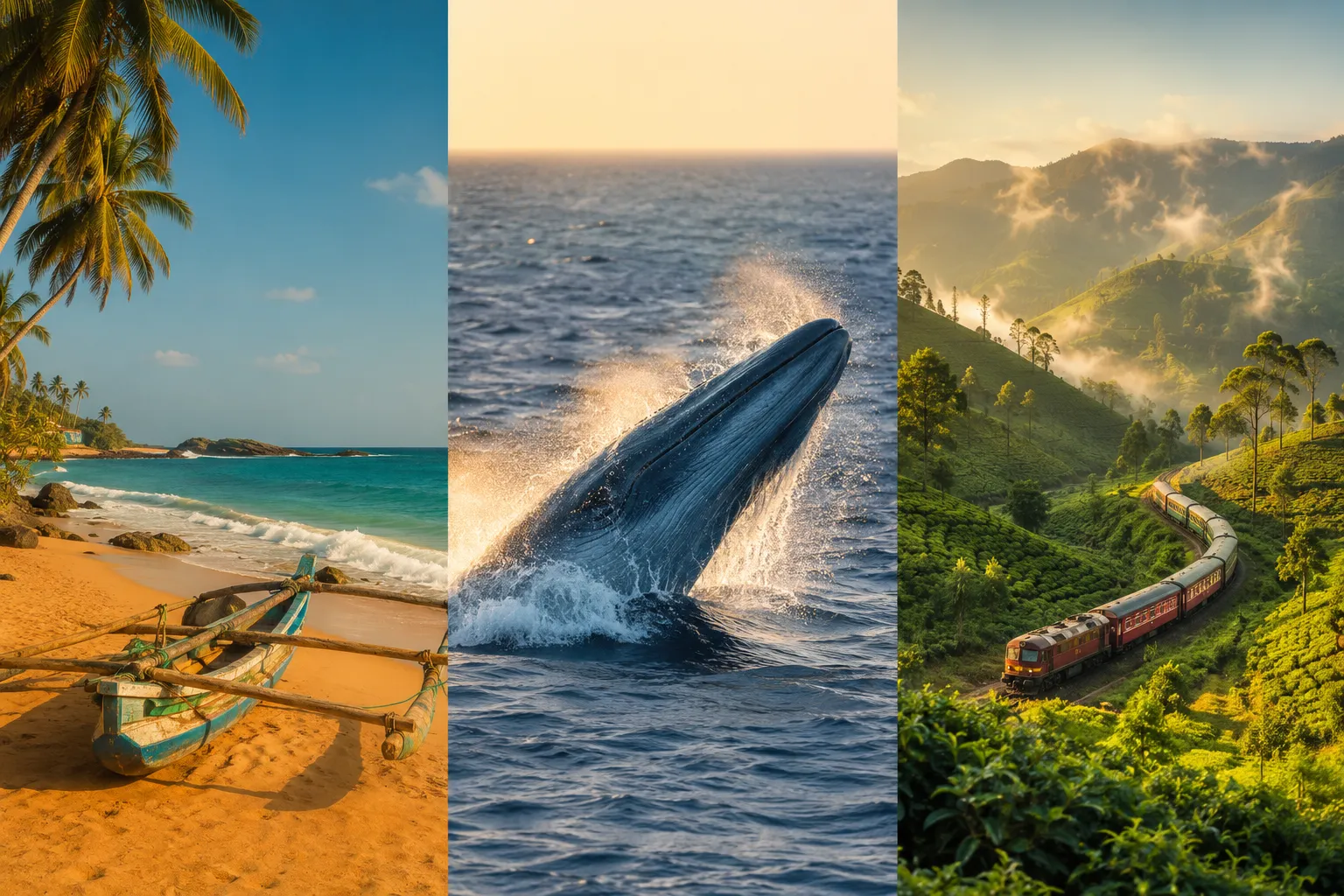
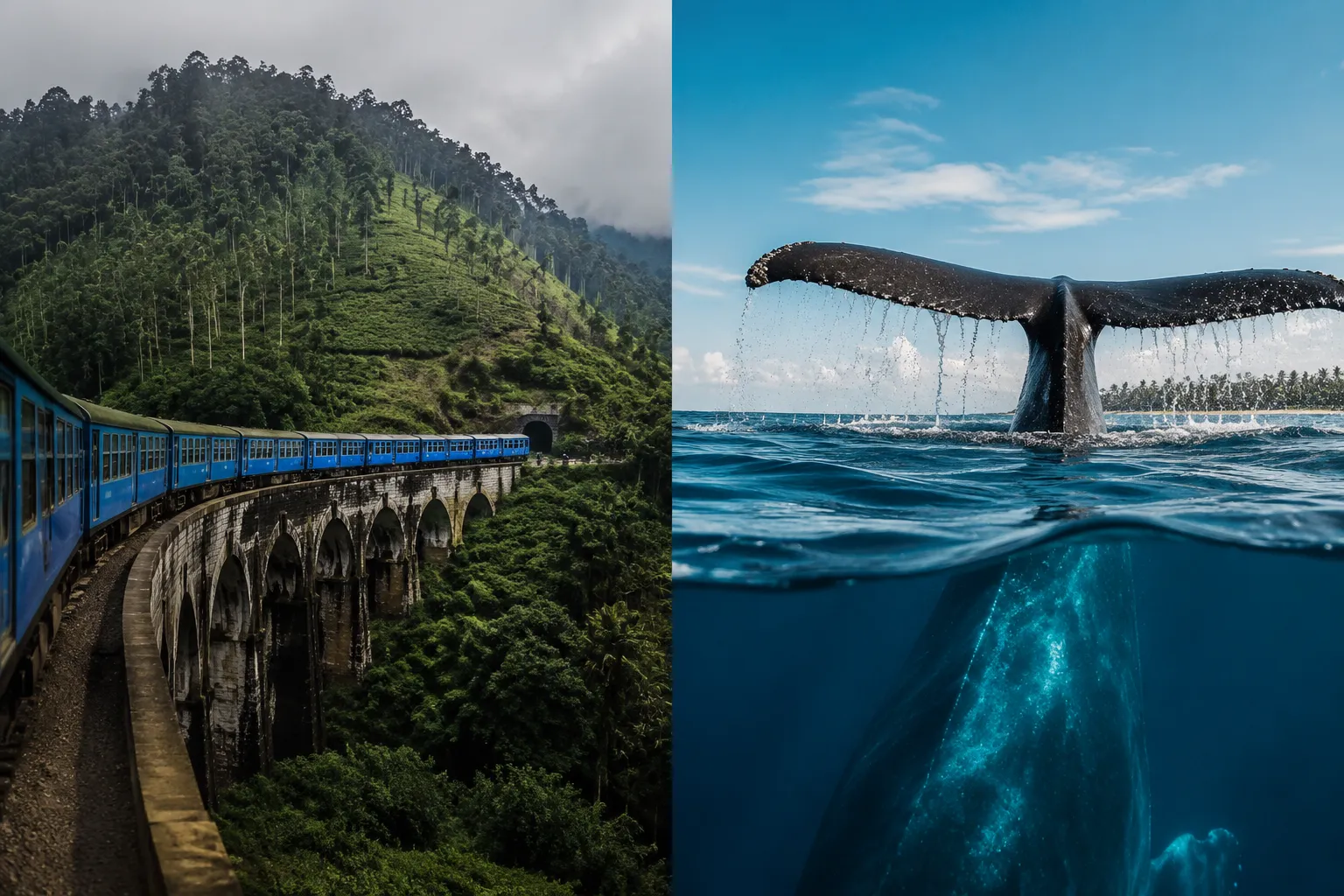
Mirissa is the main whale-watching hub, and the season runs November through April. Peak sightings happen January through March, with February and March considered the best months for consistent blue whale encounters. [3][6][7]
Blue whale encounter rates on reputable boats run roughly 70-85% during peak months. [6]
Practical details:
Is whale watching worth it in December? Yes, encounter rates are still high, and December has fewer tourists than February. Just book a licensed operator (see below) and go on a calm sea day. [3][7]
Choose operators registered with the Sri Lanka Tourism Development Authority (SLTDA) and those that follow the national whale-watching code of conduct. Unregulated boats can approach too close, which stresses animals and reduces sighting quality. [6][7]
What to look for in an operator:
Well-regarded operators include Kumara and Whales (Mirissa) and Raja and the Whales, both have strong track records for responsible practices. [7]
Hill country is best combined with the coast in a single loop. The drive or train from the south coast up to Ella takes about 3-4 hours and the scenery change is dramatic, from palm-lined beaches to misty tea terraces.
Top hill country activities:
Nuwara Eliya note: Evenings get genuinely cold (12-15°C). Pack a light jacket, most beach travelers are caught off guard.
Yes, without question. The Kandy, Ella train (or Nanu Oya to Ella segment) is one of the most scenic rail journeys in Asia. It winds through tea estates, over viaducts, and through cloud forest for roughly 6-7 hours.
Booking tips:
Common mistake: Assuming you can just turn up and buy a ticket. Reserved seats sell out weeks in advance during December, March high season.
Absolutely, this is the standard route for good reason. The south coast beaches and the hill country are connected by well-maintained roads and a scenic railway, making a combined itinerary straightforward.
The typical flow: Colombo → coast (south/west) → hill country → Kandy → Colombo. This circular route avoids backtracking and uses Colombo as both entry and exit point.
How to get around Sri Lanka: beaches to mountains:
A mid-range 10-day trip costs roughly $80-150 per person per day, including accommodation, food, transport, and activities. Budget travelers can do it for $40-60/day; luxury travelers will spend $200+.
Rough cost breakdown (per person, mid-range):
Budget tip: Eating at local “rice and curry” restaurants cuts food costs dramatically and is often better than tourist-facing menus. Expect to pay $2-4 for a full meal.
The south and west coasts are warm and dry; the hills are cool and occasionally misty. Pack for both environments in the same bag.
Packing list:
Weather snapshot:
The biggest mistake is trying to cover too much ground. Sri Lanka looks small on a map but roads are slow, especially in the hills.
Other common mistakes:
Q: Is December a good month to visit Sri Lanka? Yes. December marks the return of peak beach conditions on the south and west coasts as the southwest monsoon ends. It’s high season, so expect crowds and higher prices at popular spots. [2][4]
Q: How far in advance should I book whale-watching tours? Book 4-8 weeks ahead for January, March travel. December has slightly more availability but reputable operators still fill up. Confirm the operator is SLTDA-registered before paying. [3][6]
Q: Can I see both leopards and blue whales on the same trip? Yes. Yala National Park (leopards) and Mirissa harbor (whale watching) are roughly 2.5 hours apart. February, March is the best overlap window for both. [6]
Q: What’s the best base for whale watching in Sri Lanka? Mirissa is the primary departure point. Stay in Mirissa town or nearby Weligama for easy access to the 6am boat departures. [3][7]
Q: Is the Colombo to Galle expressway safe to drive? Yes. The Southern Expressway (E01) is Sri Lanka’s best-maintained highway and cuts the Colombo, Galle journey to about 1.5 hours. It’s the recommended route for self-drivers.
Q: Do I need a visa to visit Sri Lanka? Most nationalities require an Electronic Travel Authorization (ETA) before arrival. Apply through the official Sri Lanka ETA website. Processing is usually same-day to 48 hours.
Q: Is Sri Lanka safe for solo travelers in December, March? Generally yes. Sri Lanka is considered one of the safer destinations in South Asia for solo travel, including solo women. Standard precautions apply in busy tourist areas.
Q: What currency does Sri Lanka use? Sri Lankan Rupee (LKR). ATMs are widely available in cities and tourist areas. Carry some cash for tuk-tuks, local restaurants, and smaller guesthouses.
Q: Can I visit Sigiriya and the Cultural Triangle in December, March? Yes. The Cultural Triangle (Sigiriya, Polonnaruwa, Dambulla) is in the dry zone and is accessible year-round. It fits naturally into a 14-day itinerary after Kandy.
Q: Is December 2025 arrival data available? Yes. Sri Lanka Tourism reported 258,928 arrivals in December 2025, with leisure travel accounting for over 70% of visitors, confirming December as a peak season month. [4]
The best Sri Lanka itinerary for December, March works because the dry season conditions align perfectly across three very different experiences: calm-sea beaches on the south coast, reliable blue whale sightings off Mirissa, and cool, clear days in the hill country.
Actionable next steps:
Whether 10 days or 2 weeks, this window delivers the full Sri Lanka experience without weather compromises. The planning is straightforward once you understand which coast is dry when, and now you do.
[1] Visiting Sri Lanka In December – https://www.bvtdubai.com/visiting-sri-lanka-in-december [2] December – https://www.selectiveasia.com/sri-lanka-holidays/weather/december [3] Whale Watching Mirissa Sri Lanka Complete 2026 Guide – https://srilankatourhelp.org/articles/whale-watching-mirissa-sri-lanka-complete-2026-guide [4] Monthly Tourits Arrivals Report December 2025 Final – https://www.sltda.gov.lk/storage/common_media/Monthly_Tourits_Arrivals_Report-December-2025-Final.pdf [5] Best Time To Visit Sri Lanka 2025 Guide – https://www.atj.com/2025/07/31/best-time-to-visit-sri-lanka-2025-guide [6] Sri Lanka Leopards Blue Whales Yala Mirissa Guide 2026 – https://www.yalawildlife.com/blog/sri-lanka-leopards-blue-whales-yala-mirissa-guide-2026 [7] Best Time Whale Watching Mirissa – https://kumaraandwhales.lk/article/best-time-whale-watching-mirissa [8] journalofsrilanka – https://journalofsrilanka.com/post-details/best-time-to-visit-sri-lanka-weather-monsoon-month-by-month-guide-2025-update/59